










Britain's industrial decline is “increasingly a matter of national security” and urgent action is required to halt it, a collection of trade bodies warns.
Current policy hands the edge to foreign manufacturers, they write, citing sky-high energy costs as a key concern in a letter to industry minister, Chris McDonald.
The existing regime also allows nations with poorer environmental standards to undercut British firms, damaging both the economy and the environment, they claim.
The letter was signed by the heads of the Chemical Industries Association, Fuels Industry UK, Make UK, Offshore Energies UK, the Carbon Capture and Storage Association, the Energy Intensive Users’ Group and the Foundation Industries Sustainability Consortium.
TRENDING
Stories
Videos
Your Say
The organisations have joined forces to request a meeting with Mr McDonald and “to urge the Government to reverse the decline we have seen”.
Collectively, their sectors “form the backbone of the UK’s industrial base”, the letter states.
“However, across several of these sectors the UK has seen declining domestic production, site closures and falling investment over recent years.
“As capacity has been lost, the UK has become increasingly reliant on imported fuels, materials and industrial products that were once produced domestically.
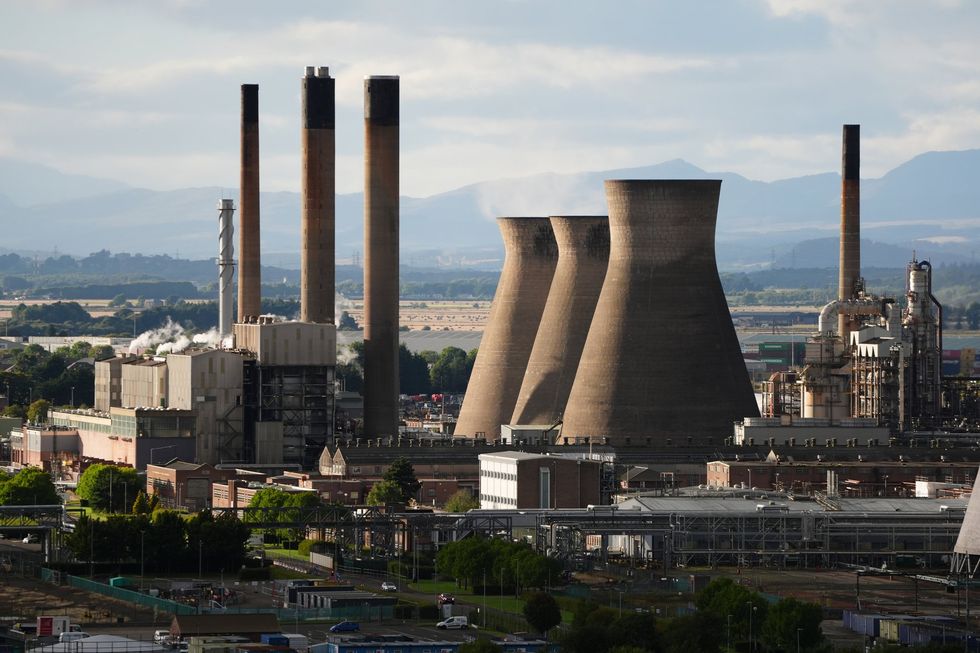
Britain's industrial decline is growing increasingly troubling, according to leading trade bodies
|PA
“This has implications not only for industrial competitiveness but also for the security of the supply chains on which the UK economy depends.”
They point out that:
- There have been at least 25 chemical manufacturing site closures in recent years
- The closure of the Grangemouth and Lindsey refineries mean there has been the “closure of one third of the UK’s refining capactiy in the past year’
- ‘Policy choices’ have led to a decline in North Sea oil production, leaving the UK a net importer of energy.
- Imports exceed exports in the chemicals sector, which employs 136,000 workers
- Manufacturing supports 2.6 million jobs and had an output of £228b - but UK imported £706b of manufactured goods.
The group warns: “This trend is not only an economic concern – it is increasingly a matter of national security. “A country that loses the ability to produce essential materials and fuels becomes reliant on overseas suppliers and exposed to geopolitical shocks and supply disruptions.”
LATEST DEVELOPMENTS

Rachel Reeves has been handed a list of demands
|PA
The letter sets out three ‘musts’ for the Government to halt and reverse the decline. The first is to improve industrial competitiveness.
The authors highlight the need to “address the structural cost disadvantages facing UK industry – particularly high industrial energy costs – to ensure domestic producers can compete with international competitors”.
The second is to protect UK industry from unfair competition caused by carbon leakage. This occurs when UK rules on emissions result in pushing production abroad.
The consequence is that UK products can be undercut by those made in countries “with weaker environmental and regulatory standards”.
The third is to support long-term industrial investment, creating “stable policy and investment conditions that enable foundational industries to modernise, decarbonise and expand production in the UK”.
This should include support for carbon capture and storage and hydrogen projects, they say. “Strong growth sectors depend on strong foundational industries,” they write.
“Rebuilding the UK’s industrial base will be essential to secure supply chains, support skilled employment and safeguard the country’s long-term national interests.”
Elizabeth de Jong, CEO of Fuels Industry UK said that the Iran conflict highlighted the importance of resilient supply chains. Urgent action was required, she said.
She explained: “The UK is steadily losing the industries that produce the essential materials, energy and products our economy depends on.
“That is leaving us increasingly exposed to global instability and reliant on imports for critical supply.
“What we are seeing in the Gulf is a clear warning. In an unstable world, relying on overseas supply chains for the essentials of your economy is a vulnerability.
“Without urgent action, we risk further industrial decline and deeper dependence at precisely the wrong time.”
Industry Minister Chris McDonald said: "We understand the importance of UK manufacturing and heavy industry, but also recognise the challenges they're facing – and we’re tackling them through our modern Industrial Strategy, which will provide the certainty they need to invest, decarbonise and grow.
“We’ll shortly set out details of our new British Industrial Competitiveness Scheme, which will reduce electricity bills by up to 25 per cent for over 7,000 manufacturing businesses.
"I regularly meet UK manufacturing businesses and will continue to work with them to strengthen our industries and the supply chains they support.”