





Fears are rising that a shipwreck sitting in the Thames could cause "mass damage", a large-scale loss of life, and even a tsunami if targeted by drones.
The SS Richard Montgomery set sail for Normandy in 1944, carrying large quantities of munitions to France.
A storm meant the American Liberty-class cargo ship never made it further than the Thames.
Last year, aircraft were banned from flying over the site of the wreck, which is holding 1,400 tons of explosives, over fears hostile nations were plotting to attack her.
TRENDING
Stories
Videos
Your Say
When the ship went down, she was armed with high-explosive general purpose bombs, fragmentation bombs, and incendiary devices such as white phosphorous bombs.
Experts fear the wreck is now a "sitting duck" for potential drone attacks from Russia and Iran.
Previous assessments of the Richard Montgomery have said an explosion could cause "mass damage and loss of life" by sending a five-metre high tsunami across the low-lying East of England.
The tsunami would impact Kent, Essex, and - Britain's largest liquefied natural gas terminal on the Isle of Grain.
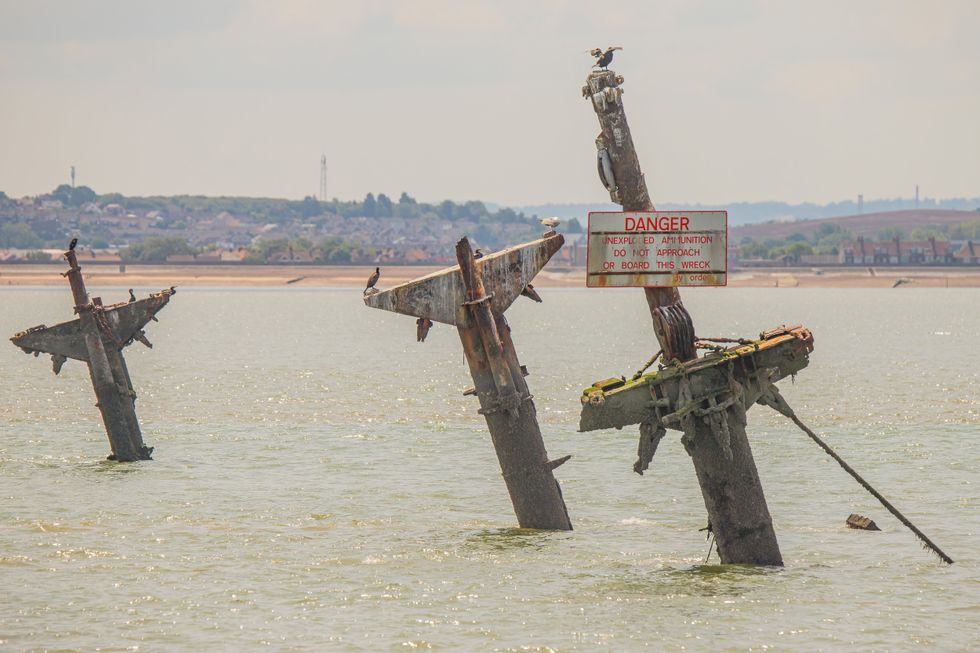
The three masts of the SS Richard Montgomery which protrude above the Thames
|GETTY
The ship's cargo has thousands of bombs in the 1,000lb and 500lb ranges and bomb clusters, which hold multiple bomblets.
She has three fragile masts protruding above the surface of the Thames, which could be targeted by the drones and cause them to topple onto the ship's explosive cargo.
In October, an ally of Vladimir Putin told Russian state TV that Moscow should target the ship - though this has not yet come to pass.
And back in Britain, Government sources have admitted they were aware of the possibility of a drone attack on the sunken ship, which lies a few hundred metres from shipping lanes leading to the Port of Medway.
After a Government survey of the wreck was published last year, a no-fly zone spanning one nautical mile around the wreck was put in place.
MILITARY HISTORY - READ MORE:
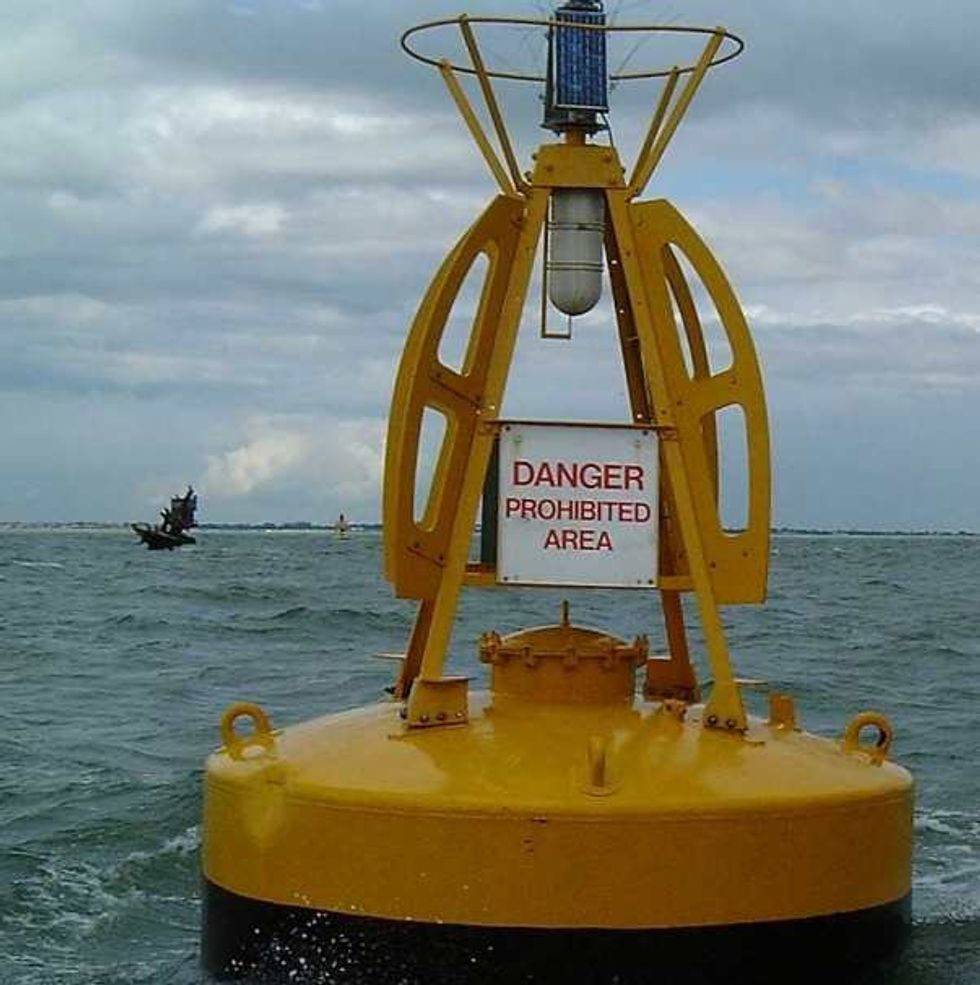
PICTURED: A buoy marking the area where the nautical exclusion area begins
|WIKIMEDIA/GILL EDWARDS
Katja Bego, a senior research fellow at the Chatham House think tank’s Europe programme, told The Telegraph a bad actor could use commercial drones rigged with explosives to attack the shipwreck from UK soil directly.
"The scary thing is that you do not need to be a highly sophisticated state actor to launch a sabotage attack using commercially-available drones. The biggest hurdle is acquiring the explosives – and finding a good drone pilot," she added.
This week, a nautical exclusion zone banning vessels from sailing too close to the wreck was extended to allow for a new survey of the wreck.
Major Andrew Fox, a retired paratrooper who served three tours of Afghanistan, said the American World War II vessel is at risk as a fixed, conspicuous target.
While an expert in emergency planning and risk management, Professor David Alexander, said it was a "sitting duck".
The Government said it wants to remove the vessel's three masts "as soon as possible" to prevent their collapse, but the project has repeatedly delayed since it was first announced.
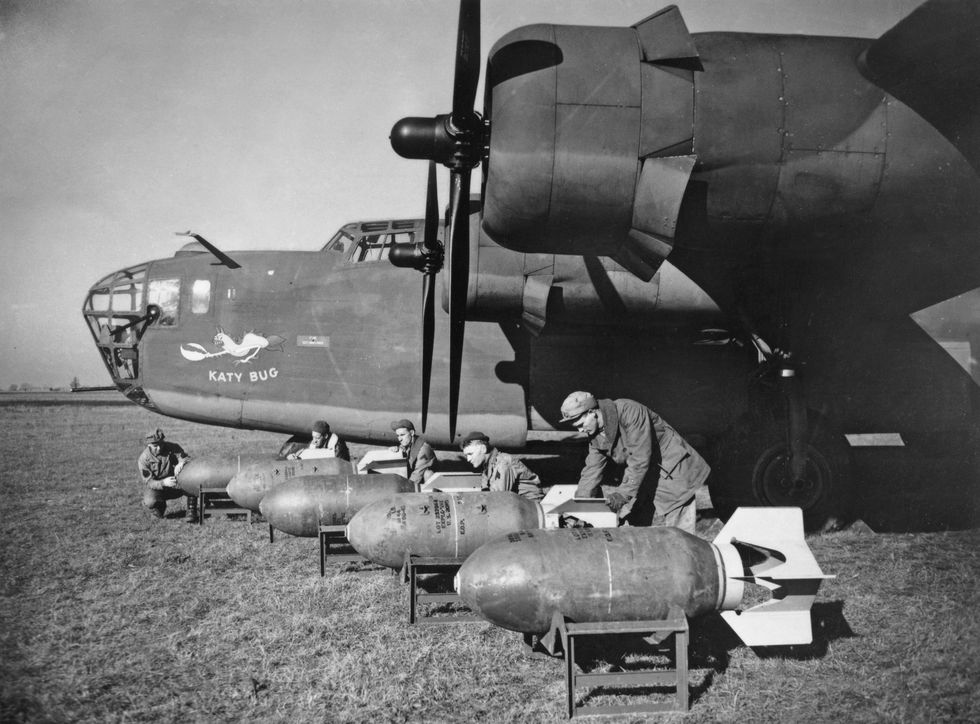
The shipwreck is carrying World War II era GP bombs which could cause a tsunami if struck
|GETTY
The Civil Aviation Authority said the no-fly zone was introduced to protect passenger airlines into London City and Biggin Hill airports.
A spokesman for the CAA said: "Restricted airspace was introduced last year above the World War II wrecked vessel, SS Richard Montgomery.
"This restriction, requested by the government, is to ensure the safety of all inbound air traffic and to prevent any potential incidents from the unexploded bombs on the ship. This impacts aircraft routes into London City and Biggin Hill airports."
The Department for Transport said the wreck was in a stable condition but added drones must not fly above it.
A spokesman said: "Our priority will always be to ensure the safety of the public and to reduce any risk posed by the SS Richard Montgomery.
"We have been clear that pilots and operators, including drones, must not fly in a limited area around and above the site, which is standard for no-fly zones across the country. The condition of the wreck remains stable, and the site is rigorously monitored 24/7."