






Staggering new data reveals roughly one in 10 students beginning university courses in 2024/25 possessed zero A-level qualifications or equivalent.
The figures from the Higher Education Statistics Agency show the number of enrolling academics without A-levels has more than doubled from 31,000 to a whopping 75,000 over the past decade.
The findings have raised concerns over the sizeable chunk of students arriving unequipped to best succeed in their degree programme, despite the taxpayer contribution funneled to complete their studies.
The observed cohort heading to university without the higher qualifications accounts for nine per cent of all course starters across the UK: a significant rise from five per cent 10 years earlier.
TRENDING
Stories
Videos
Your Say
Adam Tickell, Vice-Chancellor of Birmingham University, queried whether candidates lacking A-levels should be permitted access to student loans.
Professor Tickell argued students "without a single A-level" would be unlikely to complete their degrees successfully, despite substantial taxpayer "investment" in their education.
Speaking to the Daily Mail, he warned "investment in students is investment in human capital, and we're investing so much money in people who we are not really capable of graduating".
Under current arrangements, graduates begin loan repayments only upon reaching an earnings threshold, with outstanding balances written off after 30 to 40 years at taxpayer expense.
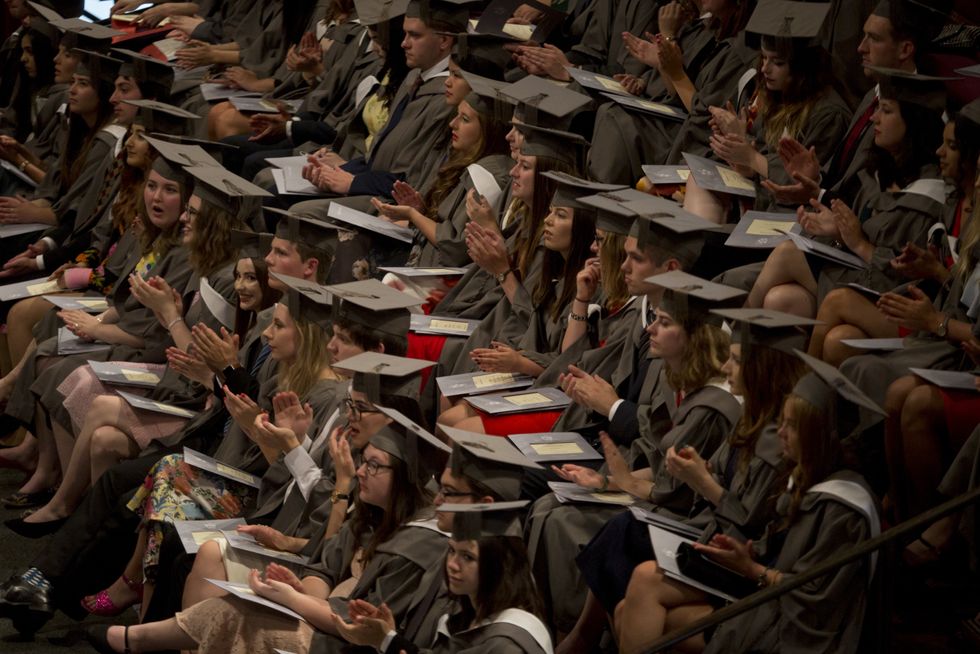
Nearly 50,000 students commenced university without holding even a GCSE
| GETTYThe VC suggested the sector needed to address fundamental questions about public expectations of universities, funding mechanisms, and appropriate student numbers.
The statistics also highlight that nearly 50,000 students commenced university without holding even a GCSE or equivalent qualification during 2024/25, compared with just 12,000 a decade prior.
All figures encompass both undergraduate and postgraduate students, as well as those studying part-time and full-time.
Paul Wiltshire, founder of the University Watch campaign group advocating for better student value-for-money, condemned the trend as harmful to those with weaker academic backgrounds.
LATEST EDUCATION STORIES
He argued students who struggled at school were unlikely to secure well-paid employment, even after obtaining a degree.
"Encouraging them to enter higher education is just a one-way ticket to a lifetime of debt and no better pay," he said.
Acknowledging some students would buck this trend, Mr Wiltshire maintained for most students with lower prior academic achievement, university represented something far more troubling.
"Higher education is not an opportunity; it is exploitation by the commercially motivated sector to use them as pawns to extract government funds via student loans," he added.
Universities UK, the body representing vice chancellors, defended current admissions practices, stating institutions consider far more than prior attainment when assessing applicants.
"Universities always look at more than prior attainment when making admissions decisions, and will take a range of factors into account when considering whether a student is well-equipped to succeed on a course," a spokesman said.
The organisation noted many students enter higher education later in life, bringing valuable skills acquired outside traditional education.
English universities face regulatory scrutiny on student outcomes including continuation rates, completion figures, and post-graduation progression, the spokesman added.
A Department for Education spokesman emphasised while universities operate independently, maintaining quality and admitting students likely to succeed remained essential.
The Government is said to be strengthening oversight of university franchising arrangements to prevent misuse of public funds.
Our Standards: The GB News Editorial Charter
More From GB News