











The airspace above a major UK bridge has been closed as a Royal Navy aircraft carrier returns to the seas.
Britain's flagship aircraft carrier HMS Queen Elizabeth departed Rosyth Dockyard on Sunday, signalling a significant return to operational status for the Royal Navy.
The 65,000-tonne vessel, guided by a flotilla of eight tugboats, made its way out of the Scottish facility where it had been undergoing an extended period of engineering work.
Originally assembled at the Rosyth site and first launched in July 2014, the carrier remained in Fife longer than anticipated while crews completed propulsion system enhancements alongside additional maintenance tasks.
TRENDING
Stories
Videos
Your Say
The departure represents a boost for the fleet, which has faced scrutiny over its operational readiness in recent months.
Flight restrictions remain in force above the Firth of Forth until 11pm on Friday, imposed due to the carrier's presence in the waterway.
Transport Secretary Heidi Alexander authorised the measures on grounds of national defence and security.
Under the restrictions, unmanned aircraft are prohibited from operating below 1,400 feet without explicit Ministry of Defence approval.
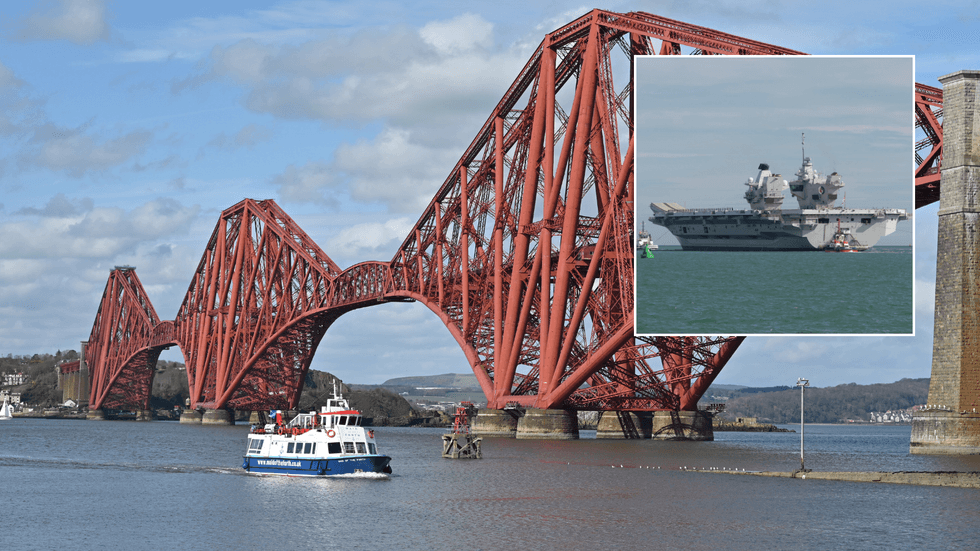
Airspace around Firth of Forth will be restricted until Friday as HMS Queen Elizabeth heads out to sea
|GETTY
The drone ban encompasses the airspace above three major crossings: the historic Forth Bridge railway structure, the Queensferry Crossing, and the Forth Road Bridge.
The carrier must await low tide conditions before navigating beneath these iconic spans as it continues its journey from the dockyard.
The carrier's return comes amid mounting criticism of Royal Navy response times during recent international crises.
When conflict erupted in the Middle East earlier this year, HMS Dragon experienced a week-long delay before it could even leave Portsmouth to respond.
LATEST DEVELOPMENTS
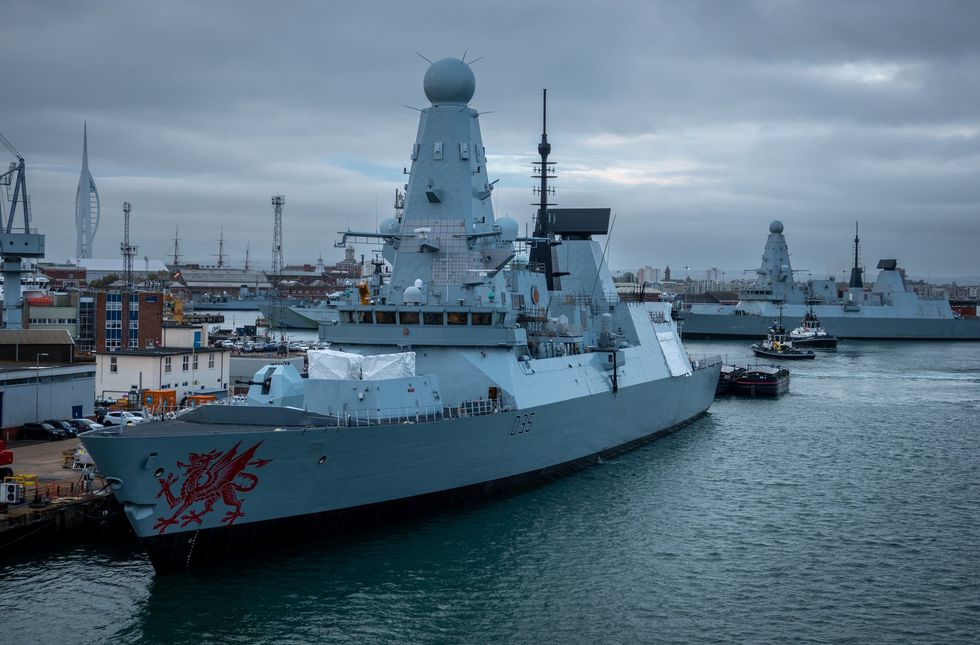 HMS Dragon lingered in the English Channel for three days after her departure from Portsmouth for Cyprus | GETTY
Reports indicate the Type 45 destroyer was caught in dry dock when deployment orders arrived, with scaffolding still surrounding the vessel and its weapons systems not yet loaded.
The situation highlighted concerns about the fleet's ability to react swiftly to emerging threats, with the warship's readiness becoming a focal point for questions about naval preparedness.
Following the Iranian drone strike on a British base in Cyprus on March 1, which caused no casualties and minimal damage.
HMS Dragon took three weeks to reach the eastern Mediterranean.
European allies moved considerably faster. French President Emmanuel Macron dispatched the Languedoc to Cypriot waters, where it arrived on March 5,
He subsequently ordered the aircraft carrier Charles de Gaulle to provide additional support.
Spain announced the deployment of its advanced frigate Cristóbal Colón that same day.
Italy's Federico Martinego reached Cyprus on March 11 and the Dutch air defence frigate HNLMS Evertsen commenced operations there on March 13.
Our Standards: The GB News Editorial Charter