











New guidelines to ration GP referrals have added another layer of red tape and will increase waiting times, experts have warned.
A controversial overhaul of how patients are referred to hospital specialists is sparking fury among frontline doctors, with critics warning it could leave millions waiting longer for care - or giving up altogether.
Over the past year, family doctors have been paid £20 extra for every case where they seek “advice and guidance” from a consultant rather than referring a patient to hospital.
But from April 1st, the scheme will become mandatory in the NHS. The system, known as A@G or ANG, requires GPs and physician associates to seek input from a consultant via an encrypted email-style platform before many non-urgent referrals can go ahead.
TRENDING
Stories
Videos
Your Say
Health chiefs say the move will cut unnecessary hospital visits and improve efficiency. But critics say it risks restricting access to specialist care.
Kate Bramall, British Medical Association’s GP leader has warned the new system could erode patient care, creating a ‘doom loop’ where GP’s lose the right to refer and patients do not receive the care they need. She said the risks of the scheme were “a huge concern for every single GP I meet and speak to. It should be a huge concern for every patient too.”
She has also described the policy as “awful for patients” and “politically driven”, warning that clinical decisions could be influenced remotely by doctors who have not seen the patient.
Luke Evans, shadow health minister, said: “My biggest concern is about this single point of access, with a target to bounce back one in four referrals - that is bad for clinicians and it is really bad for patients.

Wes Streeting has promised to bring down waiting lists
| PA“It is hard not to see this as a way of Wes Streeting simply controlling access to hospitals and massaging waiting lists.
“We don’t even know if the planned one in four patients bounced back to the GP are recorded. Is Labour planning on effectively rationing secondary care - it seems like it.”
Frontline doctors say the reality on the ground is already strained. One senior NHS advisor and consultant warned the new system is already creating delays, confusion and barriers to care.
He said: “If a GP or physician associate wanted to refer a patient now will have to send a question to a consultant through an encrypted email system called ANG asking whether they should be referred.”
LATEST DEVELOPMENTS
 The NHS doctor has been suspended (file pic) | GETTY
And he warned: “Referrals are less likely to be accepted under this system. Barriers are being put up everywhere which will hide the true waiting list data,” the advisor said.
He added: “There is no compatible national email system between hospitals and GP surgeries and the two systems are not connected. This email conversation will just add another very difficult layer to patients getting seen.”
The expert warned that what was once a straightforward referral is now being turned into a bureaucratic hurdle.
“It blocks a GP’s ability to refer a patient for non-cancer cases and turns what was a referral into a question summarising why a patient might need to see someone,” he said.
He said that for patients, the consequences could be serious - particularly for the elderly or those with complex conditions who rely on face-to-face assessments.
“It means it will be much harder for patients to be examined or seen for decisions about treatment to be made, which is vital to good care.”
Under the system, GPs must wait for a consultant response before a referral is accepted - and crucially, the exchange is limited.
“The conversation is hidden and only response is allowed, so it is not a conversation and it is not stored in the same way,” he said.
“It is a totally daft system and nearly impossible to navigate.”
Critics say the policy risks shifting pressure away from hospitals and onto already overstretched GP services.
“It just bats back the workload to overstretched GPs further,” the source added.
“And very often scans are needed - and it will delay these.”
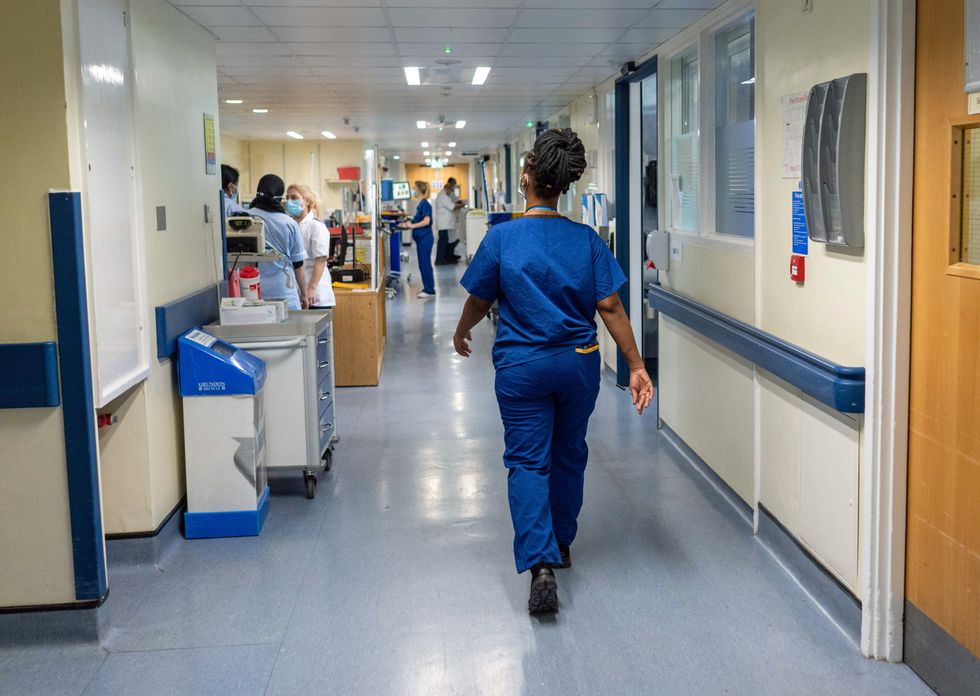
Ministers are struggling to cut NHS waiting lists
| PAThe reforms come as ministers face mounting pressure to cut NHS waiting lists, which remain at historically high levels.
“It is a brilliant way of massaging the waiting list figures as many are likely to just give up or plague their doctors more if they do not get a referral,” the consultant said.
“We have a problem with a waiting list queue - so this is almost like saying let’s stop people from joining it. We call it the “ANG police” stopping patients being referred," he added.
Regional medical committees have also raised concerns, citing cases where urgent referrals were downgraded.
In one instance, an urgent cancer referral was reportedly converted into an advice request more than once rather than being accepted, which clinicians believed contributed to delays in diagnosis.
Other GPs warn responses to A and G requests can take months.
Dr Ankit Kant, a GP in West Norfolk, has said some cases have taken as long as eight months to receive a reply - including one where a patient died while waiting, with the eventual response concluding a specialist referral had not been needed.
Meanwhile, patients are increasingly reporting being left in limbo - struggling to secure appointments or clarity on their care.
 The NHS is under fire again | NHS
The NHS has long faced challenges with fragmented IT systems, and critics say the changes risk exposing those weaknesses.
“There is no compatible national email system,” the consultant stressed.
“Of course the internet system is complex. But this is not an excuse.”
He added: “You can get a car part from any part of the country to any other part of the country in 24 hours - even for a car that no longer exists.
“Yet you cannot get a proper email from a GP to a consultant and get question and reply recorded on both systems.”
He said the government should tackle the "real" problems in the NHS by fixing social care, the IT system and introducing routine 7-day working for doctors. "But they are not brave enough to do this," he added.
Supporters of the policy say advice and guidance can help ensure patients are directed to the most appropriate care and avoid unnecessary hospital visits.
An NHS spokesman said the approach is intended to support clinical decision-making and improve access to the right care.
He said: "While the NHS delivered record numbers of appointments in 2025 and reduced the waiting list to its lowest level in three years, we have much further to go to ensure planned care is easier to access for patients. In addition to transforming how patients can book and manage their care through the NHS app, 'advice and guidance' has a major role to play in the coming years to support clinical decision-making and ensure patients are directed to the right specialist care as soon as possible."