











Opening up the North Sea would let the UK “take back control of its energy future” and cause less damage to the planet than imports, the offshore trade association says.
The sticking point is “policy, not geology”, Offshore Energies UK (OEUK), the leading trade body for the industry, contends.
Rather than arguing about the merits of renewables over oil and gas, it believes we should be discussing the benefits home-grown energy has over imported fuel.
Its analysis shows that more favourable Government policies could lead to an additional 3.25 billion barrels of oil being recovered from the North Sea basin – almost double what it is currently predicted to yield.
Maximising domestic supply would give the UK greater energy security and lower our exposure to global crises such as the war in Iran, it says.
The call comes as the Conservatives demand a rethink in the North Sea, including permitting more drilling and opening up Rosebank, the UK’s largest untapped oil field.
They will use an opposition day debate to argue that “domestic energy production is more important than ever to build a stronger economy and a stronger country”.
In its Business Outlook briefing for 2026, OEUK points out that oil and gas will play “a critical part of the UK energy system and economy for decades”.
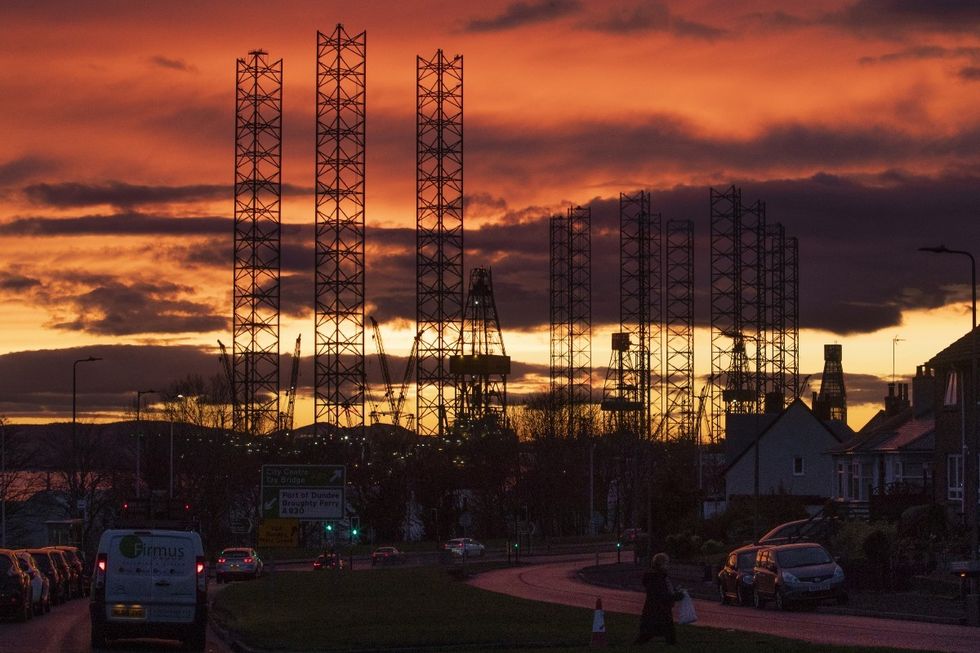 Jackup rigs, used in the North Sea oil and gas industry at the Port of Dundee in the Firth of Tay | PA
Weakening domestic supply will only make us more reliant on imports, it states. And because these imports can have a larger carbon footprint than domestic fuel, using them leads to greater emissions.
Although renewables are playing an increasing role, oil and gas still supply three quarters of the UK’s energy needs. By 2050 – the year we are expected to hit Net Zero carbon emissions – the fossil fuels are still expected to account for a fifth of our energy mix.
OEUK market intelligence manager Ben Ward said: “We believe that in the UK, rather than polarising the debate between oil and gas and renewables, the discussion should be around homegrown energy versus imported energy.
“We have a real opportunity over the course of the next five years or so to take back control of our energy future by enabling an environment that allows investment across all energy sources.
LATEST DEVELOPMENTS
 Ed Miliband is spearheading Britain's net zero efforts | GB NEWS
“Our reliance on imports comes with higher associated emissions than domestic production.
“It increases our exposure to geopolitical instability, which I think is incredibly important given the current climate in the Middle East.”
Regulations and uncertainties around the North Sea’s future have spooked investors, he said, with the effect of accelerating decline in both business confidence and domestic production.
No new licences for drilling in the North Sea will be issued under current policy and the Energy Profits Levy, or windfall tax, means producers face paying a rate of 78 per cent.
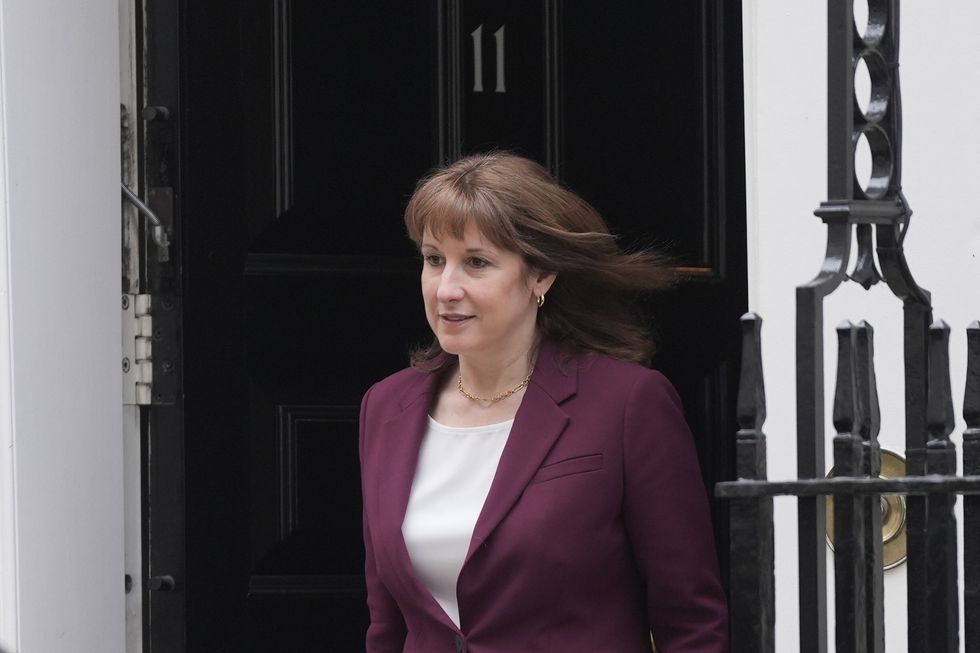
Chancellor Rachel Reeves has already discussed replacing the windfall tax with a permanent Oil and Gas Price Mechanism
| PAChancellor Rachel Reeves has already discussed replacing the windfall tax with a permanent Oil and Gas Price Mechanism, which will only charge levies when prices are unusually high. This change is currently due in 2030.
But the change should be brought forward, says OEUK, arguing the move “could unlock up to £50bn of additional capital investment in oil and gas, adding substantially to domestic supplies and increasing tax receipts over the next decade, while strengthening national energy security”.
In surveys, nine out of ten of OEUK members revealed they would be looking outside the UK to grow their business. All respondents stated that the current fiscal or regulatory regime was “the biggest barrier” to investment.
Unleashing this investment would pay huge dividends, said Mr Ward. Were the windfall tax removed early and future licences permitted, the projected results were “staggering”.
“Under these conditions an additional three and a quarter billion barrels were identified across 111 projects,” he said. “That’s the equivalent of the North Sea Transition Authority’s entire production projection between 2026 and 2050.”
The projects would cost £50b in investment but would add three times that to the economy, he said, pointing out that previous strategies have sought, successfully, to maximise North Sea production.
“I believe this shows how policy, not geology, is hampering UK production levels,” he said.
He went on: “The UK is at a defining moment for its domestic energy system. We have an opportunity to really take back control of energy supply during a period of heightened geopolitical instability and global supply shortages.
 A trawler returns to the North Shields fish quay with its catch from the North Sea | PA
“The UK has all the foundations of a truly world class energy system, built on a legacy of excellence across our history in the North Sea.”
Among the “clear advantages” domestic production has over imports is the lower emissions footprint than imported Liquified Natural Gas (LNG). The UK imports LNG from a range of countries, with the US our biggest supplier.
The process of liquifying and transporting the gas adds to its carbon footprint, and some exporters will have less rigorous carbon policies than the UK.
Director of energy policy, Enrique Cornejo, said it made no sense to import the gas, particularly as “our domestic production has a lower average carbon intensity than many of our import nations”.
He said: “For as long as the UK needs oil and gas it makes sense to produce it here. Every barrel of oil we produce in the UK pays UK tax. Every cubic metre of gas we produce here supports the near 200,000 jobs that depend on our sector.
“Obviously, climate change is important. But we are setting out a pathway to meet climate targets that makes use of our homegrown resources and also ensures that we don’t offshore those emissions to other countries.”
David Whitehouse, chief executive of Offshore Energies UK, said: “This is not an either renewables or oil and gas scenario.
“We urgently need greater supplies of secure, domestically produced energy including oil and gas, which will remain a critical part of the UK energy system and economy for decades.
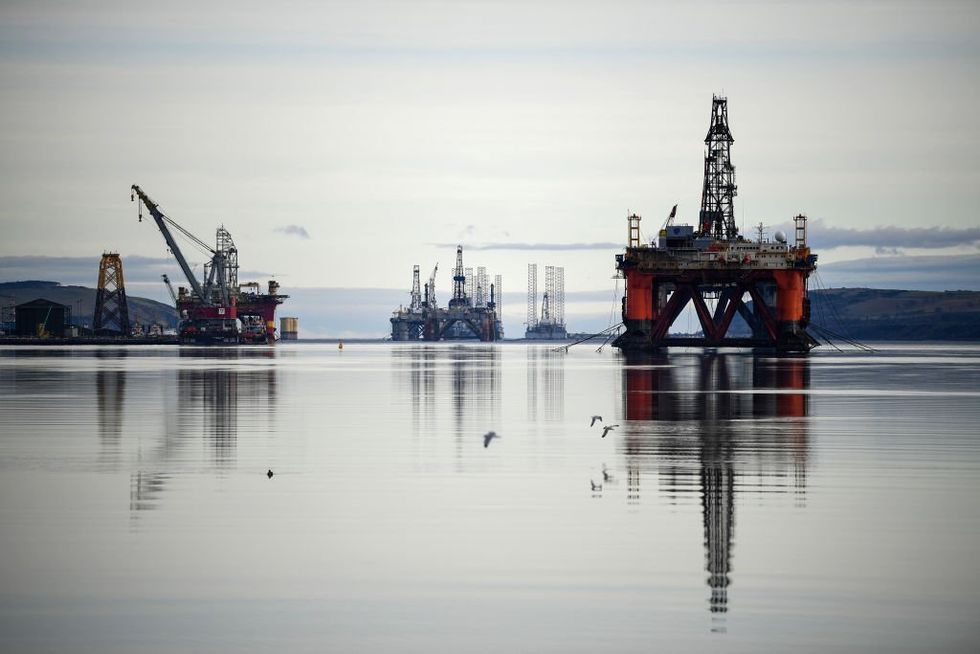 Britain's North Sea production accounts for roughly 700,000 barrels of oil per day | GETTY
“As demand rises and electricity use accelerates, weakening domestic supply would only increase our reliance on imported LNG, leaving consumers more exposed to global volatility and higher emissions.”
In a poll of 2000 adults, OEUK found that three quarters agreed the UK should “produce as much of its own oil and gas as possible rather than rely on imports”.
The Tories will today call for an end to both the windfall tax and the ban on new licences. The party also wants consent to be granted for Rosebank and Jackdaw, a gas field. Drilling at both is currently banned pending a legal decision.
Shadow Secretary of State for Energy Security Claire Coutinho said: “Turning our backs on domestic gas that could heat millions of homes would be madness in normal times, but it is sheer lunacy in the midst of a gas supply crisis.
“We must fast-track Rosebank and Jackdaw and lift the onerous bans and taxes on the North Sea to back Britain’s energy security. Labour MPs have the chance to show they will put the national interest over Ed Miliband's zealotry.”
A Government spokesperson said: “Issuing new licences to explore new fields cannot give us energy security and will not take a penny off bills.
“Regardless of where it comes from, oil and gas is sold on international markets, which set the price for British billpayers – making us a price taker.
“The only way to truly protect ourselves from these price spikes is to get off the rollercoaster of fossil fuel markets.”