










European nations are said to be considering the idea of setting up Rwanda-style deportation plans to send failed asylum seekers to return hubs.
Foreign ministers in the EU agreed a new political declaration stressing that governments have an "undeniable sovereign right" to control their borders.
The agreement includes a new interpretation of the European Convention on Human Rights (ECHR) article three protection against inhuman or degrading treatment and the article eight right to a family life, after a number of states grappling with migration problems pushed for changes.
Both articles have been used to prevent people with no right to be in the UK being sent back to their home countries.
The Council of Europe said the "right balance must be struck" between individual rights and public interests.
Countries should be allowed to pursue new approaches "such as return hubs to address and potentially deter irregular migration", it added.
The Government has spoken to a number of countries about the possibility of hosting return hubs where the UK could send failed asylum seekers before they are deported.
The Labour Government scrapped the Conservatives’ multimillion-pound deal to send migrants who crossed the Channel from France to Rwanda.
 Flights to Rwanda were scrapped when Sir Keir Starmer was elected | PA
Plans were grounded after an 11th-hour decision by a Strasbourg judge in 2022 and Britain’s Supreme Court ruled in 2023 that the deal was unlawful because Rwanda was not a safe third country for migrants.
Foreign Secretary Yvette Cooper attended the Council of Europe foreign ministers’ meeting in Moldova to finalise the agreement.
Labour, unlike the Conservative Party and Reform UK, is committed to remaining within the ECHR, which was drawn up in the aftermath of the Second World War.
More than 200,000 migrants are thought to have arrived in the UK after crossing the Channel since 2018.
LATEST DEVELOPMENTS

Over 200,000 migrants are thought to have arrived in the UK
|PA
Successive governments have tried to work with France to disrupt crossings, as well as revising the rules for claiming asylum in the UK in attempts to deter people from making the dangerous journey.
Council of Europe Secretary General Alain Berset said: "We have been able to bring together countries across Europe, with different views and experiences, to agree a common position on how the system should work best, notably in the challenging context of migration.
"Looking ahead, this will help to guide our own work as well as that of national authorities and domestic courts."
The Foreign Office said a "more modern" interpretation of the ECHR is set to be agreed.
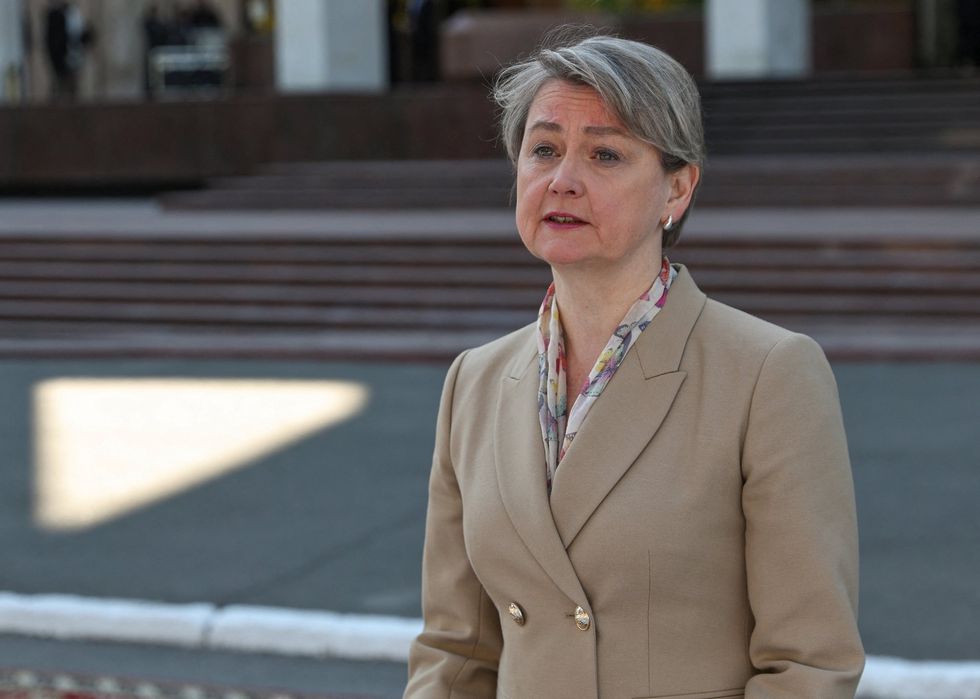
British Foreign Secretary, Yvette Cooper said she wanted a 'common sense approach'
|GETTY
Ms Cooper said ahead of her visit: "We have been working with neighbours across Europe to ensure that countries can take strong action against illegal migration, control borders, uphold the rule of law and respect international standards.
"The ECHR has protected democracy, human rights and the rule of law across Europe for 75 years.
"To ensure this continues, we need a common sense approach that reflects the realities of today.
"We want to ensure that immigration systems can’t be unfairly gamed to prevent foreign criminals or those accused of crimes abroad being lawfully returned."

Lord Hermer said the ECHR needs to 'respond to new challenges'
| GETTYAttorney General Lord Richard Hermer said: "The ECHR delivers meaningful protections for ordinary people in Britain and across Europe.
"The convention is 75 years old, but it has never been static – it has shown its ability to adapt and to respond to new challenges.
"That is why this country is proud to be part of a process to work with colleagues across the continent to modernise how the ECHR works, including how to protect our borders in the national interest, to ensure the convention endures for another 75 years and beyond."