







A set of medieval murals have been saved from ruin thanks to a major cash injection from a national Church of England’s conservation scheme.
The mural on the walls at St Mary the Virgin church in the village of Belchamp Walter, Suffolk is one of the beneficiaries of a £600,000 cash injection from the Church of England’s national conservation scheme.
Dating back to the 14th century, the painting portrays several biblical scenes.
The church, which features in the hit 1980s BBC TV series Lovejoy, described the paintings as its greatest treasures.
The Church of England’s Director for Cathedrals and Church Buildings Emily Gee told The Telegraph: "We are delighted by the increase in the number of parish churches that we can support as they conserve precious historic features of such importance to worship, artistic appreciation and local and national heritage.
"I am particularly pleased to see the flourishing collaborative projects nurturing the skills and specialist expertise that are so vital to sustaining our church heritage into the future."
Grants worth a total of £578,931 were award by the scheme across the country in 2025.
This was up 120 per cent on the £260,000 distributed the year before. with the number of grants awarded rising from 124 to 190 across 37 dioceses, compared with 33 the year before.
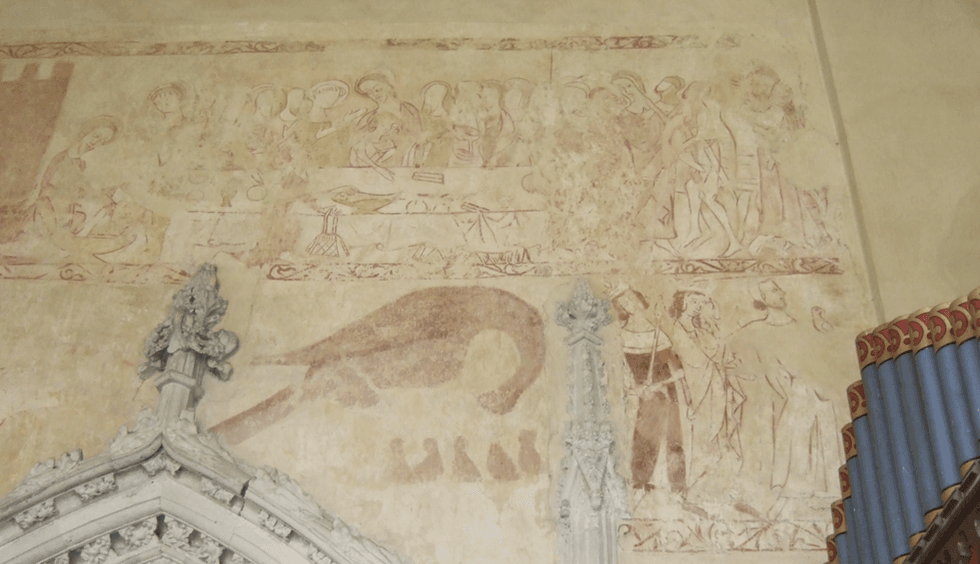
The mural has now been restored
|A CHURCH NEAR YOU
Some of the other beneficiaries include the Francis Trigge Chained Library in St Wulfram’s church in Grantham, Lincolnshire, believed to be the oldest surviving public library in England.
Among the collection of more than 250 texts is Sermons on Job, a rare English translation of sermons by John Calvin, a key figure of the Reformation.
Isaac Newton studied in the library as the headmaster of the school and was one of the library’s keyholders.
One of the oldest working clocks in the country in the church of St Catherine in Montacute, Somerset, dating back to the early 1400s, was among 15 clocks to receive funding for restoration.
LATEST DEVELOPMENTS
- Soldiers free 31 Christians held captive after armed men stormed church during Easter Sunday service
- Most Britons fear moving away from Christianity risks harming future generations, poll reveals
- 'Crying out for culture!' Young Britons hailed for turning to Christianity as political leaders 'shy away' from the Church
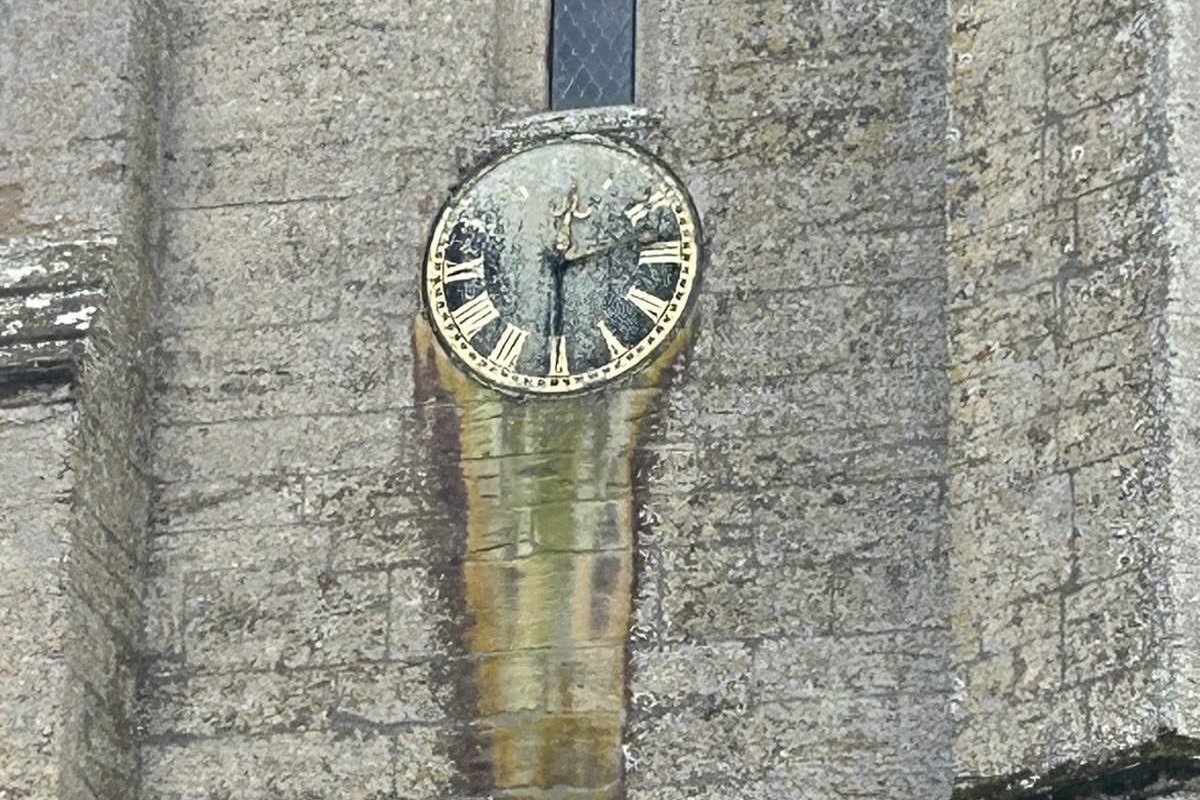
The clock face, one of the oldest in the country will be restored
|ST CATHERINE'S CHURCH MONTACUTE
Founder of the Save the Parish campaign group The Rev Marcus Walker said the investment was an "excellent" step to support "hard-pressed parishes of some of the burden of maintaining our wonderful ancient buildings".A
Meanwhile, in Northern Ireland, four historic churches have also received a funding boost to tackle urgent repairs.
The National Churches Trust (NCT) will administer £200,000 to help address a range of critical structural and fabric repairs at four church buildings.
The churches that will receive the support are Mount Merrion Parish Church, Belfast; Bloomfield Presbyterian Church, Belfast; Whiteabbey Presbyterian Church, Newtownabbey; and Seymour Street Methodist Church, Lisburn.
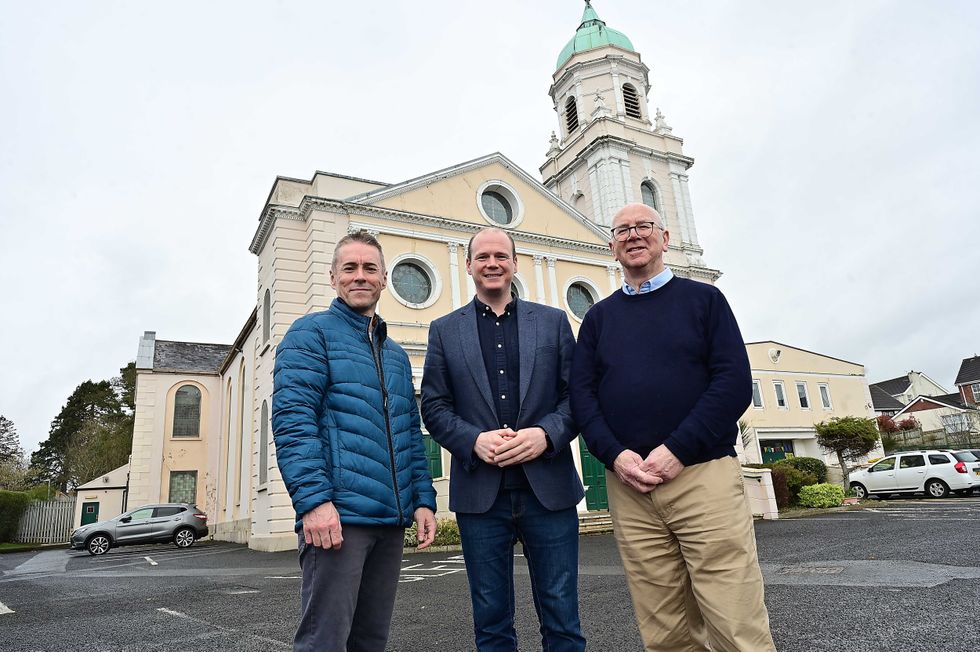
Minister Gordon Lyons with Kerry Rooney, National Churches Trust and Richard McChesney, outside Whiteabbey Presbyterian Church in Newtownabbey
|PA
Research from the National Centre for Social Research found just one in eight Christians saying they attend a religious service at least once a week.
The figure is similar to the 12 per cent recorded during the pandemic in 2021, and well below the 20 per cent recorded in 2018, before the public health emergency.
Only five per cent of all British adults now attend a Christian service weekly, compared with eight per cent in 2018.
Just four per cent of those aged under 35 attend a Christian service at least once a week, in line with proportions recorded since 2017 (which range between three per cent and five per cent), with no evidence of a recent increase in church attendance.