









The May Bank Holiday weekend witnessed a spade of violent crime and stabbings across the UK, which critics have attributed to a failing of the Labour Government to maintain order.
Between Friday and Monday, a teen was fatally stabbed in Hackney, in East London, while another survived an attack in Clapham, South London, and a third was rushed to hospital following a brawl on Brighton seafront.
Further disorder unfolded at Hampstead Heath’s Parliament Hill Lido where the centre was closed after a rowdy confrontation.
Chris Philp, Shadow Home Secretary, attributed the spade of attacks to a failing of the Labour Government, citing an immense strain on police resources.
He told GB News: “Labour has lost control of our streets in recent days as feral youths, often armed with knives, are running amok.
“The violence we saw over the weekend is completely unacceptable, and my thoughts are with the family of the boy who was stabbed to death in Hackney.
“Crime and antisocial behaviour are at very high levels, and thanks to this Labour Government, there are 1,300 fewer police officers on the beat. It is no wonder the public feel so unsafe."
The MP for Croydon South insisted the Conservatives have a plan to "take back our streets", with pledges to appoint 10,000 extra police officers and facial recognition systems, should they get into government.

The bank holiday weekend saw a surge in knife related and violent crime
|GETTY
Mr Philp highlighted a need to triple the use of stop and search to target drugs and knives on streets - a measure he said would "save lives".
The fatal stabbing of a teenage boy in Hackney on Monday evening saw officers and paramedics respond, but he sadly died at the scene.
Police were called out after reports of a stabbing and possible gunfire on Towpath Walk, following disorder that began at a house party on the same road, with onlookers recording the incident on mobile phones.
Meanwhile on Friday, a 17-year-old boy suffered stab wounds during a fight among teenagers in Clapham Common, whose injuries were assessed as neither life-changing nor life-threatening.
LATEST DEVELOPMENTS
Nine were arrested in relation to the incident, said to have taken place during a music event promoted widely via TikTok posts.
Another teen was stabbed during a large fight on Brighton seafront among crowds of people packed outside Shelter Hall on Monday evening.
The victim was rushed to hospital, where his injuries were deemed to be “superficial”, police confirmed - meaning he suffered cuts to his skin, but not deep tissue.
Hampstead Heath’s Parliament Hill Lido was forced to close after a fight broke out during hot weather on Monday, with reports a person had hit another over the head with a vodka bottle, and individuals found with knives.
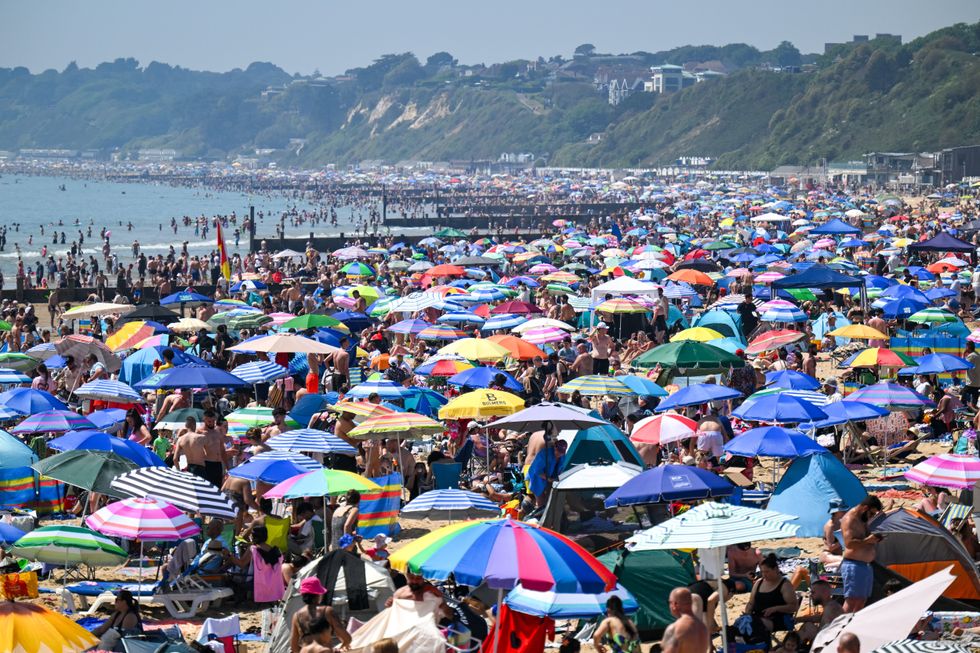
During periods of warmer weather, knife crime and violent crime averages around 14 per cent higher
| GETTYStudies analysing years of police data demonstrate the link between violent crime - including harassment and weapons possession - and higher temperatures.
During periods of warmer weather, such crime averages around 14 per cent higher when temperatures exceed 20C, compared to when temperatures drop below 10C.
Experts attributed the rise in crime to the presence of more people on the street, with more alcohol consumed, and "more potential victims".
Ken Hinds, knife crime campaigner, told the People's Channel: "Social media has increased both the speed and scale of the violence, amplifying conflict, humiliation, retaliation, and pressure among young people in ways we have never seen before.
"I can go onto the streets as a Street Father, intervene, de-escalate situations, and even take weapons away. But enforcement alone will never solve this crisis."
Mr Hinds highlighted underlying issues - low self-esteem, trauma, poor mental health, lack of belonging, and emotional instability - and claimed failure to address them would result in cycles of violence and reoffending.
"We need early intervention and community-led support systems that encourage young people to speak before anger turns into irreversible decisions.
"Punishment without emotional development simply creates more recidivism", he added.
"If we truly want safer streets, we must break the chain at its source by investing not only in consequences, but in emotional intelligence, healing, guidance, and hope."
In response to the heightened risk of violent incidents, 48 hour police dispersal orders have been implemented across the UK, with one deployed in Southend area.
It comes after reports of "significant" numbers of young people planning to travel to Southend, with social media posts implying youths will be carrying weapons.
An Essex Police spokesman said: "We expect the vast majority of people to enjoy the seafront responsibly.
"However, those who do not should expect to be identified, stopped and, where appropriate, arrested.
Section 60 powers, which allow officers to stop and search individuals without suspicion, aim to prevent serious violence and the carrying of weapons.