










Author Kate Clanchy has told GB News how she has fought back against "petty" and "envious" critics who had her cancelled four years ago.
Sitting down with Free Speech Nation host Josh Howie, the award-winning author recalled how colleagues in her former publishing house "saw a nice, middle-class, liberal middle-aged woman" and wanted to "do her in".
In 2021, Ms Clanchy was caught up in a bitter dispute over her Orwell prize-winning book, "Some Kids I Taught and What They Taught Me".
She was accused in an online Goodreads review of using "racist and ableist descriptions of children".
TRENDING
Stories
Videos
Your Say
The online review then snowballed into a campaign of serious allegations, while her publisher failed to defend her, pressured her to apologise, and then issued a public apology without warning her.
Recalling how she became embroiled in such controversy, Ms Clanchy told GB News: "I had an anthology of poetry that kids had written, and then I had my memoir. It was a demonstration of power.
"And I think that if you look at what's happening with David Walliams now, his publisher hasn't said anything, and I think that was what was interesting about me.
"I'm not sure that the publisher should say anything."
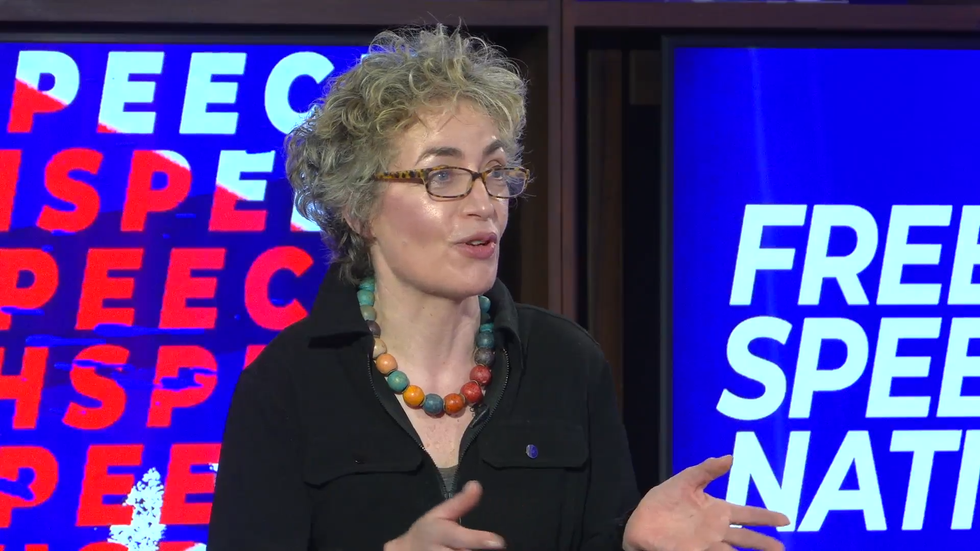
Author Kate Clanchy recalls being 'cancelled' by fellow colleagues over her award-winning book
|GB NEWS
She continued: "I think we should look at what the book is and if there's a mistake in the book, then the publisher apologises.
"Not if the publisher is not in charge of the character or the author, so I think it made a huge difference that they apologised for me. But that was the statement in itself, it showed that how soft they were, how easy that would be."
Asked by Josh what the "big shock" was for her upon investigating her own cancellation via freedom of information requests, Ms Clanchy said: "I think kind of how small it all was. I think a good thing to remember is that everyone pretended it was on huge principles.
"People kept saying, 'we have to pick on this woman because it's for the good of the publishing industry', and 'we have to scapegoat this individual'.
LATEST DEVELOPMENTS:
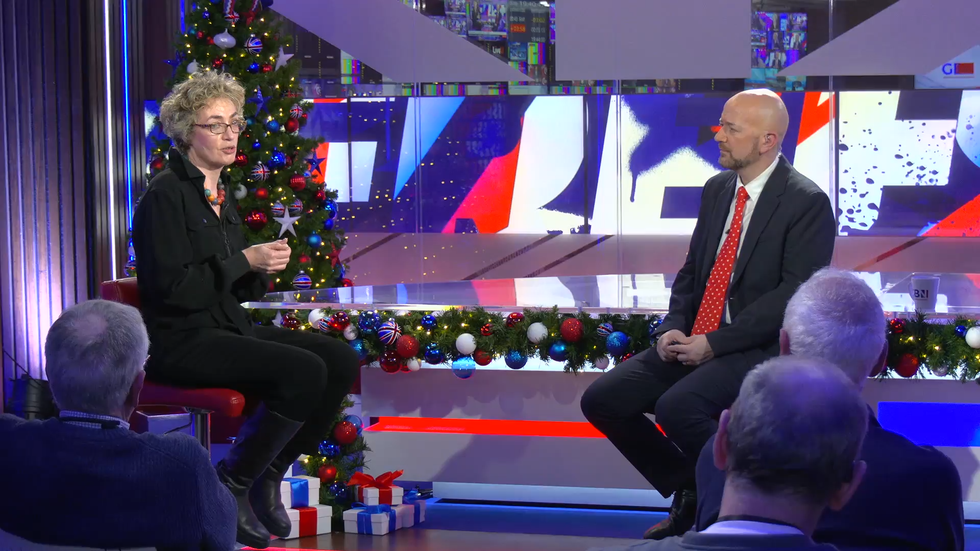
Ms Clanchy's book, Some Kids I Taught and What They Taught Me, was caught up in major controversy in 2021
|GB NEWS
"And we're all having a conversation about publishing and race, and I was expected to accept that and kind of be grateful, and I was expected to accept all the allegations against me."
She added: "And I think what was interesting, actually kind of painstakingly going through this was to see that it was individuals and probably not very many individuals.
"There were individuals on the outside who were being sort of amplified by Twitter, but also amplified by reports that were being made by the PR company into the publisher. So it all looked enormous.
"And then there were just a few individuals inside the publishing house, some of whom I knew well, moving against me. So it was more about really petty, small human jealousies being played out in this grander scheme.
"And I think that's maybe a thing to learn about it. Not that it shows that this principle was right or that principle was right, but maybe there weren't any principles.
"Maybe it was just human beings being really petty and envious and small, and maybe the best thing is to have a laugh at them."
Ms Clancy told GB News that those who ousted her were 'petty' and 'envious'
|GB NEWS
Making clear that those who sought to cancel Ms Clanchy "hadn't even read the book" and accused her of "using words I never did use", the award-winning author told GB News: "I hadn't even used the words they said I had most of the time.
"My publisher was extremely angry with me for saying that words should be taken in context, but words do actually mean things in context, and actually publishers spent a long time establishing that law that a word should be seen in context.
"It's actually an important piece of law that you can't you shouldn't quote out of context because it's taught rather than law.
"You can sue a newspaper for quoting you out of context, and that has been painfully established over 100 years.
"They're quite happy to casually throw it away for me, but they wouldn't throw it away for an author that was earning them more money."
She added: "Publishing was in a state where it could have a mobbing. There were some people at the top who had been there for a very long time - gents really not keen to give up their positions.
"And publishing is a very class-ridden profession. It's not a middle-class profession, it's an upper-middle-class profession.
"People come with lots of cultural capital, they come from really posh families, so there's kind of a top that's reluctant to move.
"And then in the 30 years that I was published, I sort of saw the middle dissolve, so all of those people that had quite good jobs being copy editors or publicists or people that did the newspaper clippings, people that did the proofreading, whole kind of layers and layers and layers of people in a publisher, you saw all of those jobs disappear or go out to freelancers and more and more pressure on editors. So they had more to do.
"And it was it was less and less possible for them to look at things individually, so there was a kind of a big discontented bottom, people that were being paid really badly and didn't have much hope of a more secure job. And then there were a lot of people who were reluctant to move.
"And what happens when you get a situation like that is you get a mobbing, because that way the top, the people at the top can have solidarity with the people at the bottom.
"And the person that you mob usually is somebody in the middle who seems quite happy, who has a little specialism of their own in someone like me."
Ms Clanchy said: "So I come up with a nice little solution, I do all this teaching, I'm bringing up these young voices, and they apparently got this problem of diversity.
"Well, here are these young voices, and here's nice middle-class liberal me, nice middle-aged woman, let's do her in there. And I'm not the only middle-aged lady I know that that's happened to."
Our Standards: The GB News Editorial Charter
More From GB News