











The Iran war is likely to increase the number of illegal migrants crossing the Channel, the head of the National Crime Agency (NCA) has warned.
Graeme Biggar, NCA director general, confessed the US-Israeli war against Iran could make organised immigration crime worse on UK borders.
He said: “Migrant demand to reach the UK unlawfully continues to be high, and the conflict in Iran is likely to increase the challenge.”
The NCA chief admitted that migration crises generally follow conflict, with people being displaced from their homes and fleeing to safety.
He continued by saying he was not “expecting” an “absolutely massive increase from Iran”, but “some of it will be in small boats”.
In his speech launching the National Strategic Assessment 2026 in Stratford, Mr Biggar said the majority of arrivals were nationals from the Horn of Africa, who have outnumbered Albanians and Vietnamese as the highest number of migrants coming to the UK.
He continued saying tackling people-smuggling networks remains the NCA’s top operational priority, making up around a quarter of its work.
However, he acknowledged the challenge of disrupting criminal activity largely based overseas, particularly where such actions are not illegal in those countries, but said the agency was seeing growing success.
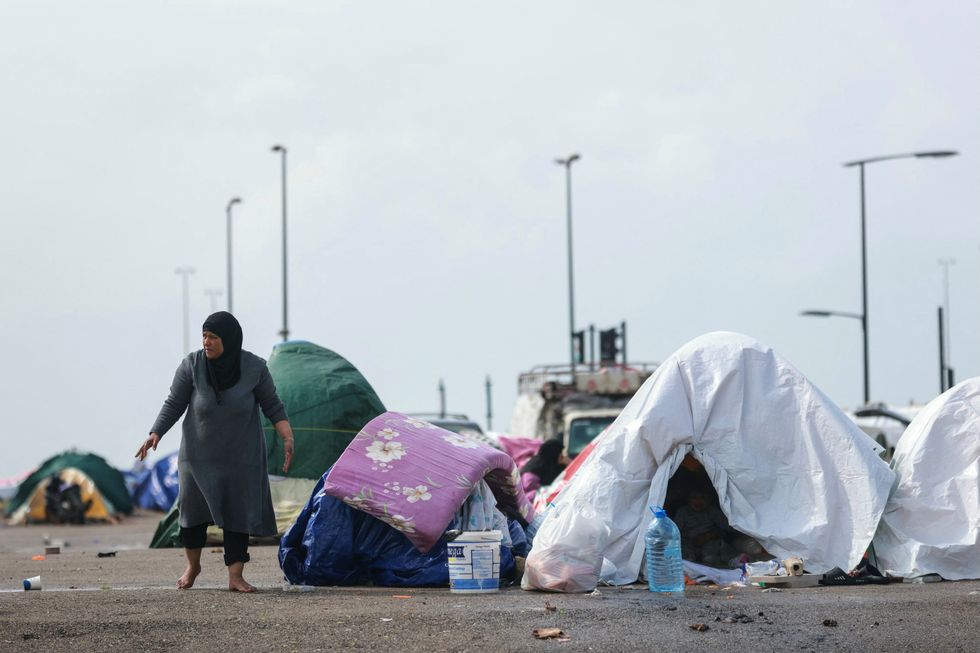
A displaced Lebanese woman on the seafront of Beirut after Israel issued evacuation orders across Lebanon
|GETTY
In 2025, officers and European partners seized more than 500 boats and engines, preventing tens of thousands of potential Channel crossings, while key smugglers were arrested and jailed.
He added that the NCA is targeting every aspect of the trade - from equipment and finances to communications, while maintaining a “relentless focus” on the threat despite continued high demand.
Working alongside Belgian police, Mr Biggar said NCA officers arrested a suspected key supplier in organised immigration crime - believed to have provided equipment used in around half of all Channel crossings in 2023.
He was later jailed for 11 years in January.
LATEST DEVELOPMENTS:
Mr Biggar said recent months have seen a series of significant arrests across multiple countries, including Iraq, Libya, Ethiopia, Turkey, Germany and France, with further action expected in the coming weeks.
He added that efforts are also focused on the UK-based elements of the networks, working with police and immigration enforcement to tackle illegal working and disrupt smuggling operations domestically.
The arrivals of small boats was up 13 per cent year-on-year in 2025, with over 45,000 people making the crossing from France to Britain.
With the weather beginning to improve, there is an expectation that small boat crossings will ramp up over the coming weeks as the sea is generally calmer.
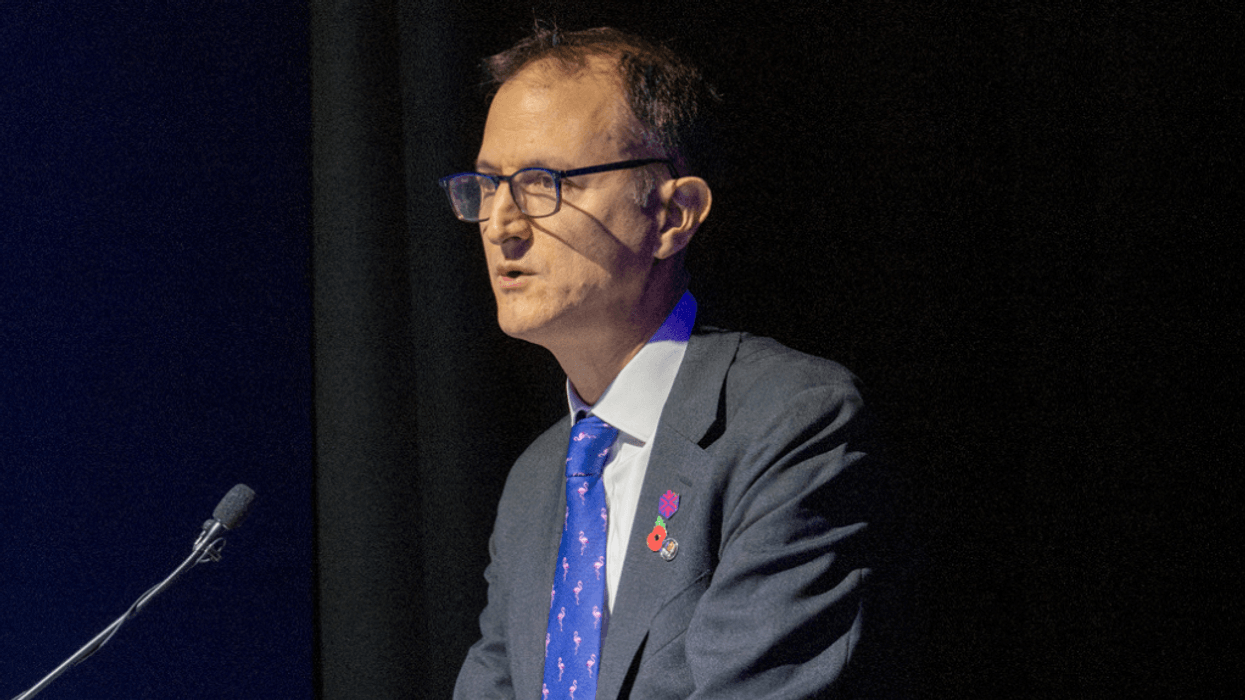
Graeme Biggar, National Crime Agency chief, launched the National Strategic Assessment 2026 in Stratford on Tuesday
|NATIONAL CRIME AGENCY
In the speech, Mr Biggar also addressed other key areas of crime - for instance, drugs and cyber-attacks.
On drugs, he said it was the “single biggest driver of serious crime in the UK”, with it fuelling violence and anti-social behaviour across the nation.
The NCA chief said new technology is making organised drug operations more sophisticated, such as making synthetic drugs and more covert smuggling of illegal substances across borders.
He concluded that the NCA and more broadly, the UK, “cannot take our eyes off the drug threat”.
For online crime, Mr Biggar described the rate of change as “most acute”.
With a string of high-profile cyber-attacks, such as the ones committed against M&S and Jaguar Land Rover, the crime chief warned that protecting systems is “not enough” and businesses need to extend beyond their tech to ensure their staff, ways of working and supply chains cannot be manipulated.
His overall assessment was that organised crime is becoming increasingly interconnected, with criminal networks collaborating across borders and diversifying their activities.
Global instability and new technology are accelerating crime, he said, with digital platforms not just enabling but actively driving criminal behaviour.