











Durham University has been accused of "anti-white discrimination" as British-Asian students are found to have been accepted with lower grades.
The Russell Group institution launched a new initiative that provides British Asian students from state schools with entry offers typically two grades below standard requirements.
The Asian Access programme, introduced for the first time this year, covers sought-after courses including psychology, law and politics.
Participants receive a complimentary summer school experience, with accommodation, travel expenses and meals all covered by the institution.
According to the university, the scheme "aims to support students who are typically underrepresented in higher education, and particularly at Durham".
Those who complete the programme successfully receive a guaranteed alternative offer with reduced grade requirements.
The initiative has sparked immediate controversy, with critics questioning whether such measures are necessary given existing university admission statistics.
Robert Jenrick, Reform Treasury spokesman, has condemned the programme as "a blatant case of anti-white discrimination".
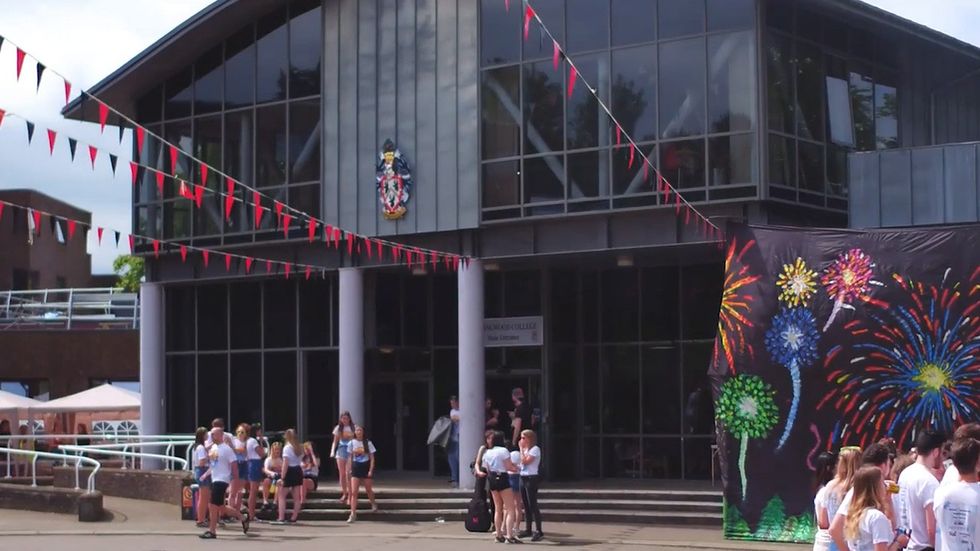
Durham University accused of 'anti-white discrimination'
|DURHAM UNIVERSITY
Speaking to the Daily Mail, he described the university's approach as "bizarre," arguing that British Asian students already outperform their white British counterparts academically.
"University admissions must treat students equally and stop trying to socially engineer outcomes by creating a two-tier system," he stated.
He pledged that his party would take action if it gains power.
"A Reform Government will end this nonsense and make our universities meritocratic once again," he declared.
LATEST DEVELOPMENTS
His intervention reflects growing political concern about contextual admissions policies at elite institutions, with questions being raised about whether such schemes achieve their stated aims of widening participation.
Official government figures appear to undercut the programme's stated rationale of addressing underrepresentation in higher education.
Data from 2024 reveals that 51.4 per cent of Asian state school pupils across England secured university places, compared with just 29.8 per cent of white students.
Chinese pupils recorded the highest acceptance rate at 66.1 per cent, whilst black pupils stood at 48 per cent.
These statistics demonstrate that Asian teenagers are already significantly more likely to gain university admission than applicants from other ethnic backgrounds, with more than half of sixth-formers successfully obtaining places.
Critics have seized upon these numbers to argue that lowering entry requirements for a group that already outperforms white students academically represents a fundamental contradiction in the university's approach.
Durham University has defended its approach, with a spokesman stating: "We encourage applications from talented students of all backgrounds.
"Our admissions decisions are fair, non-discriminatory and based on published entry criteria."
The institution explained it had reached an agreement with the Office for Students to boost numbers of British Asian students, who it maintains are underrepresented at Durham specifically, alongside other underrepresented groups.
The university emphasised that participants are selected from areas with low rates of progression to higher education.
Durham is not alone in facing scrutiny over such policies, as Oxford came under fire after data showed it admitted 16 per cent of black applicants who missed their required A-level grades over five years, versus just 6 per cent of white candidates.
York and Bristol operate similar contextual offer schemes.