




A “major gap” in Britain’s defences is leaving the country and its overseas territories exposed to ballistic missile attacks, military experts have told GB News.
Sources have told the People's Channel the UK remains entirely reliant on its allies in North America and Europe to help deter the terrifying rockets, a month after Iran fired two at the Chagos Islands.
They say the lack of anti-ballistic missile (ABM) defence systems represents a critical blind spot.
On March 20, the Islamic Republic launched two ballistic missiles towards the airbase on the Indian Ocean island of Diego Garcia, shared by the UK and US.
The US was fortunately able to shoot down one rocket while the other malfunctioned. Nevertheless, the attack proved to be a wake-up call in defence circles.
Israel warned the incident demonstrated the advanced capabilities of Iran’s missiles, claiming they could travel 2,485 miles — putting Britain itself in range of direct strikes, as Britain is 2,400 miles from the Islamic Republic.
Despite assurances from ministers there was “no intent on the part of Iran to target the UK”, Tehran’s ambassador to London, Seyed Ali Mousavi, chillingly threatened “every option would be considered”, including further strikes on British assets.
In such a scenario, Britain would be effectively helpless against a ballistic missile attack from Iran or any other hostile power.

A 'major gap' in defences is leaving Britain exposed to ballistic missile attack
|GETTY
“Our lack of anything like a proper, integrated, layered ABM defence is a major lacuna,” former British Army officer and defence analyst Simon Diggins said.
“There is no ballistic missile defence… we’ve got nothing,” retired Lieutenant Colonel Stuart Crawford concurred.
In November 2025, MPs on the Defence Committee found Britain was “nowhere near” the required level in deterrents and had “next to nothing” in integrated air missile defences.
The report also cautioned the UK may be failing to meet its Nato Article 3 obligations to “maintain and develop individual and collective capacity to resist armed attack”.
MORE DEFENCE NEWS
- Argentina scales up military amid fears over Britain's sovereignty of Falkland Islands: ‘We have no credibility!’
- The truth behind Britain's military recruitment crisis where servicemen are REJECTED for childhood injuries, lactose intolerance and acne
- The hidden tax blighting Britain's military of BILLIONS amid brutal cuts to UK armed forces: 'It's a complete con!'

On March 20, Iran launched two ballistic missiles at the Diego Garcia base on the Chagos Islands
|GETTY
Unlike other rocket projectiles, ballistic missiles fly in an arcing motion high into the upper atmosphere, sometimes into space, before plunging back towards their target at extreme speeds.
In their final moments, they descend steeply at more than Mach 10, leaving defenders with only seconds to react.
Ballistic missiles can carry a range of payloads, from conventional high-explosives for precision strikes to multiple nuclear warheads designed to split off and hit several targets at once.
The UK has no indepedent equivalent America's systems like the Patriot, THAAD and Aegis or anything like the Franco-Italian SAMP/T, all of which are capable of stopping an attack from such a weapon.

Ballistic missiles can carry conventional payloads from high-explosives for precision strikes to multiple nuclear warheads
|GETTY
Britain currently operates the Sky Sabre system, which uses the Common Anti-Air Modular Missile as a highly effective defence against aircraft, drones and cruise missiles. However, it cannot counter the high-altitude, hypersonic trajectories of ballistic weapons.
Throughout the Iran war, Royal Air Force pilots and ground crews also heroically defended regional allies and British assets by shooting down aerial threats. Yet, these efforts would again be largely ineffective against ballistic missiles.
The Royal Navy’s six Type-45 destroyers utilise the bleeding-edge Sea Viper system, technically capable of intercepting ballistic missiles.
However, these defences are “totally reliant” on the destroyers being war-ready, something that has been called into question recently following the glacial deployment of HMS Dragon to Cyprus.

Britain's advanced Sky Sabre system is ineffective against ballistic missiles
| GETTY“Of the six ships in that class, four are currently in ‘kit form’ in Portsmouth Harbour, HMS Duncan is also alongside in Portsmouth undergoing ‘routine maintenance, while the sixth, HMS Dragon, is now undergoing ‘maintenance’ in the Mediterranean, after its recent deployment of only three weeks,” Mr Diggins explained.
“In short, we do not have a reliable ship-based system,” the military analyst warned.
Lt Col Crawford warned, while a ballistic missile barrage on Britain was very unlikely, “things can change very quickly”.
He cited the once “sleepy post” of protecting the sovereign bases of Cyprus, which he previously commanded, suddenly becoming the target of Hezbollah munitions and the attempted strike on Diego Garcia.

The Royal Navy's detterent is 'totally reliant' on the the fleet being war-ready, which has been called into doubt recently
| PATo that end, the former senior officer declared ABM defences are “like car insurance”.
He said: “You have to have it, but you don't want to have to use it. Nobody takes a car out after 11 months of paying insurance on it and wraps it around a tree to get their money's worth.
“With defence, you don't complain that you haven't fired your millions worth of missiles. That's exactly what a deterrent is.”
Former Labour Defence Secretary Geoff Hoon was disturbed by the gap in the nation's defences.
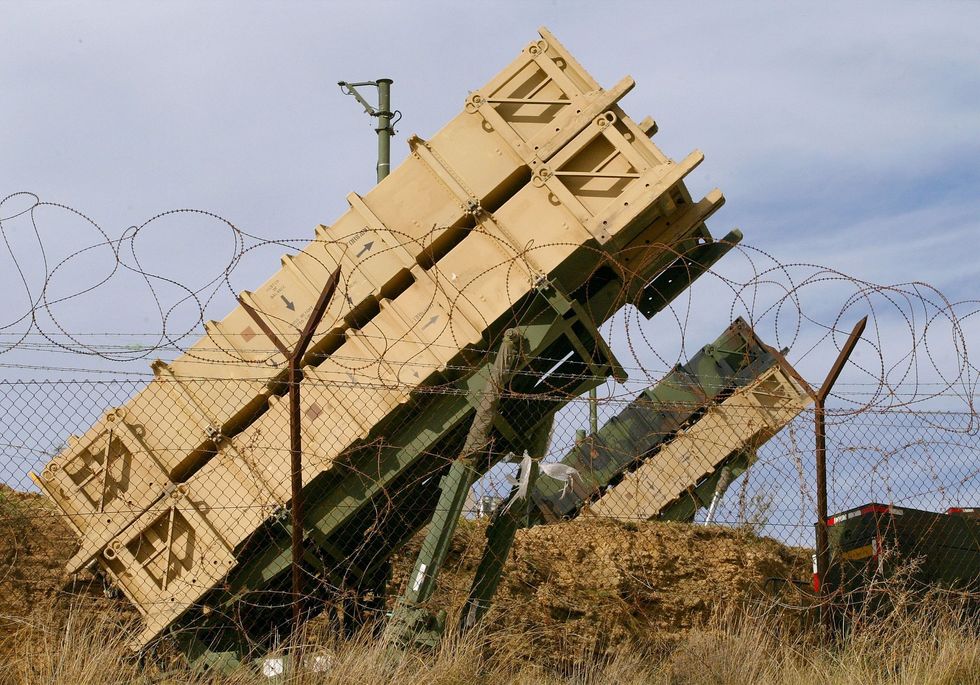
The UK would rely on allies to deter a ballistic missile attack, most likley the US using systems like Patriot batteries or Aegis
|GETTY
“Were I still in a position to influence these matters, there is no doubt that missile defence for the mainland of the United Kingdom would be the very first item on my defence equipment shopping list,” he commented.
“It seems surprising that smaller Middle East countries appear to have this capability, whereas the UK depends on a patchwork of equipment that might not be sufficient to deal with a sustained attack.”
Shadow Defence Secretary James Cartlidge agreed, telling Britain's News Channel: “There’s no question that the way warfare is rapidly changing means we need to upgrade our air defence capabilities, not least to counter more advanced ballistic missile systems.
“That’s why, as defence procurement minister, I approved the critical Sea Viper Evolution upgrade to enable our Royal Navy destroyers to counter the ballistic threat.

Military experts and top officials have expressed major concern over the UK's lack of independent ABM defence
|GETTY
“The problem is that Labour put procurement on hold, prioritising short-term penny pinching, and further progress on Sea Viper Evolution is now dependent on the long-delayed Defence Investment Plan. Instead of prioritising welfare over Defence, Keir Starmer needs to give our military the money they need to rearm, as rapidly as possible."
What Britain does have is advanced capabilities to detect incoming ballistic missile threats, with a suite of systems across the armed forces and a global scanning hub at RAF Fylingdales in the North York Moors.
The huge base’s powerful radar looks for launches and tracks incoming objects across vast distances, feeding data into allied systems. It has proved more than up to the task of altering friendly powers to such attacks.
If the home nations were to come under attack from ballistic missiles, the military would most likely have to rely on an allied system to shoot them down using information from Fylingdales.

The UK operates a suite of early warning systems including an advanced radar base at RAF Fylingdales
|GETTY
Even so, Mr Higgins cautioned: “If we are under ballistic missile attack, then so will our allies, and they may be rather busy.”
“It is also extremely unlikely that they would defend our non-Nato obligations, like Diego Garcia and Cyprus.”
The war in Iran and its fallout also exposed the potential fragility of the UK’s military alliances, with President Donald Trump being intensely critical of Britain’s initial unwillingness to aid in the conflict and lack of military might.
Addressing the “increasingly transactional” relationship, Mr Diggins warned: "A country that so blithely refuses to defend itself wins no prizes with Donald Trump’s White House… It is not as though defending against BMs is a remote threat."

Experts have warned that the UK must be more independent 'in light of the reliability of the US being put into question'
|GETTY
US foreign policy analyst, Dr Jack Clayton, advised alliances are “based on common interests and values, and there is a potentially significant divergence on this issue, as well as on Nato".
“With the US being the largest security partner to Europe and the West, it puts all the more pressure on others to increase their defence capabilities and be pragmatic in light of the reliability of the US being put into question,’ he added.
A Ministry of Defence spokesman said: “We have the resources we need to keep the United Kingdom safe from attacks, whether it's on our soil or from abroad. The UK stands ready 24/7 to defend itself, and as a founding member of Nato, we benefit from the Alliance’s collective defence capabilities, including its integrated air and missile defence systems.
“The UK operates a layered approach to air and missile defence, provided by Royal Navy, British Army and Royal Air Force assets equipped with a range of advanced capabilities, working in tandem with our NATO allies.
“This Government has made air and missile defence a priority after years of underfunding.
“That is why last June, following the Strategic Defence Review, we announced up to £1billion in new funding to strengthen our defences and keep the UK secure.
“This investment also boosts the UK’s contribution to Nato, ensuring we play our part in protecting our allies and ourselves.”
Our Standards: The GB News Editorial Charter