











Britain's toddlers spend more than two hours every day watching screens, new research has revealed.
A Government study has revealed that screens have become a near-universal fixture in the lives of Britain's youngest children - with 98 per cent of two-year-olds watching them every day.
The study, based on a survey of 4,758 primary caregivers, found toddlers spent an average of 127 minutes daily watching television, video and digital content.
This figure exceeds the World Health Organisation's recommended maximum of one hour by more than double.
When video games are included, daily screen exposure climbs to 140 minutes, with nearly one in five two-year-olds playing them.
The Department for Education commissioned the research as part of efforts to address concerns about early childhood development.
Education Secretary Bridget Phillipson has since said time spent in front of screens is "crowding out" activities such as "talking, play and reading that are so important for children's language development".
Labour is soon set to publish what it describes as "practical, non-judgmental" guidance for parents of under-fives in April, marking the first time ministers have issued official advice on the matter.
Ms Phillipson said digital devices have become "embedded in daily life" for families.
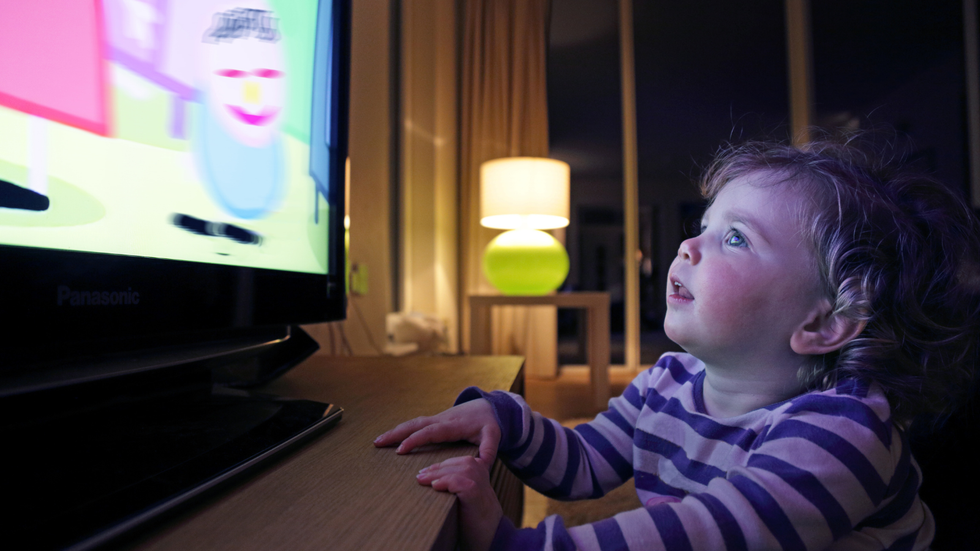
Toddlers spend an average of 127 minutes daily consuming television, video and digital content
|GETTY
"The question parents are asking isn't whether to use them, but how to use them well," she said.
The research uncovered a clear link between screen exposure and language acquisition in young children.
Toddlers averaging around five hours of daily screen time were able to say 53 per cent of 34 test words, compared with 65 per cent for those watching just 44 minutes.
Government-commissioned analysis identified 86 minutes as the threshold at which screen use had the most detrimental effect on language development.
BRITAIN'S YOUTH IN CRISIS - READ MORE:
Despite these findings, the study noted that today's two-year-olds do not appear to have smaller vocabularies compared with children surveyed between 2017 and 2020.
And the research also found major gaps in screen habits and home learning activities across different groups.
Children with black primary caregivers spent the most time on screens, averaging 213 minutes a day, followed by those of mixed or other ethnicities at 174 minutes.
Asian children averaged 156 minutes, while children from white families spent 131 minutes on-screen every day.
Reading habits also varied sharply by income and education, with 77 per cent of the wealthiest families reading to their children daily, compared with just 32 per cent of the poorest.
Dame Rachel de Souza, the Children's Commissioner for England, and Professor Russell Viner, a former chief scientific adviser to the Department for Education, will lead the panel developing the guidance.
A study published by the American Psychological Association in June 2025 warned that excessive screen time may cause emotional and behavioural problems in young children.
Dr Michael Noetel, an associate professor at Queensland University and one of the study’s authors, said: “We found that increased screen time can lead to emotional and behavioural problems, and kids with those problems often turn to screens to cope.”
Our Standards: The GB News Editorial Charter
More From GB News