

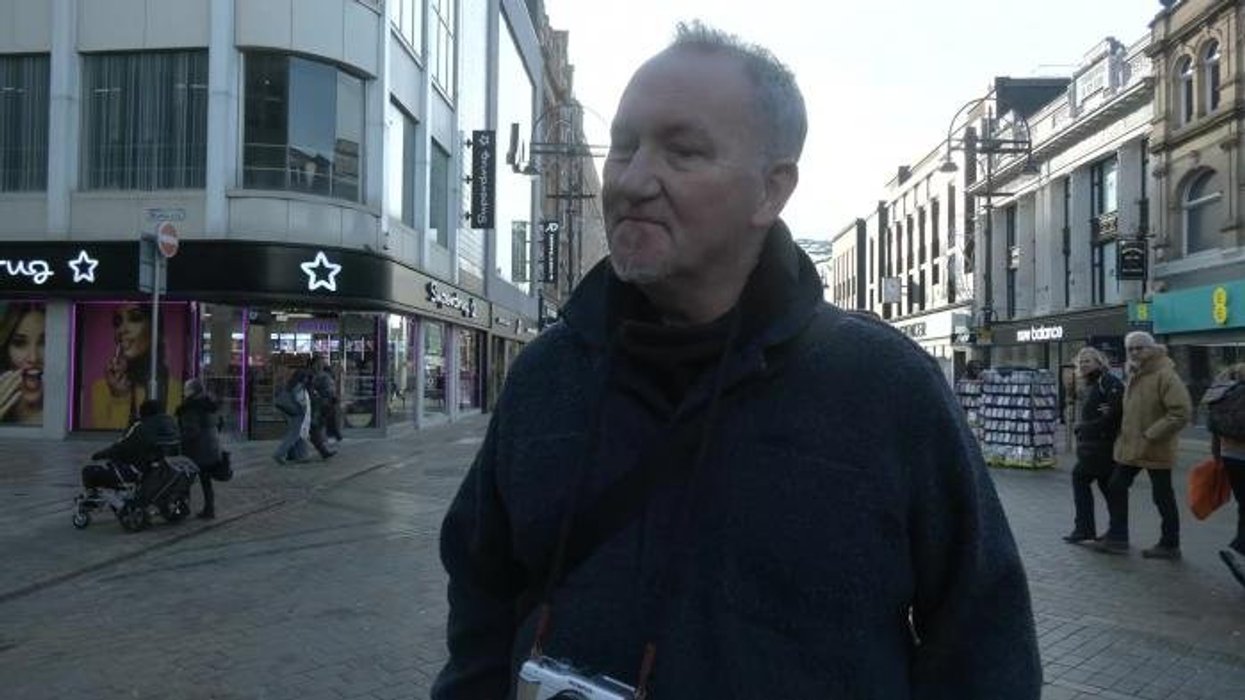









For decades, politicians and business leaders from the north of England have voiced fears of a "brain drain" to the south — despite numerous attempts to redress geographic inequality.
But GB News has found northern cities fighting back against this trend that is costing the region much of its top talent.
As the world's second-biggest financial district, London is headquarters to some of the biggest companies in the world, with the likes of Shell, HSBC and Unilever choosing to base their offices in the capital.
MPs of all political stripes have attempted to bridge the gap, such as Boris Johnson's pledge to "Level Up" the UK, which resulted in just £2.5billion out of a promised £10.6billion being spent on local regeneration schemes.
Meanwhile, Labour is aiming to address the issue by remedying the scale-backed High-Speed Rail 2 (HS2) project with Northern Powerhouse Rail — an initiative aiming to improve train connections across the Pennines and restore lines that have fallen behind the times.
Chancellor Rachel Reeves has committed more than £1billion for the delivery of NPR, much to the support of local leaders.
Bev Craig, leader of Manchester City Council, said she has "campaigned long and hard for much-needed investment in rail in the city across the North", adding the project will "create and support jobs, regeneration and other opportunities".
Will this be enough to reverse the so-called "brain drain"? A study published last year by the Institute of Fiscal Studies (IFS) found two-thirds of top academic achievers from outside London leave their hometown by the age of 32.
TRENDING
Stories
Videos
Your Say
The think-tank also found one in eight pupils in the top five per cent of GCSE results are from London. By age 32, one in four of the brightest minds live in the capital.
Zoë Billingham, director at IPPR North, insisted more work still needs to be done to resolve this issue.
"The Government has certainly made welcome progress in supporting northern cities," she said. "IPPR North would call for further fiscal devolution and cultural devolution, so that local leaders can make spending decisions based on local priorities and deliver better opportunities for young people."
Between 2023 and 2025, the North received £450million in culture funding, equivalent to £28 per person. Yet during the same period, London received £519million, or the same as £57 per person.

Rachel Reeves announced a £1.1billion package to support the delivery of the Northern Powerhouse Rail
|PA
Despite the disparity in funding, cities like Manchester, Leeds, Newcastle and Liverpool have wrestled some of the power back from London.
Leeds has drawn up an ambitious 10-year delivery plan, which is estimated to generate £20billion in economic growth and create 100,000 new jobs in sectors such as financial and professional services.
Jonathan Pryor, deputy leader and executive board member for economy, transport and sustainable development at Leeds City Council, said the city has a "remarkably strong and resilient economy".
However, Leeds is still regarded as the largest city in Western Europe without a mass transit system — a major consideration for young minds looking to move for work.
In Newcastle, major regeneration projects are being approved by North East Mayor Kim McGuinness. A recent £1.85billion expansion of the Tyne & Wear Metro shows the importance of investing in transportation.
Mrs McGuinness has also overseen the £8.5million expansion of Newcastle College Energy Academy, which provides training for jobs in green energy.
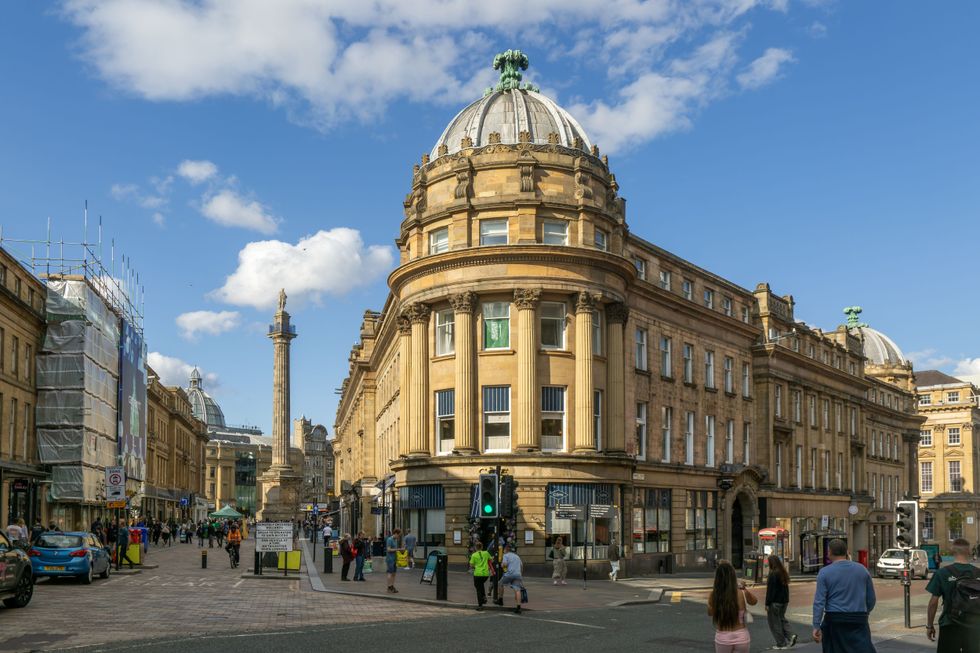
Newcastle city centre has seen considerable regeneration over recent years
|GETTY
Meanwhile, Bradford was named Britain's City of Culture last year and has since recorded a significant rise in visitor numbers. Liverpool also boasts one of the country's busiest ports, while Hull is often cited as the UK's "broadband capital" and a pioneer in digital infrastructure.
However, it is Manchester that has paved the way for growth in the North. Between 2011 and 2012, the BBC relocated several key functions, and 1,700 jobs, to MediaCity in Salford Quays, which also houses offices for ITV and Warner Bros.
Finance has been another major driver in Manchester's growth. The Bank of New York Mellon has relocated notable operations into the city's business districts, while Vanguard chose the area for its first UK office outside of London. And that is without mentioning two of the globe's biggest football clubs, in Manchester United and Manchester City.
More recently, the mayor of Greater Manchester, Andy Burnham, unveiled major plans to "reindustrialise the birthplace of the industrial revolution".
The "Manchesterism" proposal singles out five "growth clusters" in Greater Manchester. Each cluster, which includes artificial intelligence and manufacturing, will be dedicated to developing a specific industry to take the Manchester's economy over the £100billion mark.
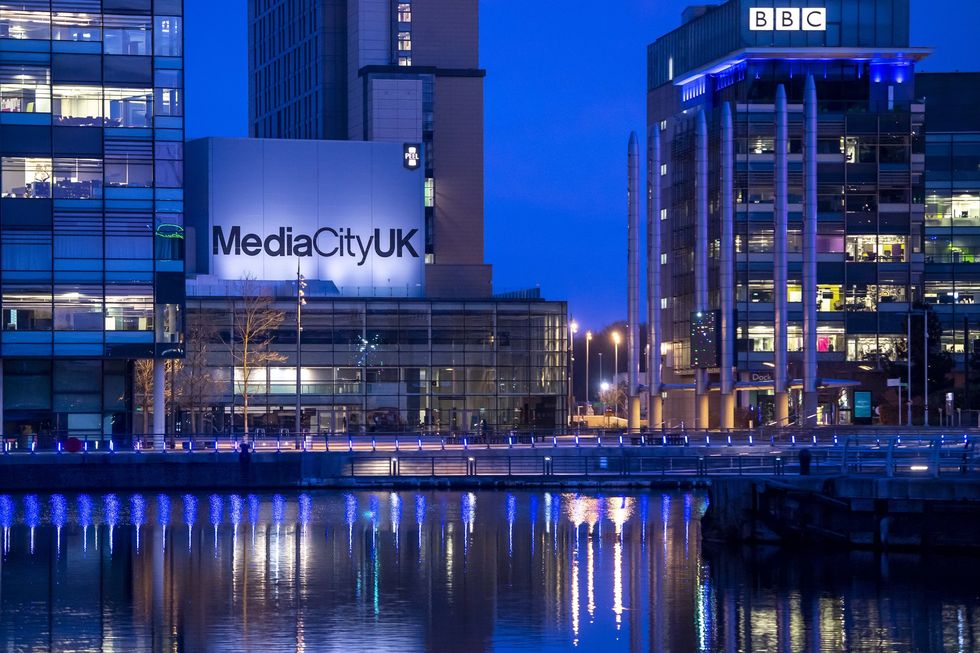
Salford's Media City now leads the country for creative and technology industries
|GETTY
The plans mirror what the statistics show. Manchester has been the third-fastest growing economy in the UK since 2024. And the city's overall economy is projected to grow at approximately 2.5 per cent per year.
Moreover, Manchester is home to five major universities that teach an estimated 100,000 students. Crucially, 51 per cent of students who study in the city choose to remain after graduating, while 57 per cent who leave the "Rainy City" for studies elsewhere end up returning. That shows signs people could be starting to see Manchester as a "London of the North".
"Greater Manchester has benefited from more than a decade of strong, devolved leadership which has delivered real change from transport and skills to housing and public health," Mrs Billingham said.
"Anyone from Manchester can tell you how much has changed in the last few years and it is now attracting new workers and companies."
Former University of Salford student Immy Hall, 24, told GB News: "I saw lots of change when I was there. It's great for restaurants, and there's always new bars and things opening up."
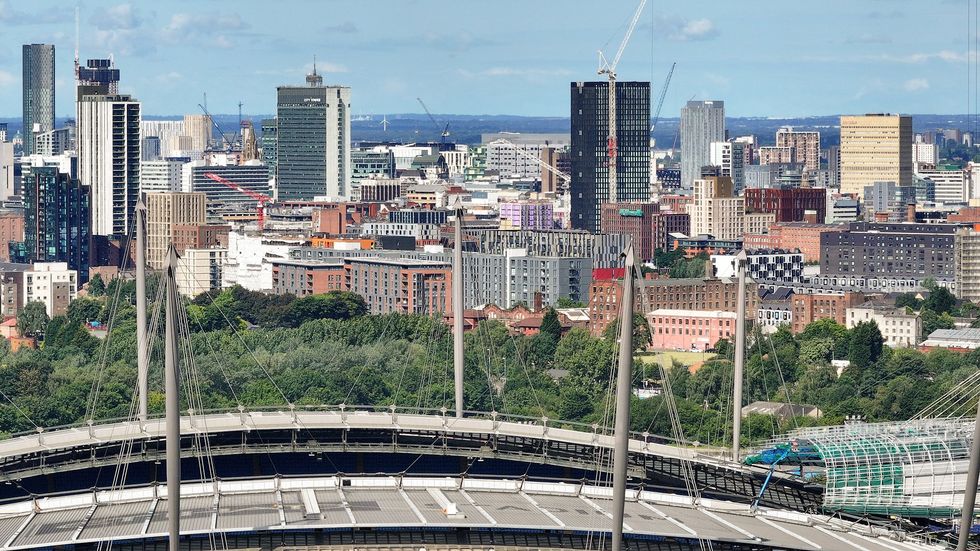
Manchester's skyline is ever-evolving as high-rises continue to be erected
|GETTY
Another former resident pointed to "large construction in the centre", additionally noting the city's focus on "Post-Covid pedestrianisation and Europeanisation of central areas".
The Sustainable Materials and Manufacturing Centre (SMMC) at Atom Valley by the M62, which will be completed this year, is expected to create 20,000 jobs, 7,000 homes, and 1.6 million square meters of employment space for high-tech manufacturing companies to scale up their operations.
Other areas of the North continue to be pegged back. The North West, along with the West Midlands, have now overtaken London in child poverty rates, according to IPPR North’s State of the North 2025 report.
Regarding aspiring youngsters, the think-tank stated: "Few participants in our focus groups envisaged staying in the North as they got older. People felt they needed to move away to succeed."
IPPR North revealed inner east London, inner west London and outer London have the three highest percentages of workers in "higher professional" roles.
Regeneration projects are not always effective, either. In Sheffield, Britain's fourth-largest city, half of the retail units built during a £470million city centre redevelopment remain vacant.

Former University of Salford student Immy Hall said of Manchester: 'There's always new bars and things opening up'
|So what is stopping the North from truly flourishing? For young talent, there are more higher-skilled positions for those looking for their first foray into the world of work.
Universities UK analysis shows 21 per cent of new graduates made their start in the job market in Greater London. Greater Manchester was second, with just 4.9 per cent.
"I would consider moving to London because I did interior design, that's an art-based career, and a lot of the design jobs are London-based," Ms Hall said.
Another individual told the People's Channel: "(There are) so many opportunities in London to go far in your career, meet connections and friends. There doesn’t seem to be as many big opportunities coming out of the North."
A third explained: "Friends of mine have moved down to London recently. Their reasons are very similar; in their industries, there’s much more opportunity and higher wages in London."
The IFS found young workers can expect to earn 15 per cent more in London than in the average Travel to Work Area (TTWA), while pay progression is also faster in the capital, particularly for graduates.

A fifth of new graduates made their start in the job market in Greater London, showing the migration of young talent to the capital
|GETTY
Nevertheless, the rising cost of living, which has affected workers nationwide, means wages in real terms make London least attractive.
"Although London comes out on top for wages, graduates will also consider cost of living differences between London and northern cities when choosing where to live and work and broader measures of quality of life," Mrs Billingham said.
She referenced a study published by Centre for Cities this week, showing in several towns and cities in the North, including Warrington, Barnsley and Wakefield, disposable incomes have risen twice as fast as the rest of the UK over the past decade.
Marketing agency Think Orion revealed London's average annual pay is £51,662, compared to less than £35,000 in Manchester, Newcastle, Liverpool and Sheffield.
However, Nottingham has a 420 per cent higher average disposable income than London, according to ABC Finance.
Additionally, the Cost-of-Living index, which generates a score out of 100 based on a variety of expenses to demonstrate how expensive each city is to live in, puts London at the top with 89.55.
York was the only Northern city in the top 10, at 77.89, while Manchester and Leeds sit 11th and 15th, respectively. Newcastle ranked 26th, with 69.68.
"There is certainly a perception that moving away would provide more opportunity," Mrs Billingham said. "We expect this perceived and real opportunity gap to close in the future."
That perception certainly persists for many people.
One northerner explained: "Where I go next will be more based on where there are jobs rather than where I would actually like to live. I think for my field, there are more opportunities (in London) but that’s not the case for every career."
Olly Henley, a Northumbria University graduate, detailed why he chose against moving to the capital, stating: "Rent and living costs are high; I can live at home up north and save up to buy a place of my own. I am close to family up here and had an opportunity in the North straight out of university.
"I like the countryside, there is lots of that up here, and I can have a car. There's not so much freedom to do that and travel to places outside of London when you live there.
"I think the main takeaway is not wanting to be too far from family and what I have up here."
If the career involves high-tech start-ups, media creativity, logistics or green energy, then maybe the North can offer just as high a ceiling as the capital.
"If the devolution of power and resources continues at its current rate, we would hope to see cultural funding fairly distributed across the country alongside a longer-term vision of the country where each region has its specialism, like we see in other countries like Germany," Mrs Billingham concluded.
"There is no need for London as the capital city to be the capital of everything and we’d all be better off for it."
Our Standards: The GB News Editorial Charter
More From GB News