







An inquiry into the deadliest Channel crossing on record has said the small boats crisis “must end” to prevent further deaths, as it concluded some of the 30 victims could have been saved in the tragedy.
The independent probe found “systemic failures, missed opportunities” and “chronic staff shortages” in the UK’s maritime response contributed directly to the failure to rescue people.
The tragedy occurred when a crowded inflatable boat capsized overnight on November 23, 2021, leaving just two survivors who were discovered in French waters nearly 12 hours after the first calls for help.
The inquiry, led by Sir Ross Cranston, identified 27 men, women and children among the dead, while four people remain missing, and said “some of those deaths were avoidable”.
TRENDING
Stories
Videos
Your Say
Sir Ross said the practice of small boat crossings “must end”, and that “apart from other reasons, it is imperative to prevent further loss of life.”
Home Office figures show there have been 157,058 people who have arrived after making the dangerous journey by small boat to the UK between November 24, 2021 and February 3 this year.
The inquiry was first announced in November 2023 after a report into the incident by the Marine Accident Investigation Branch’s found the boat was “wholly unsuitable and ill-equipped”.
In its final report published on Thursday, the inquiry set out three key reasons some of the deaths were avoidable, including how people smugglers provided an “unsuitable” craft which they crowded with at least 33 people, many of which died.
A French Navy vessel, which was closest to the boat, failed to respond to a mayday message, further delaying the search.
French police initially said the crew denied having received the message, but HM Coastguard radio recordings show the ship was using the same channel.
As such, it is now involved in an ongoing criminal investigation in France.
Meanwhile the UK coastguard made a “number of flawed decisions” for the rescue search operation into the incident known as “Charlie”, which led to it being ended early on November 24 because of what was described as “failures in record keeping”.
There was also a “widely held belief” within the Coastguard that callers from small boats “exaggerated their level of distress”, the report said.
The report added: “If the search had continued throughout that day, some of the deaths would have been avoided.
“These members of the HM Coastguard were placed in an intolerable position because of chronic staff shortages at Dover and other deficiencies.
"These were known about for some time, but no effective action had been taken to alleviate them. This represents a significant, systemic failure on the part of Government.”
One of the victims was believed to have died just half an hour before rescue, the inquiry had heard.
In hearings over four weeks in March last year, the inquiry was told how the boat left the French coast shortly after 10pm on November 23 and around three hours into the journey it became “swamped”.
The inquiry’s counsel, Rory Phillips KC, detailed multiple distress calls made from the boat to authorities, but the incident was mistakenly marked as resolved and “no-one came to their rescue”.
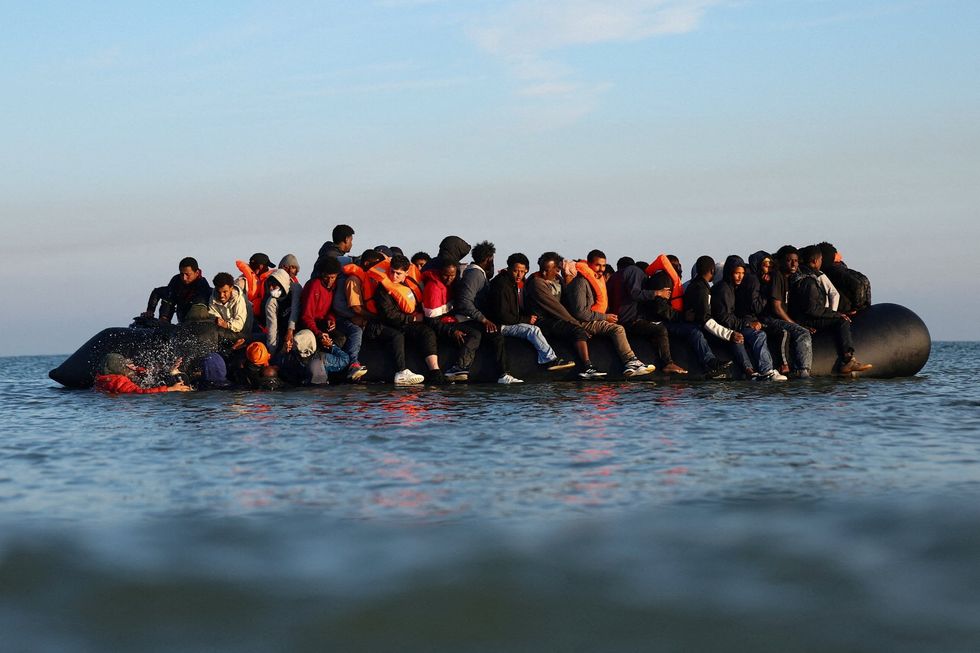
Droves of migrants make the perilous journey across the Channel
|Reuters
Several calls were made by 16-year-old Kurdish boy Mubin Rizghar Hussein, who was known to have died that night alongside his mother and two sisters.
The report said between 3.17am when the likely last call from Charlie ended, and 3.33am when a WhatsApp message was sent by HM Coastguard to Charlie, which was never delivered, all of the passengers on board the dinghy went fully into the water.
One of the two survivors of the tragedy gave evidence during the hearings, Issa Mohamed Omar, who described how he kept moving to survive the cold water.
He said: "In the morning I would say around 10 people were still alive. It’s a harrowing experience and I just don’t want to remember.
“All night I was holding to what remained of the boat, in the morning I could hear people screaming, it’s something I cannot forget in my mind.”
Cold water expert Professor Michael Tipton concluded that while some of those on board may have drowned immediately, it is likely the majority of victims died over a long period, by sunrise at 7am and between sunrise and the rescue in the afternoon the next day, the report said.
During inquiry hearings last year, many families of the dead and missing paid tribute to their loved ones throughout proceedings.
Rasul Farkha Hussein had said he hopes the inquiry will find his missing son, Pshtiwan Rasul Farkha Hussein, and that he is certain he is alive somewhere.
He said: “He was in cold water surrounded by dead people for so long it may be the case that he has lost his mind and does not know that he should call his parents.
“If someone finds him and he contacts us, our lives would be saved and filled with joy.”
Elsewhere, the Home Office’s former director of Clandestine Channel Threat Command, Dan O’Mahoney, had told the inquiry that a key part of aerial surveillance in the Channel, which can operate in adverse weather conditions, is now in place.
He claimed that if the circumstances of that night happened again, he believed “the outcome would have been different”.
The inquiry’s report found that “much has improved” since November 2021 in terms of staff and assets for HM Coastguard, but set out 18 recommendations relating to rescue operations for small boat crossings and mass casualties generally.
It also highlighted the need to address structural issues for UK organisations over maritime search and rescue.
More From GB News