







Britain’s economic growth is forecast to fall below one per cent next year as rising unemployment and escalating energy costs linked to the Middle East conflict continue to weigh on the economy.
The Paris-based Organisation for Economic Co-operation and Development (OECD) said UK gross domestic product would expand by just 0.9 per cent in 2026, down from 1.4 per cent growth in 2025.
It also projected unemployment would climb to 5.5 per cent as economic conditions weaken.
The OECD said the slowdown was being driven primarily by the continuing US-Iran conflict, which has pushed oil and gas prices higher across global markets.
Despite the weaker outlook, the latest forecast represents an improvement on the organisation’s March projection of 0.7 per cent growth, which was issued shortly after the conflict began.
The think-tank warned the disruption to energy markets continued to place major pressure on advanced economies, with Britain remaining particularly vulnerable because of volatile fuel costs.
Chancellor Rachel Reeves defended the Government’s economic strategy despite the deteriorating outlook.
She said: "The conflict in the Middle East poses a significant challenge to the world economy. Despite this, the OECD now expects UK inflation to be lower and growth higher than previously thought."

OECD warns UK growth to fall below one per cent as unemployment rises
| GETTYMs Reeves insisted ministers would continue pursuing their current fiscal approach.
"We have the right economic plan, and changing course would put that progress at risk, with families and businesses paying the price. Through stability, investment and reform we will build a stronger more secure Britain."
The OECD backed Labour’s restrictive fiscal strategy, which aims to avoid artificially stimulating economic activity through Government spending and taxation measures.
It urged ministers to continue pursuing fiscal consolidation through a combination of higher revenues, spending restraint and productivity-focused investment.
Britain’s budget deficit is forecast to narrow from 5.5 per cent of Gross Domestic Product (GDP) last year to 4.4 per cent by 2027.
LATEST DEVELOPMENTS
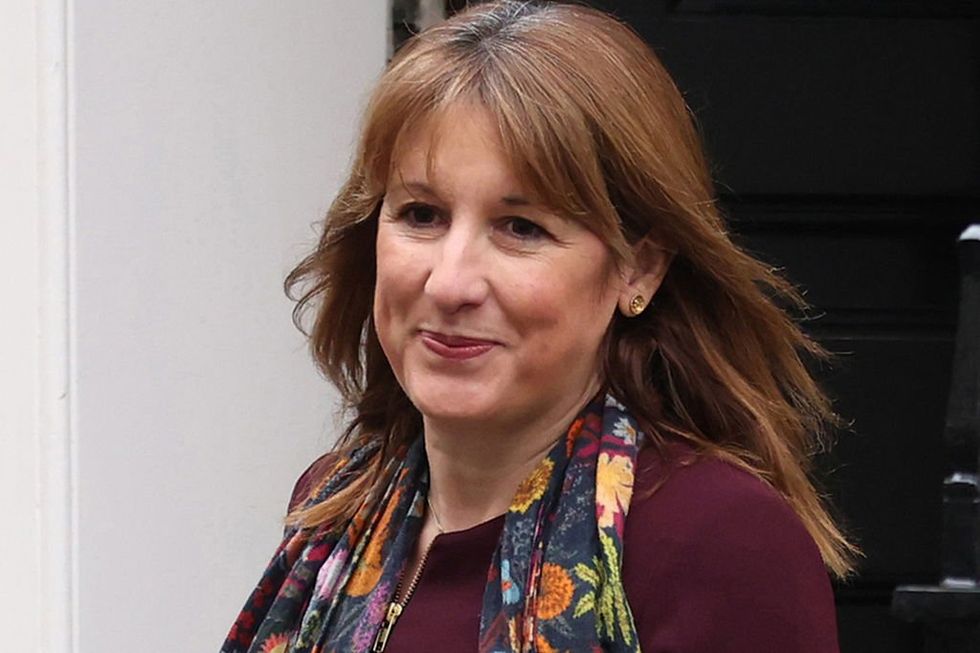 Chancellor Rachel Reeves has faced criticism for the tax levels implemented | GETTY
The OECD said this would represent one of the largest fiscal tightenings among advanced economies.
They stated: "The ongoing fiscal consolidation through a combination of revenue-raising measures, spending cuts, and productivity-enhancing investments remains necessary to rebuild buffers."
It also called for further structural reforms aimed at strengthening Britain’s long-term economic capacity.
"Planned structural reforms to further expand supply remain necessary, including delivering on the overhaul of infrastructure planning and the simplification of financial services regulation."
The OECD warned the global economic outlook could deteriorate sharply if the conflict continues into next year.
Worldwide growth is expected to slow to 2.8 per cent from 3.4 per cent in 2025 under the assumption that key shipping routes reopen in the near future.
However, the organisation warned prolonged fighting could reduce global growth to just 2.1 per cent this year and 1.8 per cent in 2027.
The OECD said such a scenario could push energy-dependent economies into recession.
Stefano Scarpetta, the organisation’s chief economist, said: "The consequences would be global but could prove especially severe for developing economies with limited energy reserves, higher shares of energy and food in household consumption, constrained fiscal capacity and weak social safety nets, low private savings buffers and more fragile currencies."
The OECD also warned Britain’s poorest households remain particularly exposed to rising energy prices.
According to the organisation, the lowest fifth of earners spend 8.5 per cent of their income on energy bills, more than double the proportion recorded in Australia.