








HM Revenue and Customs (HMRC) has admitted millions of Britons are being pulled into higher tax brackets due to thresholds being left "unchanged" over multiple years.
Chancellor Rachel Reeves has doubled down on fiscal drag, introduced under the Conservative Government, which occurs when wage growth or inflation pulls higher tax brackets while tax allowances are frozen.
Fresh data from HMRC reveals that the number of Britons paying the 40 per cent income tax rate has surged dramatically since the start of the decade.
According to the figures, 5.76 million people fell into the higher-rate bracket during the 2023/24 tax year. This marks a substantial jump from the 3.83 million who paid the rate in 2019/20, representing a 50 per cent rise over four years.
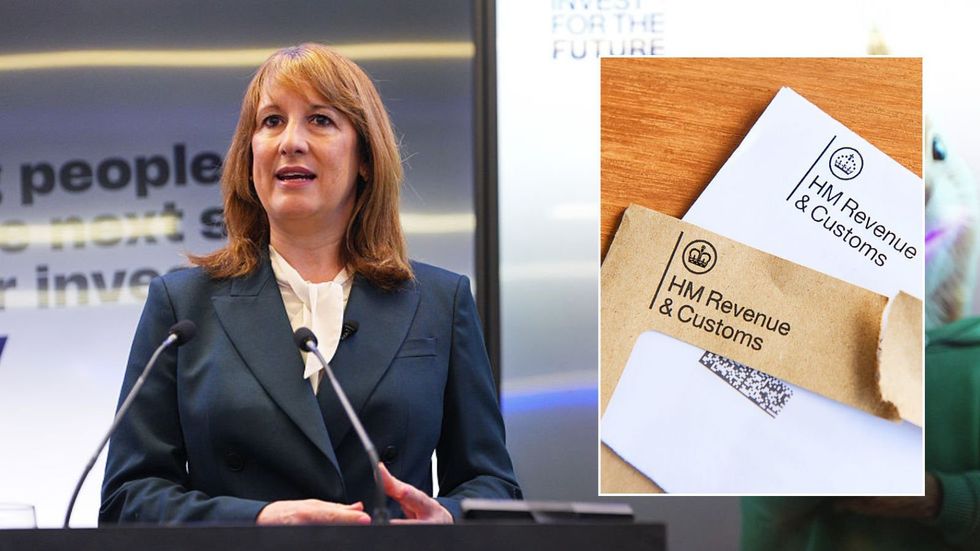
The Chancellor has backed freezing tax thresholds to bolster the Treasury's coffers
|GETTY
The year-on-year increase was particularly striking, with 654,000 additional taxpayers entering the higher band between 2022/23 and 2023/24 alone, representing a 13 per cent annual leap.
HMRC attributed this shift to "the unchanged higher rate threshold and increases in income, largely from employment, resulting in more taxpayers being brought into the higher rate of tax".
The threshold at which the 40 per cent rate kicks in has remained static at £50,271 since the 2021/22 tax year. Historically, these thresholds would have been adjusted upwards in line with inflation.
However, the freeze has meant that as workers' wages have increased, they have been pulled into higher tax brackets without any real improvement in their purchasing power.
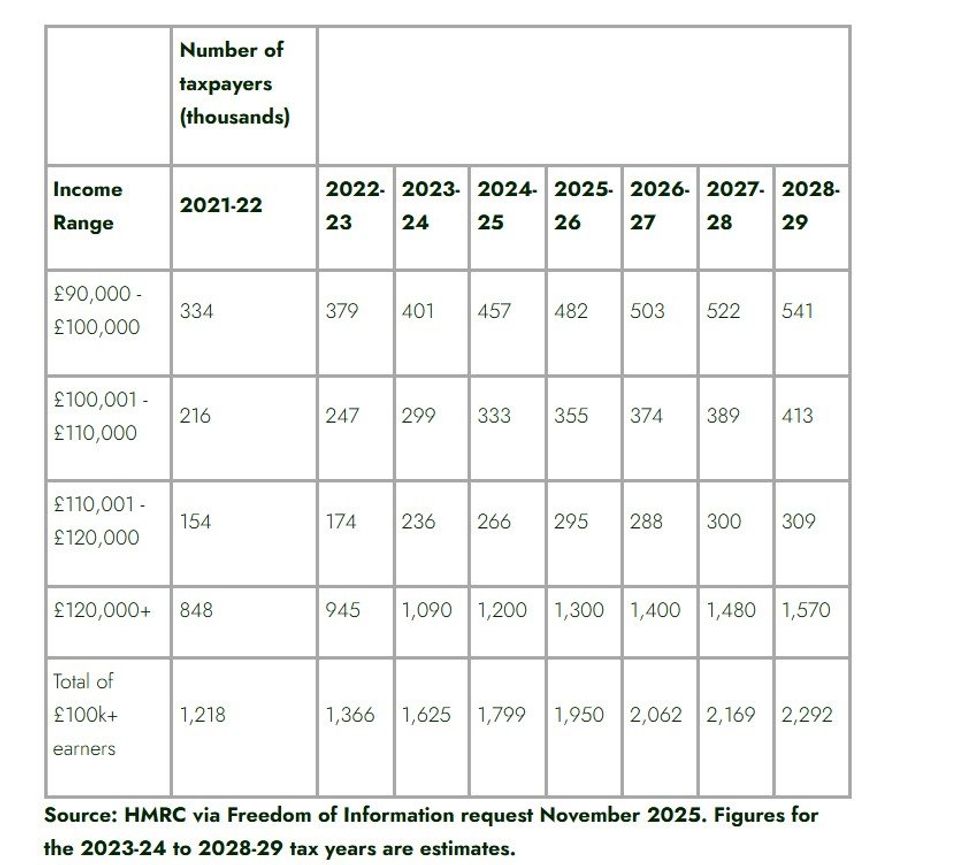 How many people will be pulled into higher tax brackets? | RATHBONDES / HMRC
 LATEST DEVELOPMENTS
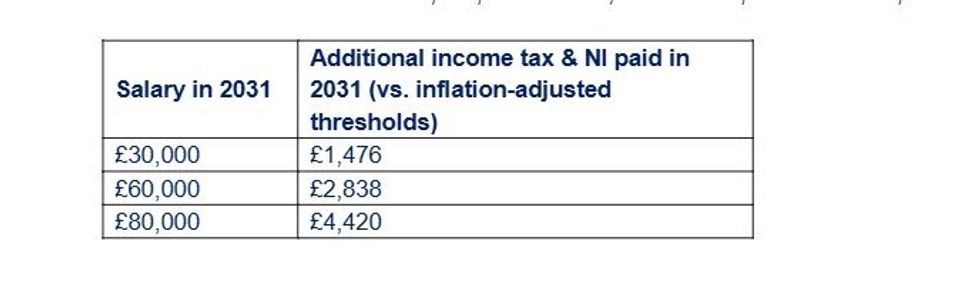 How much more will you pay by 2031 due to fiscal drag? | STANDARD LIFE
Chancellor Rachel Reeves confirmed at the November 2025 Budget that these frozen thresholds will persist until 2030/31, suggesting fiscal drag will continue drawing more earners into elevated tax bands.
The proportion of taxpayers in the higher bracket has climbed from roughly one in eight in 2019/20 to nearly one in six by 2023/24, now representing 15.7 per cent of all income tax payers.
Those in the 40 per cent band contributed 32 per cent of total income tax receipts in the year ending March 2024.
Meanwhile, additional-rate taxpayers, those earning above £125,140 and paying 45 per cent, numbered 893,000 in 2023/24. This is up 57 per cent from the previous year, and accounted for 37.7 per cent of all income tax collected.
Are you paying more under fiscal drag?
| GETTYOlly Cheng, the financial planning divisional lead at Rathbones, warns that these so-called stealth taxes are catching many households off guard.
She said: "Frozen thresholds are quietly pulling more people into higher tax bands, meaning more households will pay more tax, often without realising it."
Mr Cheng notes that when combined with rising council tax, water bills, and telecommunications costs, the cumulative effect becomes significant.
The financial expert added: "The danger is people don't feel the squeeze until the year is already underway, which is why it's so important to take stock before and after the new tax year to get finances in the best possible shape."