









Affluent residents of Dubai stranded overseas during the Iran conflict are scrambling to return to the United Arab Emirates, with some chartering private aircraft to protect their favourable tax arrangements.
The emirate’s tax regime, which imposes no income tax on individuals, investors or most businesses, requires residents to meet minimum day requirements to maintain their status.
Charles Robinson, founder of private jet marketplace EnterJet, said his firm had received multiple flight requests from individuals seeking to travel back to the region.
He said: "With minimum required days within an individual's fiscal year to gain benefit from the tax regime, some appear to be requiring a return to the region to complete their days."
TRENDING
Stories
Videos
Your Say
He said private aviation was being used by some travellers to maintain compliance with residency rules.
Mr Robinson said: "Private jets have become an instrument of return in some situations, particularly when the cost of a flight can be significantly lower than the potential tax bill if someone fails to meet the minimum day requirements."
Lawyers in the region said they had received confidential enquiries from clients concerned about how the disruption could affect their tax positions.
Ronald Graham, managing partner of Taylor Wessing’s Dubai office, said advisers had been asked about the implications of extended stays outside the UAE.
"We have received discreet enquiries around day count in the UK and if clients can't get back to the UAE how that might impact their tax situation."
He added that many individuals were currently waiting to see how the situation develops.

High net-worth individuals are fleeing the UK
|GETTY
He said wealthy expatriates often prioritise flexibility when choosing where to live and work.
"Many clients really value the ability to move and work wherever they want, when they want, and when something like the Iran war disrupts it, they don't like it."
Hannah Wailoo, co-head of the Middle East group at law firm Withers, said individuals stranded abroad could face tax complications in more than one country.
She said extended time outside the UAE could jeopardise residency status while simultaneously triggering tax liabilities elsewhere if people remain too long in another jurisdiction.
Under UAE rules, individuals typically need to spend 183 days within any consecutive 12 month period in the country to qualify as tax resident.
LATEST DEVELOPMENTS
Expatriates often prioritise flexibility when choosing where to live and work
| GETTYAn alternative route exists for those holding residence visas who maintain a permanent home, employment or business in the country, allowing them to qualify with as few as 90 days spent there.
Tax specialists said the situation can become more complicated for people who divide their time between the UAE and the UK.
The UK’s statutory residence test calculates tax residency based on a combination of days spent in the country and an individual’s connections to Britain.
People with limited ties to the UK may be able to spend around 120 days per year in the country without becoming tax resident.
However, those with stronger connections may face stricter limits, potentially needing to restrict their time to 90, 46 or even fewer days.
Eamon Shahir, co-founder of online tax filing service Taxd, said maintaining non-resident status under Britain’s rules was often the primary concern for internationally mobile professionals.
He said the tax issues affect people from a wide range of nationalities who live in Dubai.
The emirate hosts large communities of wealthy individuals from countries including India and France who may face similar complications if they remain outside the UAE for extended periods.
In many jurisdictions, spending more than 183 days in a country during a year generally results in tax residency there.
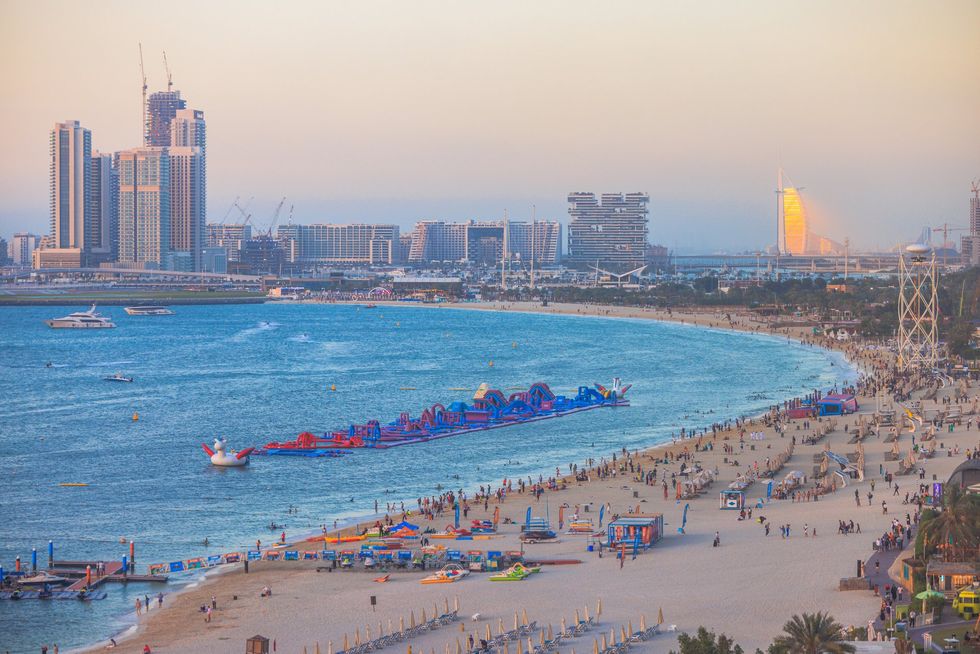
The improved weather is also cited as a factor for people leaving
|GETTY
Beyond financial considerations, some individuals are also trying to return to Dubai for personal reasons.
In certain cases families have been separated, with children remaining in the UAE when the conflict began.
While some residents are attempting to return to Dubai to maintain residency status, others are trying to leave the wider region as security concerns increase.
Insurance companies offering crisis response services said the cost of private jets and vehicle hire had surged as businesses attempt to evacuate staff from the Middle East.
More From GB News