









Thousands of working-age Britons are being slapped with a "stealth tax", which is being raised by £484 a second, according to shocking new figures.
Interest on student loan debt accumulated at £482 every second during the last financial year, according to newly released Student Loan Company data.
Graduates holding higher education loans saw £15.2billion added to their balances in interest charges during 2024-25, while repayments totalled just £5billion over the same period.
The overall student debt burden has climbed to £266.6billion, rising from £236.2billion twelve months earlier.

A 'stealth tax' is hitting graduates
|GETTY
This dramatic increase in interest charges represents a threefold jump compared to 2021-22, when just £4.7billion was added to student balances.
Dr Arthur Joustra, a 27-year-old paediatric trainee working for the NHS, spoke to The Telegraph about the frustration felt by many graduates trapped in this cycle.
Despite initially borrowing £55,000 for his education, his debt has ballooned to £72,000 even after repaying approximately £10,000 over four years of full-time medical work.
"Every month it comes out of my pay cheque, about £250, about £3,000 per year," he said.

Studenty
| Getty"Despite that it is still going up. There is a bit of anxiety about it, not just among other doctors, but anybody who's a graduate, who's been to university.
"The debt is just creeping up in the background and there's not really an awful lot you can do about it."
His experience reflects a broader pattern affecting millions of borrowers whose balances continue growing despite regular contributions.
Under Plan 2 arrangements, which apply to students who began courses in England and Wales between 2012 and 2023, interest is charged at up to three percentage points above the retail price index.
LATEST DEVELOPMENTS
The rate varies according to earnings, with higher earners paying more, and peaked at eight per cent last year.
Graduates must contribute nine per cent of their income above the current threshold of £28,470.
From April 2027, the repayment threshold will be frozen at £29,385 for three years, meaning a larger proportion of graduate earnings will be subject to deductions.
Ministers anticipate this freeze will bring in an additional £7.4billion by 2030-31, fuelling accusations that the system operates as a "stealth tax" on those with university qualifications.
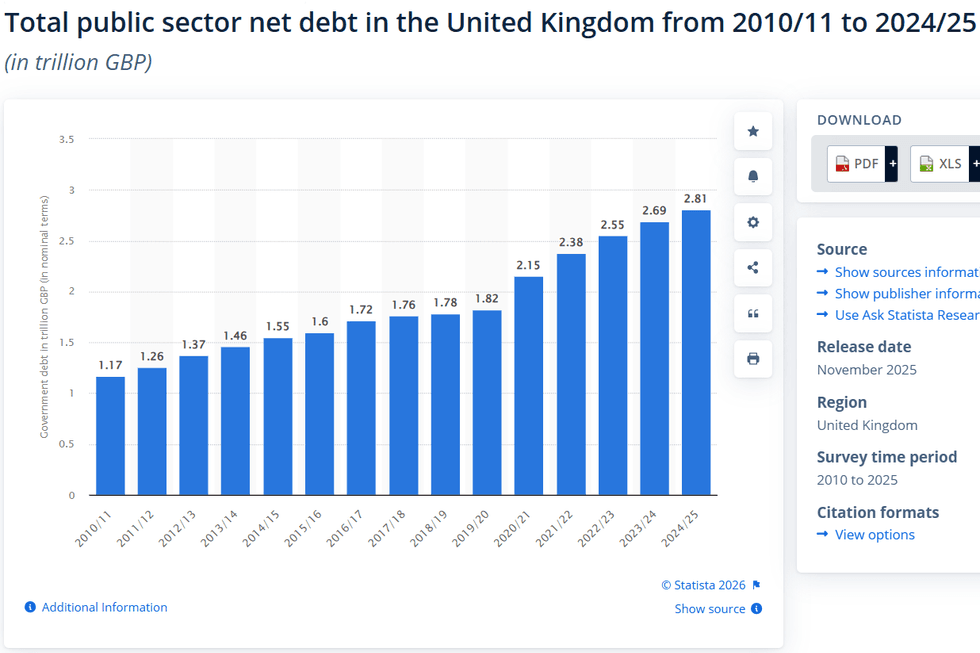 Total UK government debt rose above £2.8trillion in the 2024/25 financial year, up from £2.69 trillion the year before | STATISTA
Oliver Gardner, the founder of campaign group Rethink Repayment, condemned the current arrangements as fundamentally flawed.
He explained: "These figures show just how broken the student loan system is. So many graduates are working hard, earning good salaries and repaying a lot of money every month, and yet their loan balance is still compounding too quickly for them to make a dent.
"At that point, it stops feeling like a loan and starts feeling like a penalty for going to university."
He noted that student loans lack protections afforded to other forms of borrowing under the Consumer Credit Act and Consumer Duty. Of the 5.5 million people with outstanding student loans, roughly two million made no repayments during 2024-25.
More From GB News