









The state pension triple lock must be scrapped in order to improve the life prospects of white, working-class young men in Britain, a leading think think has claimed.
The Centre for Social Justice has put forward a striking proposal urging Britain's pensioners to give up their triple lock pension guarantee, with billions in savings channelled toward supporting white working-class boys.
The think tank's latest report, "Lost Boys: Boyhood", identifies this demographic as among the nation's most disadvantaged groups, suffering disproportionately in education, employment and mental health outcomes.
Under the current triple lock payment mechanism, the state pension increases annually by whichever figure is greatest: inflation, average earnings, or 2.5 per cent.
The state pension triple lock should be axed to better support young, working-class white boys
|GETTY
The Centre for Social Justice argues this protection has benefited older generations at the expense of younger Britons.
By linking future pension rises solely to consumer price inflation and accelerating planned retirement age changes, the Government could generate savings reaching £8.4billion by the end of this parliament.
The breakdown of family stability lies at the heart of these poor outcomes, according to the research.
Approximately 2.5 million children across the United Kingdom—one fifth of all dependent youngsters—grow up without a father present in the home.
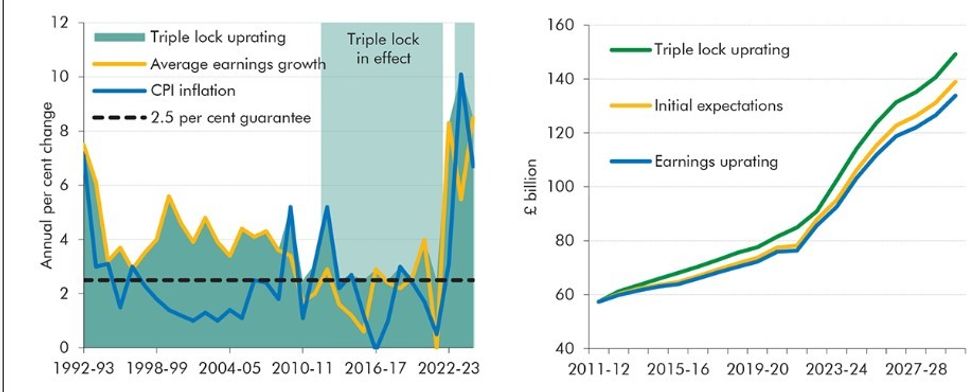 What has the impact of the state pension triple lock been on the public's finances | OBR
 The report notes: "Boys are more likely now to own a smartphone than to live with their dad."
Marriage rates reveal a pronounced class divide among white families. Merely two in ten children from the poorest white households have married parents, whereas nearly nine in ten from the wealthiest backgrounds do.
This contrast with non-white families, with 56 per cent of poor children in those households living with married parents. The think noted boys consistently trail girls academically, face double the unemployment risk, and are more than three times as likely to end their own lives.
To address these challenges, the Centre for Social Justice has outlined an ambitious package of reforms targeting early childhood support.
The think tank recommends allocating £1 billion from Triple Lock savings to triple the expansion of Family Hubs nationwide—local centres providing comprehensive support services for families and children.
Additional measures include paying childcare credits directly to parents, frontloading child benefit payments, and relocating birth registrations to Family Hubs.
The report also calls for a public health campaign warning of the dangers posed by excessive screen time during early childhood.
To strengthen family bonds, the CSJ proposes introducing a transferable tax allowance for married couples alongside subsidised wedding costs for those on lower incomes.

GB News host Miriam Cates is backing the reforms
| GB NewsDespite £5.4billion in annual public spending on early years education, outcomes for boys continue to deteriorate.
Miriam Cates, Senior Fellow at the Centre for Social Justice, said: "Pensioners in the UK have been the principal beneficiary of fiscal policy choices for well over a decade, leaving spending on workers, children and young families frequently shrinking in comparison."
She added: "This out-of-step growth has separated the fortunes of the old and young, morphed the UK into a gerontocracy, and contributed to the further atomisation of society. Therefore, as the centrepiece of funding for the following recommendations, we propose scrapping the Triple Lock.
Ms Cates described the proposal as "a necessary social realignment to give both economic and political re-enfranchisement and support to children and young families, on whom our nation ultimately depends".
The authors emphasise that savings from abolishing the triple lock should also serve to reduce the deficit and ease the long-term debt burden weighing upon future generations.
The CSJ plans to publish further reports in 2026 examining older boys, secondary education, and the transition from school to employment.
More From GB News