








Fears have been growing that rising state pension payments could soon push retirees into the tax net.
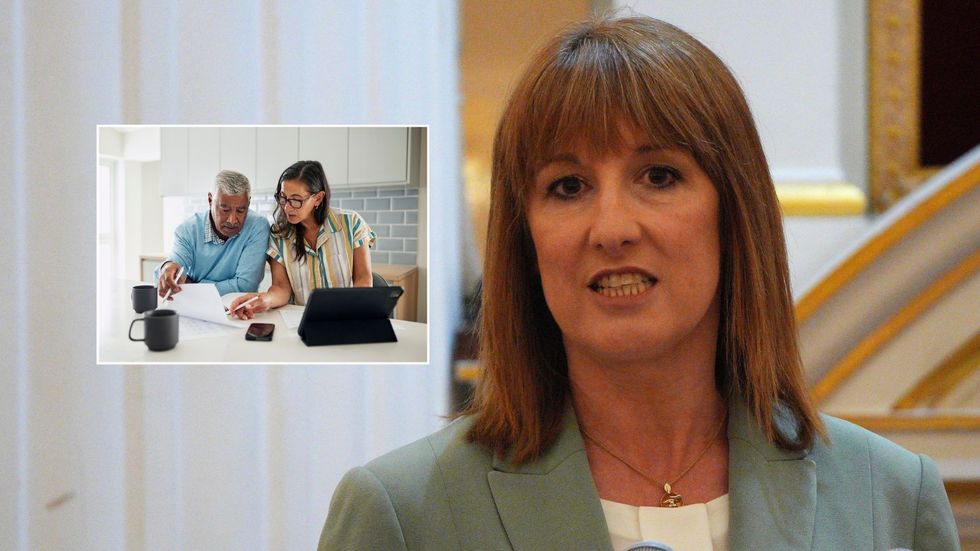
Rachel Reeves has now stepped in to address the concern with a major clarification on how the rules will work.
The Chancellor confirmed that pensioners whose only income comes from the state pension will not face income tax bills, even if payments exceed the personal allowance from April 2027.
The Treasury previously stated in the Autumn Budget 2025 that individuals "whose sole income is the basic or new state pension without any increments do not have to pay small amounts of tax via simple assessment from 2027-28 if the new or basic state pension exceeds the personal allowance from that point".
Responding to questions in the Commons, Ms Reeves said: "As I said after the Budget last year, if you just get the basic state pension you will not be paying tax. We will be setting out more details of that in the coming months."
The Office for Budget Responsibility projects that 600,000 pensioners will be pulled into the tax system during the current year, with that figure climbing to one million by the conclusion of this Parliament.
Conservative MP Luke Evans challenged the Chancellor in the Commons to provide greater clarity on the policy's implementation.
He asked: "The updated [OBR] forecast now says this year 600,000 pensioners will be drawn into paying tax, and going up to a one million by the end of this Parliament.
"Could she set out what the definition is of small amounts of tax and what the mechanism is she will use to make sure they don't have to do a tax return?"
Rachel Reeves issues major update
| GETTYMr Evans also highlighted the impact of frozen thresholds, noting the Chancellor had previously assured Martin Lewis that affected pensioners would avoid both tax payments and the requirement to complete returns.
HMRC's director of Individuals Policy, Cerys McDonald, told the Treasury Committee in January 2026 that between 800,000 and one million pensioners receive the state pension as their sole source of income.
She confirmed that fresh legislation will be necessary to implement the tax changes, with the expectation that this will proceed through the autumn finance bill.
Ms McDonald said: "We have mobilised a project team already in anticipation of having to make this change."
LATEST DEVELOPMENTS:

Fresh legislation will be necessary to implement the tax changes
| GETTYShe explained that the tax authority typically uses simple assessment to recover such amounts, noting: "There's clearly a lot of detail to still work through and she [the Chancellor] has said that that detail will be set out in due course."
The new arrangements will be operational from April 2027.
The triple lock mechanism guarantees that state pension payments rise annually by whichever figure proves highest: 2.5 per cent, average earnings growth, or inflation.

Currently, the full new state pension stands at £230.25 weekly
| GETTYCurrently, the full new state pension stands at £230.25 weekly, equating to £11,973 annually. From April 2026, a 4.8 per cent increase will lift this to £241.30 per week, or £12,547.60 per year.
This leaves recipients just over £20 below the £12,570 personal allowance, meaning the threshold will inevitably be breached the following year.
Separately, the state pension age is set to rise from 66 beginning in April 2026, gradually increasing in stages until it reaches 67 by April 2028.
More From GB News