









Rachel Reeves is set to oversee the sharpest rise in taxation among major economies, with the UK’s tax burden forecast to reach 42.1 per cent of GDP by 2030.
This represents a significant increase from 37.6 per cent when Labour took office in 2024 — equivalent to around £130billion in additional annual taxation, or roughly £4,500 per household at today’s values, according to the International Monetary Fund (IMF).
The IMF’s analysis places the UK at the top of global rankings for tax increases over the period.
Britain’s projected rise outpaces all other G7 economies and exceeds that of countries such as Pakistan and Egypt.
Between now and 2031, the UK’s tax burden is expected to climb by 4.5 percentage points. By comparison, France is forecast to see a 1.7‑point rise and Germany 1.2 points, while the United States is projected to increase by 0.9 points to 30.8 per cent of GDP.
Italy is expected to record a 0.6‑point rise, while Japan and Canada are forecast to see declines relative to economic output.
The figures suggest the UK’s tax burden is rising faster than in comparable economies and will move closer to levels seen in higher‑tax European countries by the end of the decade.
The increases follow a series of fiscal measures affecting both households and businesses, including changes to employers’ national insurance contributions, which were raised by £25billion.
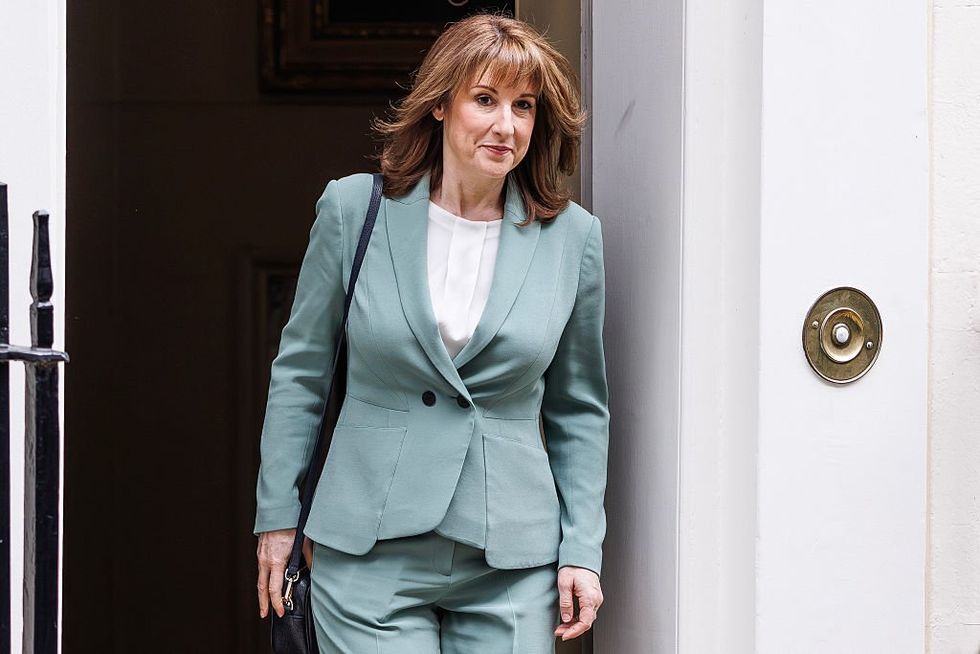
Rachel Reeves to push UK tax burden to 42.1 per cent by 2030 IMF says
|GETTY
Despite the higher tax take, the IMF expects UK public debt to continue rising.
Gross public debt is projected to reach 104.1 per cent of GDP by 2030, close to the 104.8 per cent recorded in 2020.
The Fund also warned that global public debt is on track to hit 100 per cent of GDP by 2029.
Rodrigo Valdés, director of the IMF’s fiscal affairs department, said the nature of fiscal pressures had shifted, noting that “weaknesses are no longer mainly cyclical or the result of temporary emergencies but are structural.”
LATEST DEVELOPMENTS
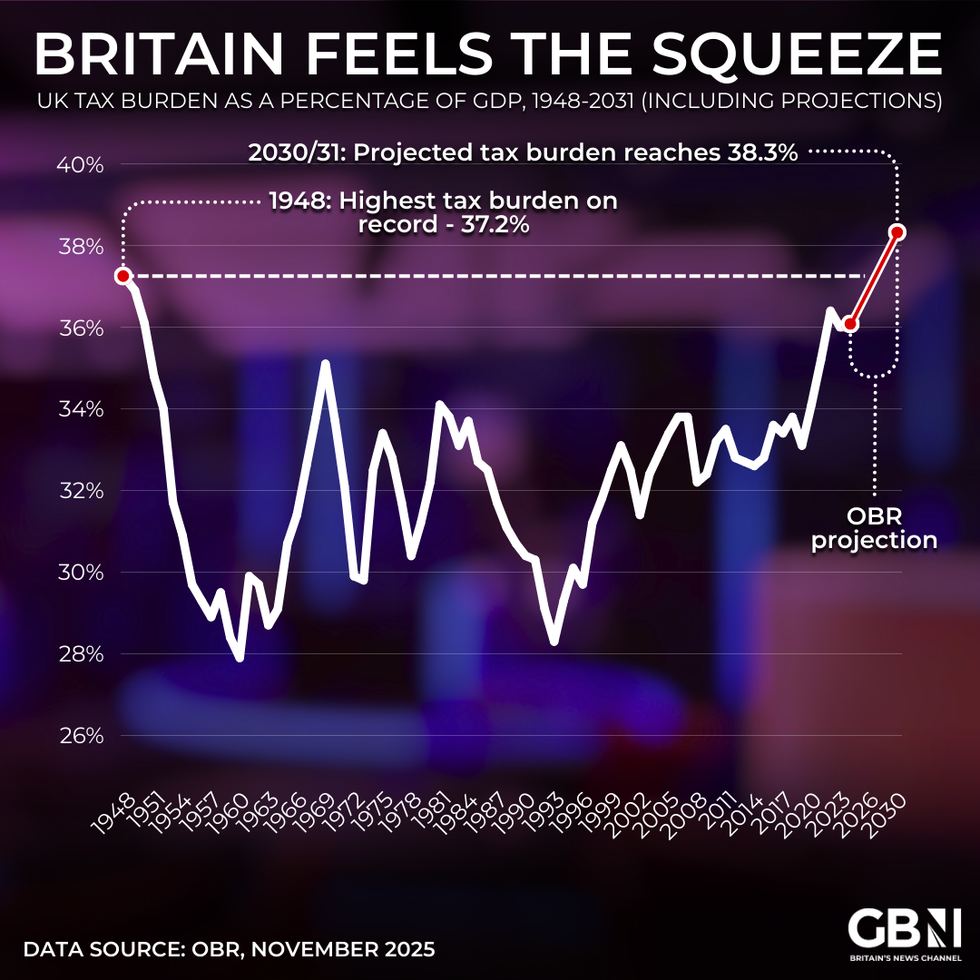 GRAPHED: The UK's tax burden as a percentage of GDP, 1948-2031 | GB NEWS
Economists note that the Chancellor entered office with one of the smallest fiscal buffers of any recent administration, leaving little room to absorb weaker‑than‑expected growth.
The £26billion tax package announced in the 2025 Budget temporarily expanded her headroom, but subsequent data releases have eroded much of that margin.
Rising welfare spending, higher debt‑interest costs and softer tax receipts have all contributed to the squeeze.
Analysts say the deterioration highlights how sensitive the public finances are to even modest shifts in unemployment and productivity.
Several forecasters have warned that the UK’s structural deficit remains large by international standards, limiting the scope for discretionary tax cuts or spending increases.
The IMF and Organisation for Economic Co-operation and Development (OECD) have both cautioned that countries with high debt levels will face tougher trade‑offs as borrowing costs remain elevated.
Ms Reeves has repeatedly argued that tight fiscal discipline is necessary to restore economic stability, but the latest projections suggest she may have less flexibility than initially assumed.
With the Office for Budget Responsibility (OBR) due to update its forecasts next month, officials privately acknowledge that any further weakening in the data could force difficult decisions later in the year.