








The value British pound has plummeted to its lowest level this year, falling to $1.32 earlier today, having dropped for four consecutive days this week.
This represents sterling's lowest value since December 2025, with the rate at the foreign exchange coming in just below $1.30 on average.
Today's latest drop is primarily due to the ongoing US-Iran war, which has seen a spike in oil prices, and "disappointing" gross domestic product (GDP) growth for January 2026.
According to figures from the Office for National Statistics (ONS), the UK economy has no growth over the period in a major blow to Chancellor Rachel Reeves's fiscal plans.
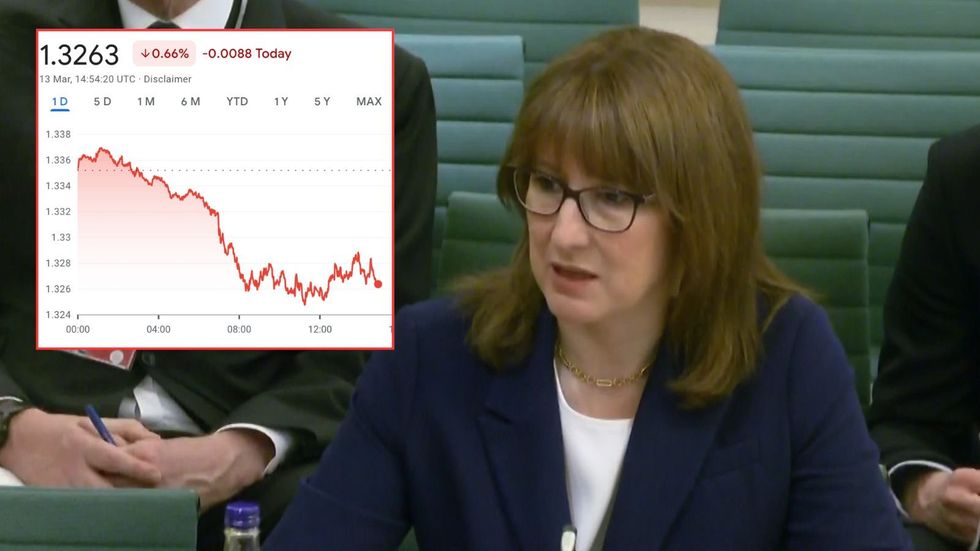
The pound has dropped in value in response to the ongoing crisis
|GETTY / ECONOMY
Kevin Brown, a savings expert at Scottish Friendly, shared: "Despite some encouraging data recently, today’s GDP reading is disappointing and shows the UK economy is struggling to build momentum in the face of numerous headwinds.
"Recent reports of rising output and business confidence had perhaps raised hopes that the economy was starting to turn the corner. Instead, the data suggest that growth remains patchy and inconsistent.
"A major economic drag remains consumer confidence, or the lack thereof, with households grappling with elevated interest rates and nearly five years of higher inflation. This is a real concern for an economy that relies so heavily on consumption."
Alpesh Paleja, deputy chief economist at the CBI, added: "While the economy managed to eke out modest growth in the three months to January, underlying momentum remained weak. The broader picture is still one of an economy treading water since the middle of last year.
 Rachel Reeves | RACHEL REEVES / LINKEDIN
 LATEST DEVELOPMENTS
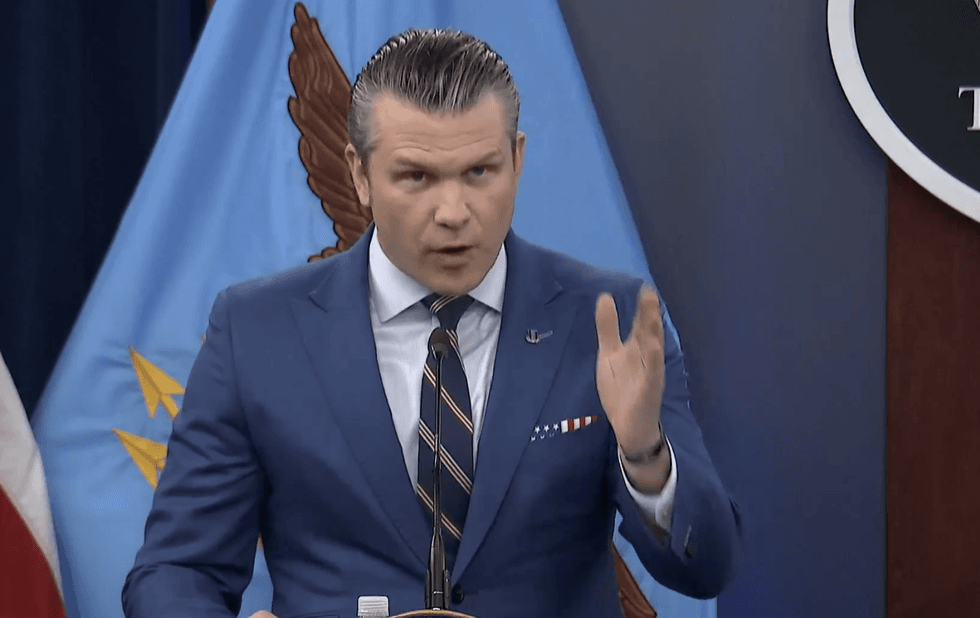 US War Secretary Pete Hegseth outlined Donald Trump's three strategic aims in Iran being 'executed with ruthless precision' | REUTERS
"However, this data is already backward-looking. The near-term outlook is now dominated by heightened uncertainty surrounding conflict in the Middle East. Energy prices have risen sharply and, if sustained, will only intensify the by now familiar mix of high inflation and weak growth.
"Oil and gas price shocks risk placing renewed strain on businesses and households, and Government will need to respond with agility to the evolving conflict.
"With firms already squeezed by high industrial energy costs, this moment reinforces the need to cut the cost of doing business – including finding appropriate landing zones for the Employment Rights Act and simplifying the tax system to support growth."
Analysts are sounding the alarm over a likely rise in consumer price index (CPI) inflation in response to the spiraling conflict in the Middle East.
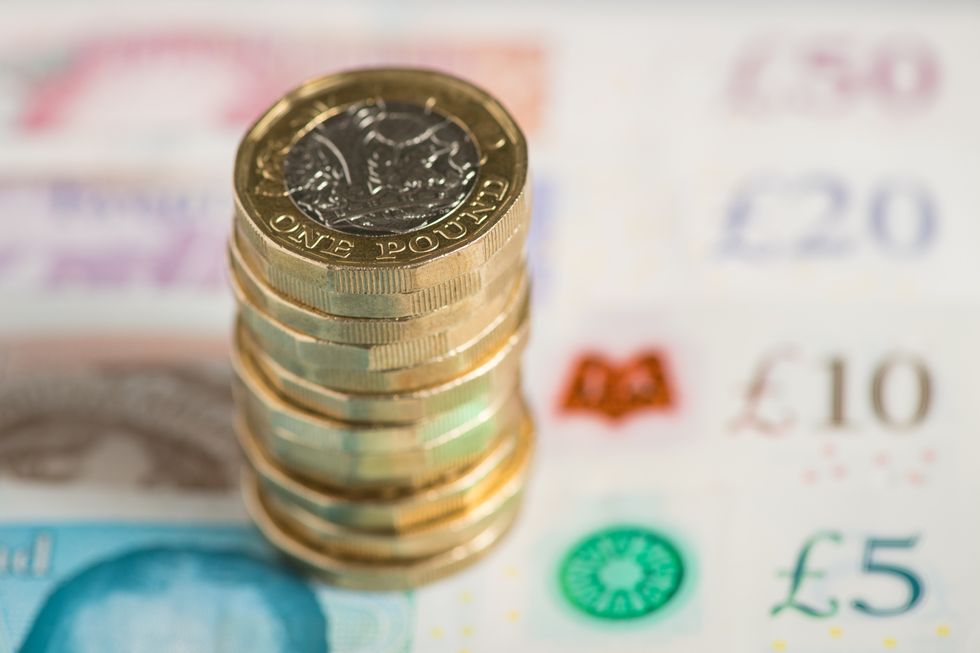
Traders think the pound is set to weaken even further
| PABefore President Donald Trump's military strike on the Islamic Republic, traders had priced in a base rate cut from the Bank of England later this month.
However, analysts now believe the central bank's Monetary Policy Committee (MPC) is likely to keep interest rates at 3.75 per cent.
John Wyn Evans, the head of Market Analysis at Rathbones, said: "With the MPC meeting next week, we hope to get more guidance as to how they are viewing the current situation.
"On the one hand, higher energy prices will feed through to inflation and the Bank will want to ensure that long-term inflation expectations remain well anchored. If they start to rise, it could lead to an unwelcome inflationary wage/price spiral."
More From GB News