





The owner of Phase Eight, Hobbs, Whistles and White Stuff is considering closing as many as 400 stores worldwide as part of a major cost-cutting programme.
TFG, the South African retail group behind the fashion brands, has already committed to shutting more than 100 underperforming stores this year.
Reports published over the weekend suggested the retailer could eventually close up to 400 locations across its global portfolio as customer spending continues shifting away from traditional high street shopping.
South Africa's News24 reported that the group was reviewing hundreds of stores across its international operations amid growing pressure on physical retail sites.
TFG operates thousands of outlets across Africa, the United Kingdom and Australia, selling fashion, homeware and lifestyle products.
Chief executive Anthony Thunström told The Sunday Times the company had identified 300 stores internationally that were underperforming.
Mr Thunström said store closures would be treated as a last resort, with the retailer first attempting measures designed to improve trading performance.
He did not disclose how many of the struggling stores were located in Britain.
Part of the group's restructuring strategy involves reducing retail floor space to accommodate online fulfilment operations within existing stores.
Phase Eight owner TFG considers closing up to 400 stores worldwide
|GETTY
The move forms part of a broader shift towards digital commerce as internet sales continue growing faster than revenue generated through physical locations.
TFG said the strategy was intended to preserve its high street presence while responding to long-term growth in online demand.
Phase Eight has faced particular difficulties following the collapse of Britain's department store sector.
When TFG acquired the womenswear retailer in 2014, around 70 per cent of the brand's revenue came through department store concessions.
LATEST DEVELOPMENTS
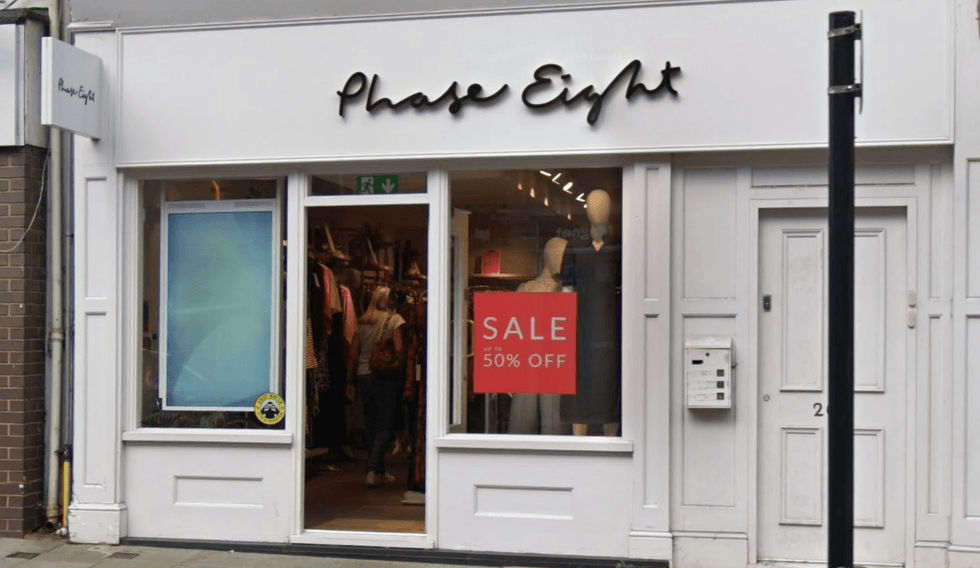
The collapse of Debenhams in 2021 forced the closure of numerous Phase Eight locations and significantly disrupted the company's traditional sales model
|PHASE EIGHT
TFG said in its latest annual results that Phase Eight had been "heavily impacted over several years" by the decline in department store retailing.
The group also warned trading conditions in London and Australia had been more difficult than expected.
It cited weaker demand for occasion wear, softer department store trading and disruption linked to a major cyber incident affecting John Lewis as factors impacting performance within its UK operations.
The retailer's digital business has continued growing rapidly, with online sales rising by 31.7 per cent across all regions.
Internet sales now account for 14.8 per cent of the group's total retail revenue.
Despite the growth in online shopping, profitability across the business has fallen sharply.
TFG reported that segmental EBIT before impairment dropped by 65.4 per cent compared with the previous year.
Phase Eight has already begun closing stores in Scotland, with its St Andrews branch currently holding a closing down sale after earlier closures in Dundee and Perth.
Mr Thunström said: "FY26 was a challenging year as weaker consumer demand and margin pressure impacted profitability across the group.
"While these conditions were largely outside of our control, our response was not.
"We acted decisively to reduce costs, manage inventory, preserve cash and strengthen the resilience of the business."