










Families across Britain are being warned they could face inheritance tax bills averaging an extra £34,000 under major pension rule changes due to take effect from April 2027.
The reforms will see most unused pension funds and certain pension death benefits included within estate calculations for inheritance tax purposes for the first time.
Financial experts warned the changes will not only increase the tax burden on families but could also create significant administrative problems for grieving relatives attempting to settle estates.
Maike Currie, vice president of personal finance at PensionBee, said: "An admin nightmare is waiting in the wings for grieving families".
The changes are intended to prevent savers from using pension funds primarily as a way to pass wealth to future generations instead of drawing down the money during retirement.
However, experts warned the reforms could leave executors and family members struggling to trace multiple pension pots accumulated throughout a person's working life.
Ms Currie said personal representatives handling estates would effectively need to become "pension detectives" under the new system.
She explained that relatives and executors could be "expected to track down old workplace schemes, historic pension pots and online-only accounts, often with incomplete records and missing passwords".
The warning comes as many workers now hold several pension pots spread across different employers and providers after changing jobs over the course of their careers.

Families warned inheritance tax bills could jump by £34,000 under pension crackdown
|GETTY
Experts said this could create major complications for grieving families trying to piece together somebody's finances after their death.
Financial advisers are now urging savers to review and update their Expression of Wishes forms with pension providers before the reforms come into force.
These forms allow pension holders to specify who should receive pension funds if they die before withdrawing the money.
Many savers complete the paperwork when first opening a pension and then fail to revisit it for years, potentially leaving outdated information or former partners listed as beneficiaries.
Ms Currie said: "One simple but important thing people can do now is ensure their expression of wish forms detailing their beneficiaries are up to date with all pension providers".
LATEST DEVELOPMENTS
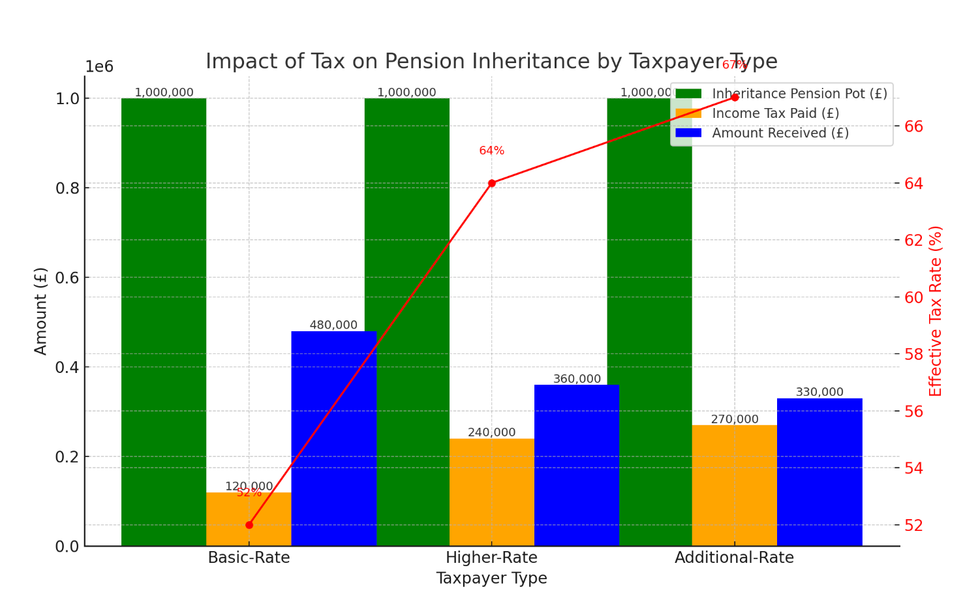 Additional-rate taxpayers would be hit hardest, paying £270,000 in income tax and receiving £330,000 |
 CHATGPT
She explained that ensuring the forms are current could significantly reduce the administrative burden placed on family members after a death.
Despite concerns over the reforms, Ms Currie said HMRC had confirmed some pension death benefits should still be released relatively quickly in most cases while inheritance tax liabilities are being resolved.
She said: "There is a bit of good news for bereaved families with HMRC confirming that, in most cases, up to half of pension death benefits should still be able to be paid out relatively quickly while inheritance tax liabilities are being settled".
Transfers of pension wealth to spouses and civil partners living in the UK will remain exempt from inheritance tax, although they may still need to be formally reported.
Experts also noted pension providers may choose to temporarily retain part of a pension death benefit until any tax liabilities have been calculated and settled.
This could help prevent families from needing to sell assets or access other funds to cover inheritance tax demands.
Ms Currie said the reforms meant pension organisation would become increasingly important for estate planning.
She added: "Pension housekeeping is about to become essential estate planning".