









HM Revenue and Customs (HMRC) has collected more than £13million from debtors after warning taxpayers it could recover unpaid bills directly from their bank accounts.
The tax authority’s “direct recovery” powers allow HMRC to withdraw money from accounts belonging to people owing more than £1,000.
These powers were reinstated by Chancellor Rachel Reeves at last year’s Spring Statement after being paused during the coronavirus pandemic.
Despite the warning proving highly effective, the powers themselves have been used only rarely since their return.
HMRC has directly accessed bank accounts on just 12 occasions since the policy was reintroduced, recovering a total of £225,000.
The figure amounts to an average recovery of around £18,750 per debtor.
The wider £13million total was collected between September last year and early May, according to The Telegraph..
It came after taxpayers either settled debts or entered payment plans following warnings that HMRC could seize funds directly from their accounts.
 |
| GETTY
Direct recovery powers were first introduced a decade ago, with HMRC initially estimating the mechanism would be used around 11,000 times each year.
However, usage remained significantly lower than expected.
Between April 2016 and December 2018, the powers were used on only 19 occasions and recovered £361,678 in total.
An official review published in 2019 suggested the policy generated a far greater financial impact through deterrence rather than direct action.
LATEST DEVELOPMENTS
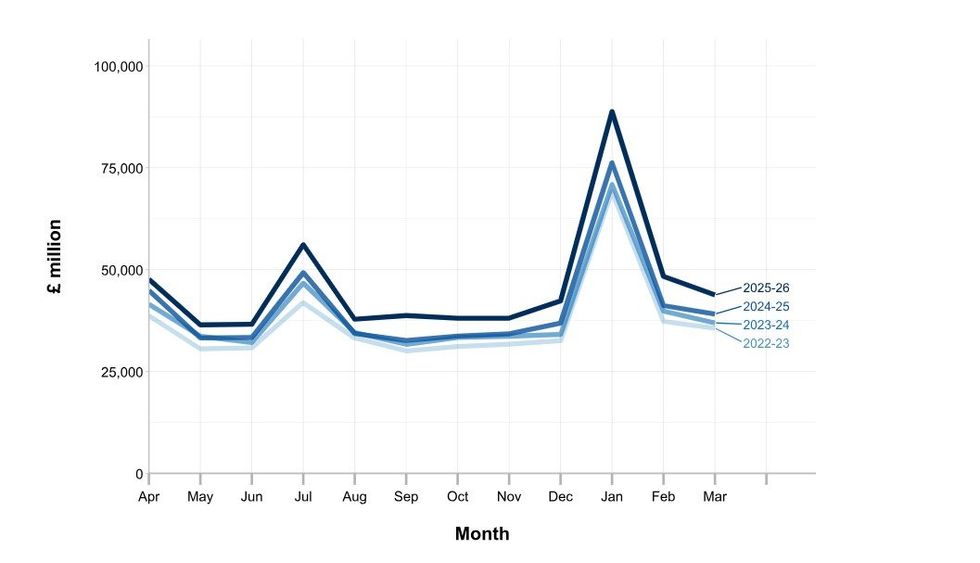 Tax receipts, including income tax, CGT and National Insurance, over recent years | HMRC
 The assessment estimated the powers helped recover an additional £178million during the first three years of operation as taxpayers settled debts after receiving warnings.
Tax experts have raised concerns about the policy and its potential effect on taxpayers disputing demands from HMRC.
Mike Warburton, tax expert at The Telegraph, said he feared the powers could discourage legitimate appeals.
“This is a blunt sword. I am very concerned that they may be using this in circumstances where the tax may not be due and they are effectively bullying people into paying,” Mr Warburton said.
Nimesh Shah, chief executive of accountancy firm Blick Rothenberg, also criticised the approach.
“I remain unconvinced that this is a sensible tool for HMRC to use, especially at a time when businesses and individuals are struggling with an increased tax burden as a direct result of Government tax changes, so it seems a double blow,” Mr Shah said.
The direct recovery system includes a number of safeguards for taxpayers.
HMRC must inform individuals before taking money directly from a bank account or cash ISA and provide a 30-day notice period before any action is taken.
The authority must also leave a minimum balance of £5,000 in the account and can only proceed once the appeals process has ended.
An HMRC spokesman defended the policy and said it was aimed at those refusing to pay despite being able to do so.
“Most people pay tax on time and in full but it’s right that we seek to recover tax from the tiny minority who can afford to pay but refuse to,” the spokesman said.
“More than £13million of tax has already been paid or brought into payment plans for public services due to the deterrent effect of this measure.”