









Patients in NHS hospitals and pupils in schools across England are set to receive smaller portions and lower‑quality meals as suppliers face rising costs linked to the conflict in Iran.
Food and Drink Wholesale UK said companies tied into fixed‑price public‑sector contracts are unable to pass on increasing expenses, warning this will affect both portion sizes and the quality of ingredients.
Chief executive, James Bielby, said: “There’ll be lower‑quality items and fewer items for the same price being supplied into schools and hospitals, which I think is a big challenge.”
He explained that suppliers are constrained by agreements that prevent them from raising prices.
TRENDING
Stories
Videos
Your Say
“It’s fixed‑contract pricing so if our prices go up, we can’t pass that cost on to schools, we can’t pass that cost on to hospitals,” he said.
Rising oil and gas prices since the start of the Iran conflict have pushed up costs across the food supply chain, affecting everything from heating greenhouses to transporting goods.
The Food and Drink Federation has warned that food prices could rise by up to 10 per cent by the end of the year.
Supply chains have also been disrupted by the closure of the Strait of Hormuz, which has affected fertiliser shipments and raised concerns among farmers about future production.
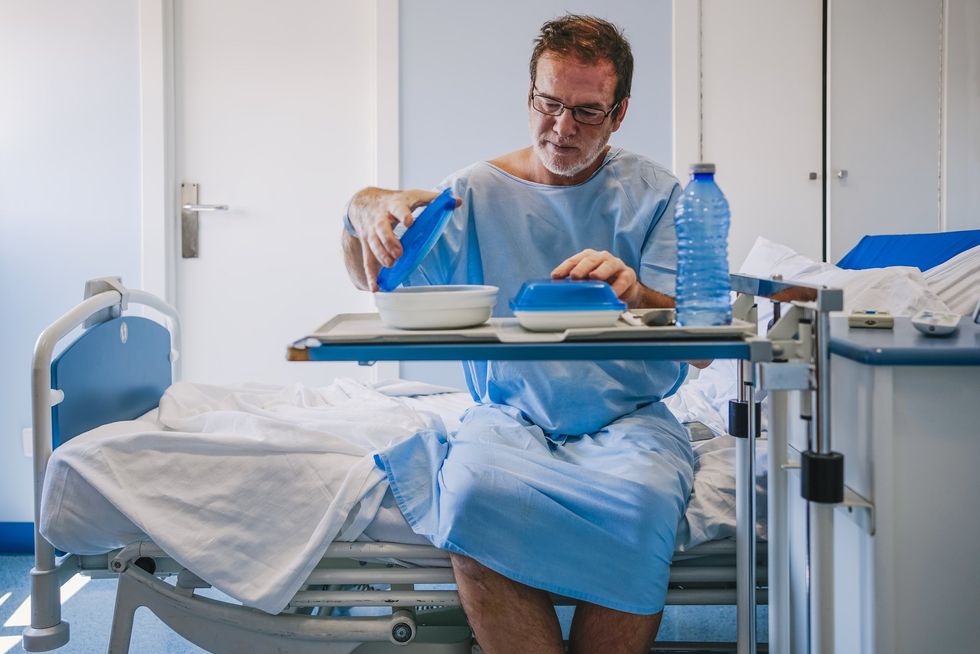
Patients and pupils face smaller portions as food costs surge
|GETTY
Mr Bielby said suppliers may need to turn to more affordable alternatives, predicting “cheaper imports, lower‑quality dairy products, like cheeses and smaller portions” as companies attempt to manage costs.
NHS England spent £831.8million on patient meals last year, providing 143.9 million meals — a 4.9 per cent increase on the previous year. School meal providers have also raised concerns about funding levels.
Caterers currently receive £2.61 per meal for pupils in England, due to rise by two per cent to £2.66 in September, while food inflation stood at 3.7 per cent in March.
Brad Pearce, chairman of The School Food People, said funding remains inadequate.
LATEST DEVELOPMENTS:
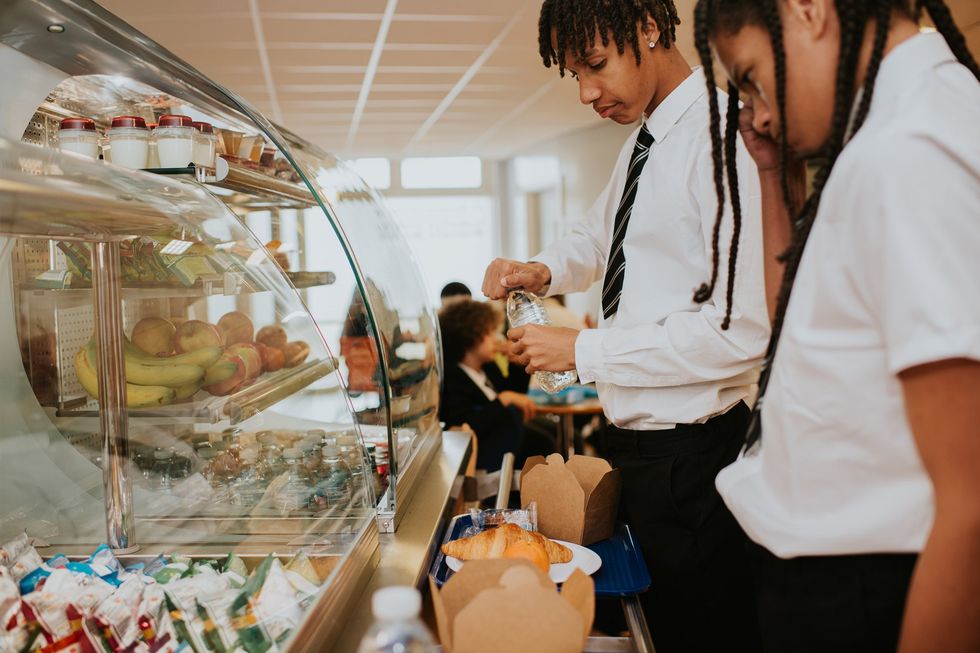
The school pupils se to face smaller portions despite the investment Labour has allocated for free breakfast clubs
|GETTY
“Funding for school food in England is woefully inadequate,” he said, warning that financial pressures are creating significant challenges for providers.
“We accept that the country is in a difficult position financially but you cannot, on the one hand, ask for all of this to be delivered when the actual funding itself is way too low.”
Mr Pearce, who is also managing director of CATERed, said his company will stop operating at the end of the school year in July.
The business supplies meals to 67 schools in Cornwall and Devon, and he said other providers are facing similar pressures.
“It’s just not sustainable and we’re seeing it time and time again,” he said, adding that “the numbers of people exiting the service will continue to grow”.
The warnings come shortly after ministers announced a ban on deep‑fried foods in school meals as part of efforts to improve nutrition by increasing the amount of fruit, vegetables and lentils served.
The Department of Health and Social Care has been approached for comment.