










Britain must consider the “unthinkable” step of returning to coal-fired power, a new paper has argued.
As the Iran conflict continues to bite, and with the UK labouring under some of the highest electricity prices in the world, campaign group Net Zero Watch believes coal may be the best solution to the energy crisis.
A reliance on energy imports, it says, makes us vulnerable to sabotage, pointing out that pipelines and cables could become targets of hostile states.
Using coal would add to our energy security and, the paper predicts, could also become the cheapest option to power the country.
It points out that other European nations, including Germany, have already backtracked on their use of coal.
Arguing that the UK should follow suit, it states: “In an unstable world, energy security – the term encompassing adequacy of supply, intrinsic reliability and resilience to external threats, both natural and manmade – is a pressing concern.
“This paper argues that it may best be addressed by the reintroduction of coal-fired power stations to the UK grid.”
Many of our older gas-fired power stations are reaching the end of their lives and could be replaced by coal-fired generators, the paper suggests.
But coal is considered the most polluting of the main power sources, making it incompatible with our climate obligations.
The Government said it was “ludicrous” to suggest bringing it back.
 UK must consider 'unthinkable' step of returning to coal-fired power, says new study |
 GETTY
Britain became the first G7 country to remove coal from its energy mix when it closed the Ratcliffe-on-Soar power station in 2024.
It marked the end of a rapid decline in the use of coal, which had provided almost 40 per cent of UK generation in 2012.
Gas use has only increased from 28 per cent to 34 per cent, meaning clean renewables have picked up the slack.
Over the same period, harmful emissions from the power sector have fallen by 74 per cent.
Former chair of the Climate Change Committee (CCC), Lord Deben, said after the Ratcliffe closure: “King Coal is dead. Long live his clean successors. This is the day we finally recognise that we can have power without it costing the Earth.”
Although power is cleaner, prices have remained stubbornly high, with the Iran war further pushing up the cost of oil.
LATEST DEVELOPMENTS
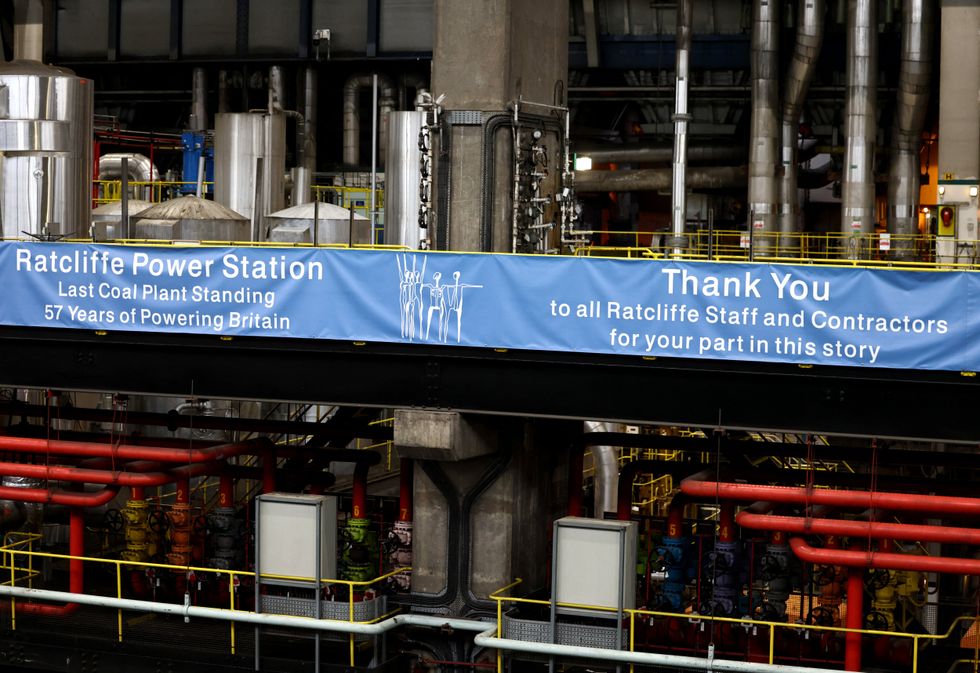
A banner hangs in the offline turbine hall of Ratcliffe on Soar Coal-fired power station in Nottinghamshire
|GETTY
UK industry now faces the costliest electricity in the developed world and trade bodies have warned of closures and layoffs.
Net Zero Watch, which opposes decarbonisation policies, argues that coal would provide a solution to expensive energy and would also be more secure.
It suggests that, with the world so uncertain, the country should be utilising all of its domestic energy resources.
“It is clear that the looming geopolitical threats to the country now mean that the time is ripe to reconsider the consensus against coal that has taken hold in the last two decades,” it argues in the paper Thinking the Unthinkable – Coal Power and National Security.
It points out that the UK was “horribly exposed” because of its reliance on imports and says pipelines, as well as offshore windfarm export cables, were vulnerable to sabotage.
It states: “From an energy-security perspective, onshore resources are preferable – imports and offshore production are both vulnerable to the actions of hostile powers, as the sabotage of the Nord Stream pipeline in 2022 made clear.”
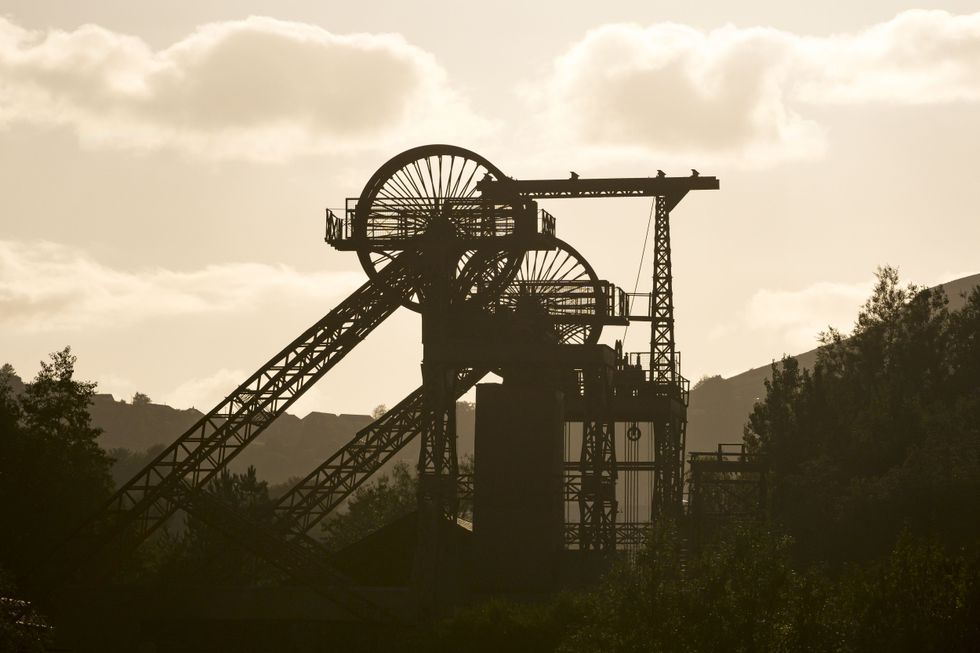
Coal mining was a major part of the UK's economy
|GETTY
It goes on: “We need to build new firm capacity soon. Lead times for nuclear power were long and, because of the growth of AI and the demand for power, there were also lengthy waiting lists for gas-fired power stations.
"Coal-fired stations were complex to build, it said, but did offer advantages, including huge domestic reserves.
"The UK has huge coal resources, and storing large quantities at power stations is simple and straightforward."
The paper identifies two problems to be overcome. The first is that much of the UK’s shallow coal has already been extracted. The second is that domestic coal is high in sulphur.
For the first, it points out that, although harder to access, our coal supplies still remain “abundant”.
For the second, it recommends a process called fluidised bed combustion (FBC), that blows air through granular coal as it burns.

Ed Miliband's department rejected the coal call
| GETTYThis was previously widely used in the UK and can eliminate sulphur emissions. In calculating costs, the paper assumes that net zero targets and carbon taxes on generation would be ditched "no matter which party is in power”.
It based this on “the deteriorating state of the UK economy – unsustainably high electricity prices, low growth, deindustrialisation and a declining tax base”.
The Tories have pledged to scrap carbon taxes, and both they and Reform say they will change course on net zero.
Net Zero Watch says a “dramatic scaling back of the burden of environmental regulation” was needed to deliver power stations on shorter timescales and at lower costs.
It calculates that, price-wise, initial coal production would be on a par with gas but would become cheaper as build-out advances.
It concludes: “As the UK’s nuclear power stations and older combined-cycle gas turbines retire, there is a strong case for replacing them with new FBC coal-fired power stations.
“Such a position has, until recently, been seen as outlandish. However, that perception is changing rapidly. If the analysis presented here is accepted, then there is a pressing need for a national conversation on the subject.”
But Adam Berman, Director of Policy and Advocacy at energy industry trade association Energy UK, said while coal had been “crucial” in the past, the future was one of clean power.
He added: "Building a reliable, low-carbon energy system is critical to the success of the UK economy.
“Whilst coal has played a crucial role in powering our economy, the UK's coal infrastructure has largely now been decommissioned.
“Gas remains an important mechanism for ensuring security of supply, but the energy industry sees the future of our energy system in homegrown energy sources that can decrease our reliance on international commodity markets.”
The Government said that phasing out coal was crucial to tackling climate change, pointing out it was the largest source of energy-related CO2 emissions globally.
A spokesman for the Department for Energy Security and Net Zero said of the suggestion to bring back coal: “This is a ludicrous idea which would drag us back to the past.
“Clean power, unlike coal, will bring energy security, lower bills and good long-term jobs across the country.”