









Larger vehicles have been warned that they have been banned from a major road due to strong winds posing a serious safety concern.
The A66 in County Durham, Cumbria, has closed in both directions to high-sided vehicles between the A67 near Bowes and the A685 near Brough due to strong winds.
The ban affects motorhomes, campervans, HGVs, transit vans with modifications, vehicles towing trailers, motorcycles, tippers, abnormal loads, double-decker buses, and car transporters.
National Highways explained that for these vehicle users travelling across the Pennines, they have now been advised to plan ahead and consider alternate routes such as the A69.
TRENDING
Stories
Videos
Your Say
Met Office Deputy Chief Forecaster Steven Keates said: "After a spell of mild and brighter weather, the UK will turn increasingly unsettled in the coming days.
"A series of weather fronts will bring periods of rain, strong winds and much colder air by midweek. Wednesday could be quite a shock to the system."
National Highways prevents certain vehicles from using roads during strong weather due to their being more susceptible to falling, breaking down, or causing delays.
The agency shared that if the closure impacts the planned route, "please allow extra journey time. Plan ahead, you may wish to re-route or even delay your journey".
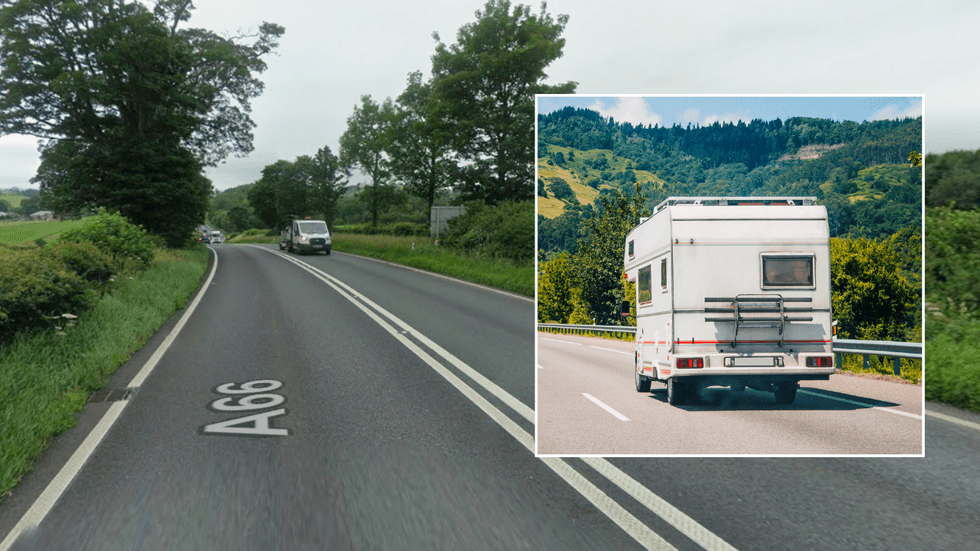
The road remains closed to high-sided vehicles due to strong winds
|GOOGLE MAPS/GETTY
Offering advice to drivers, National Highways suggested that drivers of larger vehicles should slow down and keep focused on the road ahead, as they may encounter debris from fallen trees, branches or other items blown by winds.
Drivers should also avoid using exposed sections of road if possible, where lorries, caravans and motorbikes are at particular risk.
"Gusts of wind can cause your vehicle to shake. Always keep good control of your vehicle by using both hands on the steering wheel," the agency warned.
Drivers should also look for gaps in trees or buildings, or when crossing bridges, where it can be more likely to encounter side winds. "Keep room on either side of your vehicle to allow for it being blown sideways," National Highways added.
LATEST DEVELOPMENTS
Motorhomes can be blocked from certain roads due to being more vulnerable to stronger weather
| PAThe Met Office explained how today looks to be a wet and windy day for many, with heavy, persistent rain across parts of northern England and Wales.
"Blustery showers move into Scotland and Northern Ireland, with hail and thunder possible, as well as wintry showers over higher ground," the office stated.
According to Highway Code Rule 232, it warns that while high-sided vehicles are most affected by windy weather, strong gusts can also blow a car, cyclist, motorcyclist or horse rider off course.
The code stated: "Watch out for side winds when passing larger high-sided vehicles. Keep room on either side of your vehicle to allow for it being blown sideways."
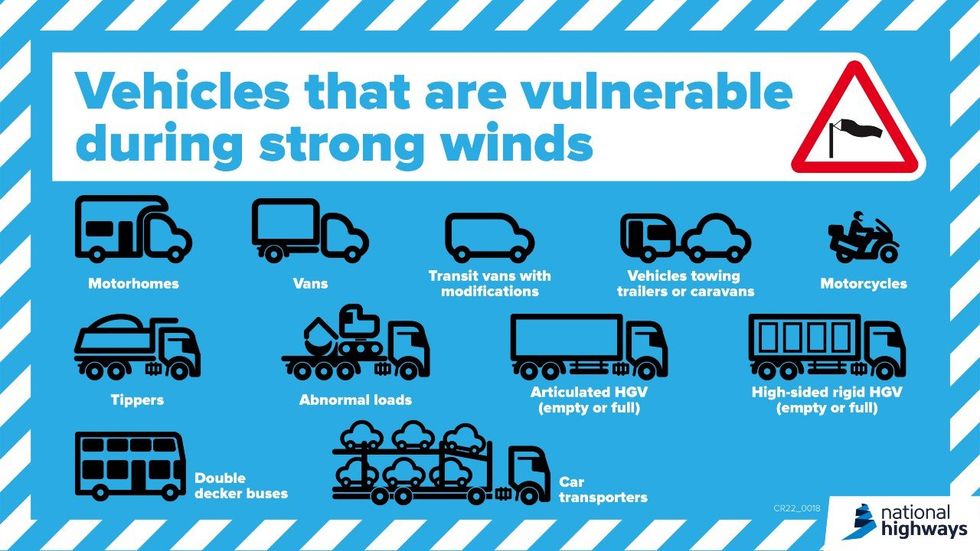
During windy weather, National Highways can prevent certain vehicles from travelling on UK roads
|NATIONAL HIGHWAYS
Meanwhile, Rule 233 detailed how, in very windy weather, vehicles may be affected by turbulence created by large vehicles.
This would particularly impact motorcyclists, "so keep well back from them when they are overtaking a high-sided vehicle," the code added.
National Highways shared: "We use roadside signs to warn you of possible strong winds or side winds. These could be displayed on electronic or fixed roadside signs.
"Some locations also have windsocks located on the roadside. These give you a visual representation of the direction and severity of the wind. We monitor the network for fallen trees and debris and use specialist equipment to remove them as quickly as possible."