








Labour has been urged to review its upcoming car ban for petrol and diesel cars following outcries by the automotive industry and wider global tensions.
Mike Hawes, chief executive of the Society of Motor Manufacturers and Traders (SMMT), has called on the Government to urgently review the Zero Emission Vehicle mandate, which requires the UK to have 100 per cent electric vehicles by 2035.
Speaking at the SMMT Electrified event, Mr Hawes said that while "everyone must comply with the mandate", it does not mean it is delivering as planned.
He has now warned that without more Government support, the ZEV target of having 33 per cent of car sales be electric by the end of this year, will be "unattainable".
TRENDING
Stories
Videos
Your Say
He told delegates: "The UK's EV transition pathway was conceived with the best of intentions - but the assumptions behind it have proved over-ambitious.
"A landscape which once looked solid has turned out to be quicksand. Recognising that the world of 2026 is not the one envisaged five years ago is not a retreat from ambition; it is a necessary step to achieving it.
"We need an urgent review that reflects today's realities, that delivers decarbonisation not deindustrialisation and offers consumers the choice they have always expected."
He highlighted how battery costs, charging rates, and EV prices are currently fourfold what they were when the ZEV mandate was first announced in 2022.
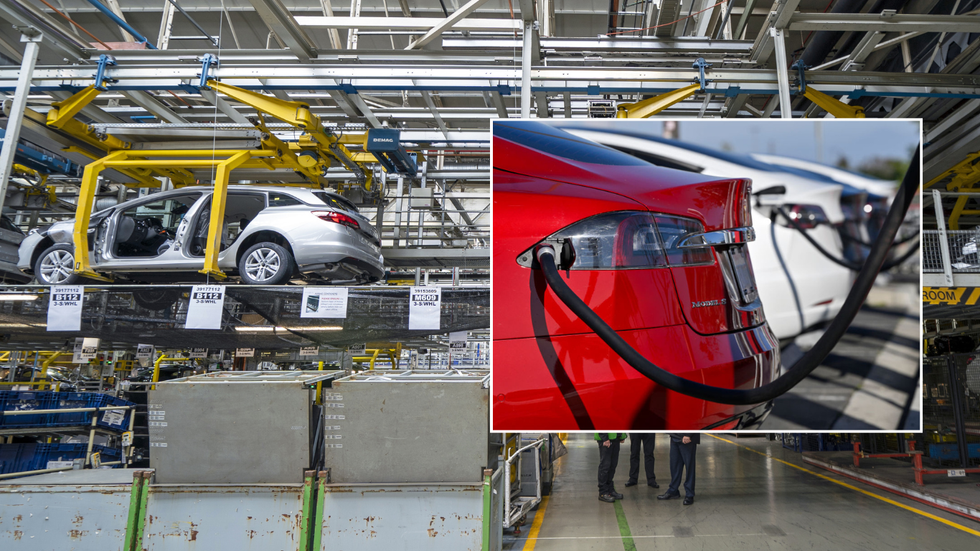
The SMMT has called on the Government to review the ZEV mandate
| GETTY/PAMr Hawes said: "Without change, the ZEV market is too far ahead of the market; we need it reviewed now, resolved now to reflect realities.
"Government needs to be bold, to recognise that our world has changed, but we need the Government to back us."
The latest SMMT report detailed how the original outlook for the ZEV mandate suggested that a new car market without a mandate would reach 26 per cent battery electric vehicle share in 2025.
The report stated: "Yet even with the mandate, and despite billions invested in new products and technologies, a massive choice of vehicles in every segment and discounting totalling at least £10billion in the first two years of the ZEV Mandate, drivers have proved less willing to move to electric vehicles than anticipated, with 2025's market share reaching 23.4 per cent."
LATEST DEVELOPMENTS
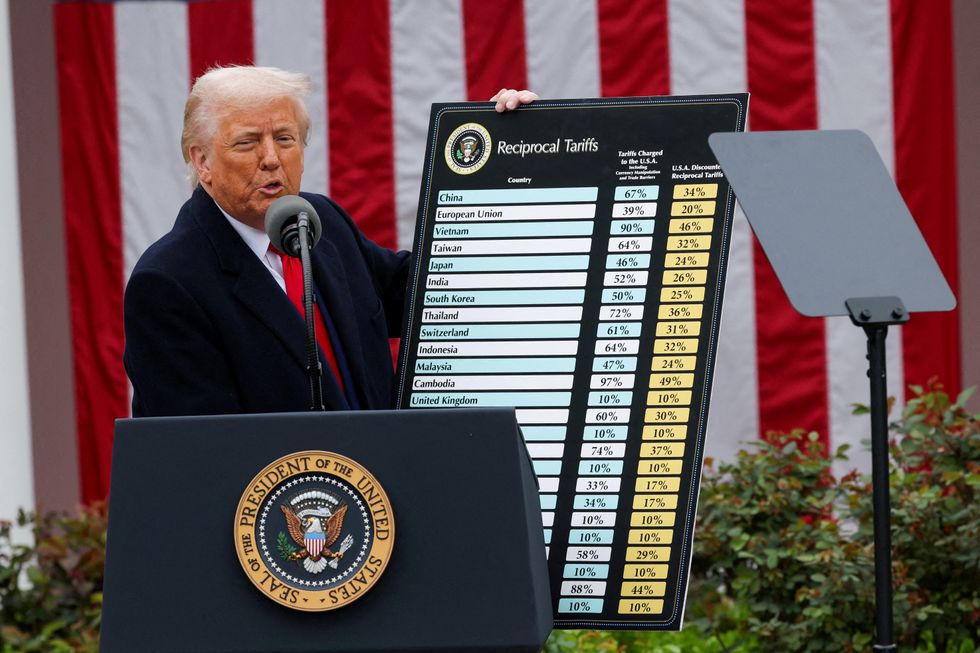
The US President announced huge tariffs last year, impacting the automotive sector
| REUTERSCommenting on the SMMT warning, Fiona Howarth, Founder and Director at Octopus Electric Vehicles, said: "Drivers are already choosing electric in growing numbers because the technology and economics make sense. The ZEV mandate provides the certainty that brings more choice and better value to drivers.
"Weakening this policy now would be the wrong approach. We should be doubling down on ways to power our cars and homes with energy produced here in the UK, rather than relying on imported fossil fuels."
She suggested that the focus now should be on building confidence and accelerating the transition, "not slowing it down".
The SMMT explained how, due to global concerns, political upheaval and the impact of the tariffs by the US, "a new normal requires a new route".
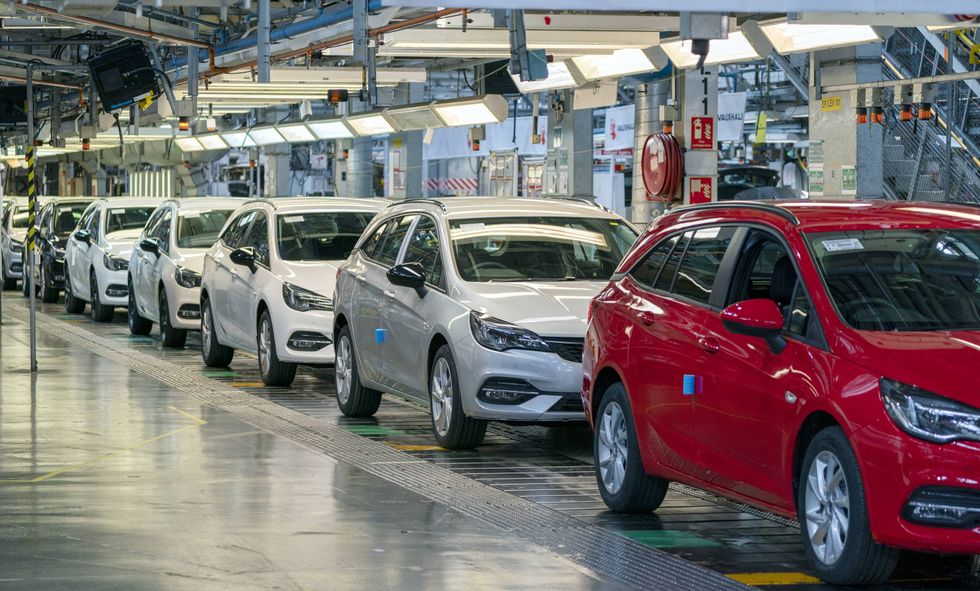 The ZEV mandate requires all new petrol and diesel car sales to be electric by 2030 | PA
The SMMT stated that a new approach has been grounded in realism and pragmatism.
"The industry is determined to deliver, investing billions in technology, manufacturing and model choice, but the cost of complying with regulation puts the sustainability of the industry - and therefore, its ability to decarbonise road transport through fleet renewal, at risk," the society added.
Meanwhile, Tanya Sinclair, CEO of Electric Vehicles UK, took a more positive approach, stating that the EV transition is already well underway.
She shared: "Electric vehicles accounted for almost a quarter of new car sales last year, and more than two million drivers are already enjoying the benefits of going electric.
"If some manufacturers now want to weaken the targets designed to bring these vehicles to market, they are only hurting themselves. Drivers are increasingly choosing electric because the technology, performance and running costs are better."