










Scientists have discovered that medication commonly used to treat gout could offer an unexpected bonus, offering protection against heart attacks and strokes.
The research, conducted by scientists in the UK, Sweden and Italy, has found that patients taking uric acid-lowering drugs, primarily allopurinol, experienced fewer cardiovascular events over a five-year period.
The team examined records from more than 109,000 adults diagnosed with gout, which revealed that those who achieved uric acid levels below 300 micromol/L saw the greatest reduction in risk.
It was also noted that patients on the medication had fewer gout flare-ups compared to those who weren't receiving treatment.
TRENDING
Stories
Videos
Your Say

High uric acid levels alone don't cause any symptoms
|GETTY
This could have significant implications for the millions of Britons living with this painful condition.
The researchers drew their data from the Clinical Practice Research Datalink Aurum, which was linked with hospital admission records and mortality data spanning from January 2007 to March 2021.
LATEST DEVELOPMENTS
All 109,504 participants were adults aged 18 and over who had been diagnosed with gout and had uric acid levels above recommended targets before they started treatment.
The team split the patients into two groups – one receiving uric acid-lowering medication, mainly allopurinol, and the other not.
They then tracked heart attacks, strokes and cardiovascular-related deaths for five years following the first prescription.
The findings clearly demonstrated that individuals on the medication had a lower risk of these serious cardiovascular events, alongside experiencing fewer painful gout episodes.
What is gout?
Professor Abhishek Abhishek, a rheumatology expert at the University of Nottingham, explains that it's a type of arthritis linked to high uric acid levels in the blood.
"Over time, the uric acid deposits inside joints form very small crystals and when these crystals are released, they cause arthritis, which is characterised by severe pain and joint swelling," he said.
The painful episodes typically last between a week and ten days, but once the crystals form, they stick around and keep triggering flare-ups.
As for what sets off an attack, Professor Abhishek points to dehydration, joint injuries, illness, starting diuretic medication, and heavy drinking over a short period.
While gout can technically affect anyone, it's most commonly seen in people aged 40 and over, becoming increasingly prevalent as we get older – it's actually quite common among those in their 70s and 80s.
Unfortunately, high uric acid levels alone don't cause any symptoms, so the first sign most people notice is a sudden, painful arthritis episode.
"During this, there's a fairly acute or abrupt onset of joint pain, swelling and redness on the big toe," explained Professor Abhishek.
The mid foot, ankle, knee and wrist can also be affected.
Some people develop small, firm lumps called tophi – visible as whitish, chalk-like deposits beneath the skin, typically appearing at the elbow or fingertips.
Left untreated, gout attacks can spread to multiple joints simultaneously and eventually cause permanent joint damage.
Anyone who suspects they might have gout should see their GP, advises Professor Abhishek.
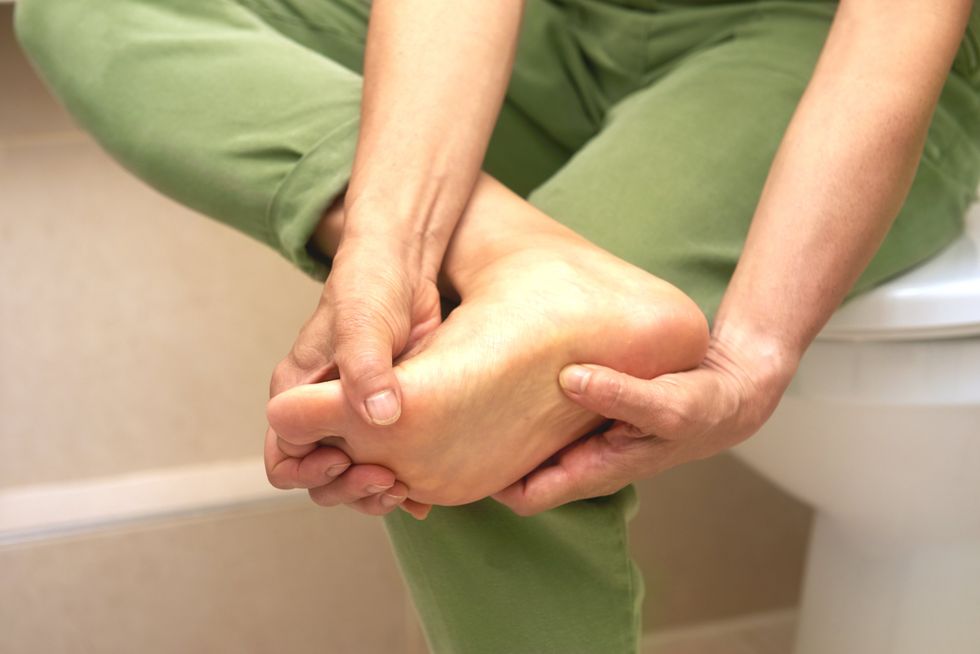
The midfoot, ankle, knee and wrist can all be affected by gout
|GETTY
A blood test can check uric acid levels, and if these are elevated in someone with typical big toe arthritis symptoms, that's usually enough to confirm the diagnosis.
"A doctor can stick a needle inside the joint to drain a bit of joint fluid and then look at it, or ask the labs to look for any crystals under a microscope," Professor Abhishek explained.
For acute flare-ups, treatment typically involves painkillers like paracetamol, rest and ice packs, along with anti-inflammatory options such as naproxen, colchicine or prednisolone.
For long-term management, two main medications available in the UK are allopurinol and febuxostat, both of which work by reducing uric acid production in the liver.
Our Standards: The GB News Editorial Charter