

The postponed council areas are not where Labour faces an electoral wipeout in May. Reform eyes another prize
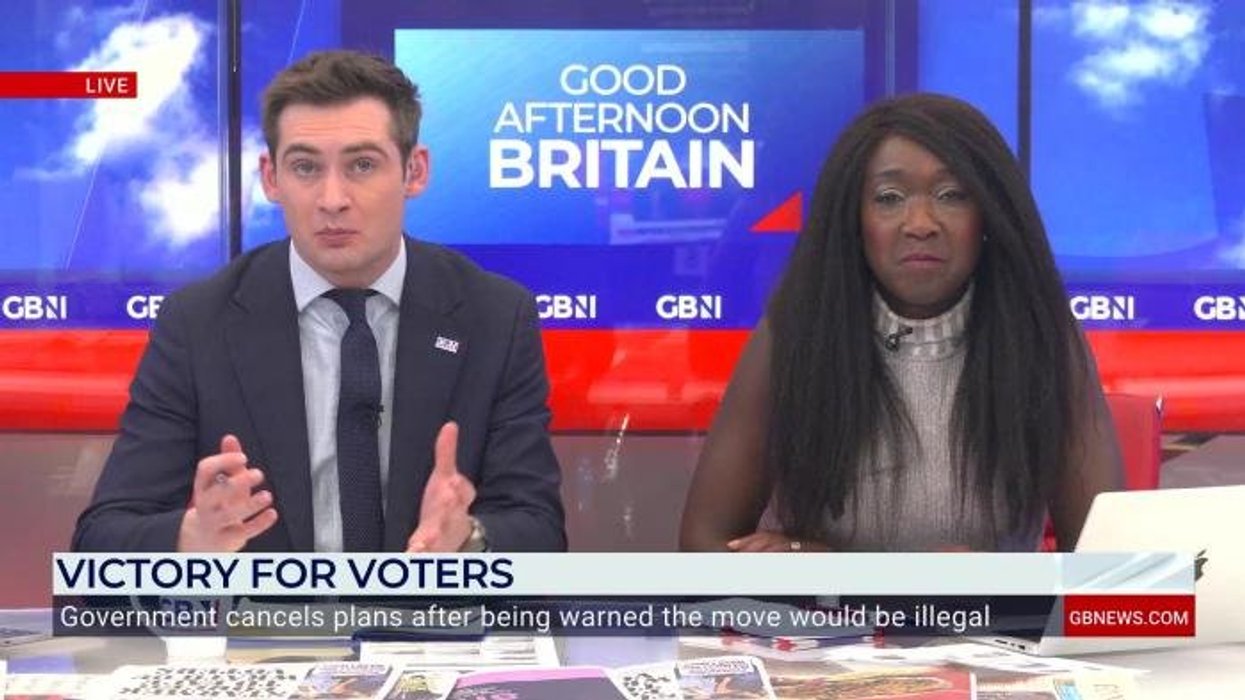
Jack Carson speaks to Cheltenham locals after Labour performs massive U-turn on delaying local elections |
GB



Metropolitan councils will determine how good or bad the headlines are for Labour, writes Britain's top elections guru
Don't Miss



Most Read

Trending on GB News
Labour has unsurprisingly come in for considerable criticism following the reversal of its original decision to postpone local elections for 30 councils in May.
The reason for the postponement was supposedly that the local councils in question could not cope with holding elections while preparing for local government reorganisation. Yet now they are being expected to run an election anyway, despite having had their preparations put on hold.
There was also a curious feature to the postponements. Labour-led councils found the opportunity to delay their next appointment with the electorate much more attractive than did those being run by the Conservatives or the Liberal Democrats.
This inevitably led some to the conclusion that, given its dire position in the polls, the party was taking the opportunity to avoid some seemingly inevitable, serious electoral losses.
But if such calculations did play any role in the decision, the postponements were never likely to have a major impact on the scale of the losses the party might suffer on May 7.
As a result of the original decision, the elections were cancelled for fewer than 700 council seats – out of a grand total of over 5,000 that were scheduled.
Far more important to Labour’s fortunes are the elections in London, where, at the last borough elections in 2022, Labour won nearly two-thirds of the 1,800 council seats at stake.
Meanwhile, another 1,000 seats are being contested in most of the metropolitan councils in and around England’s biggest cities outside the capital. Labour will be defending control of no less than 25 of these 32 councils.
Facing the prospect of a challenge from the Greens in London and from Reform in many of the metropolitan councils, these are elections that will primarily determine how good or bad the headlines are for Labour on the day after polling day. And there was never any suggestion that these elections might be stopped.
Most of the councils where the elections were originally postponed are relatively small district councils, the lower tier of the two-tier system of local government that the government wants to scrap.
Not only are they relatively small, but in most instances, in contrast to London and half the metropolitan councils, only one-third of the council seats are due to be elected this year.
Most of the councillors on these councils were not due to face the electorate anyway. That means that even if Labour now does badly in the elections for these councils, the party could often still retain overall control anyway.
However, there are four key exceptions to this picture. Also due for postponement were the elections for four county councils (all already having been postponed last year), where the Conservatives are either in overall control or are the largest party.
Norfolk and Suffolk, East and West Sussex - these are big councils where all the seats will be contested. Indeed, between them, they account for more than two in five of the seats where the elections had been postponed.
The postponement of the elections on these four predominantly Tory councils helped ensure that the total tally of Conservative councillors who were no longer going to have to face the electorate was, in fact, slightly bigger than the total tally of Labour councillors who found themselves in that position.
Moreover, these are just the kinds of councils where the Conservatives lost ground heavily last year – often to Reform and sometimes to the Liberal Democrats.
Their loss this year could present Kemi Badenoch with just the kind of bad headlines that she might have hoped would be the exclusive preserve of Sir Keir Starmer.
More From GB News