



Have you been to Dubai? Do you know people who’ve moved to that Shangri-la of high-rise bling in the desert? A quarter of a million Britons are now classified as Dubai residents.
Whatever you think about the fur-coat-no-knickers, gin-and-Jag vibe, Dubai is a capitalist success story like no other (notwithstanding its recent setbacks at the hands of the Iranian Revolutionary Guard).
But I’m not talking today about Dubai as a magnet for influencers or a lifeboat for UK nationals who've fled a tax-take in Britain now higher than at any time since World War Two. No, I want to consider how our relationship with Gulf States, like Dubai, has just been transformed by Brexit.
To do this, you need to imagine what Dubai looked like 40 years ago. When a place that is now home to the world’s tallest skyscraper and deepest pockets was little more than a shabby, fly-blown oasis in the sands.
Because that was when the European Union, or rather its predecessor, the European Economic Community, last signed a trade deal with Dubai. To describe such a trade deal as out-of-date or obsolete does no justice to the scale of change in business between Europe and the Gulf since then.
This is not a column about economics. I leave such things to my friend Liam Halligan, the brilliant economist who explains these things so lucidly. But it is a column which reflects on recent events which affect us all. Rich or poor. Financially literate or not.
What I’m talking about is an extraordinary trade partnership announced earlier this week that was signed between the UK and the Gulf States. Not just Dubai and the UAE, but all of the major Gulf economies combined, including Saudi Arabia, Qatar, Bahrain, Kuwait and Oman.
This trade deal is worth a fortune, getting on for £4billion and likely to see the volume of business between Britain and those mega-wealthy Gulf states rise by a fifth.
It will favour sales of things you’d expect, like luxury cars and missile systems made in the UK. But, unusually, it will also benefit British farmers, who will now be able to sell more food into a part of the world where growing the stuff isn’t easy.
This, then, is a big deal. Which is why previous Conservative governments tried so hard to bring it home. The Gulf Co-Operation Council, the Gulf’s version of the EU, had not - before this week’s deal - signed a trade deal with any G7 country. Now it has. And the deal is with Britain.
This is a major feather in the cap for a Labour-led government, which, in so many other respects, has done all it can to tank the British economy.
So credit where credit’s due. Except that the credit hasn’t gone where it should. Yes, the diplomats and negotiators who made this deal possible deserve our gratitude. But, in fact, there are millions of us who also deserve credit - 17.4 million of us. All of us who voted in favour of Brexit.
By securing our sovereignty, Britain regained the ability to sign one-on-one trade deals with foreign nations. And, for all that we are told by Remainiacs that no good ever came of Brexit, these deals are now beginning to mount up.
Countries like India and South Korea have signed on the dotted line. And Britain is now part of the fastest-growing trade partnership in the world, in the Pacific.
But when Keir Starmer celebrated this latest trade deal this week, he made no mention - at all - of Brexit. He was so keen to boast about a rare win for his Government that he even wrote a piece in the Times newspaper, rhapsodising about what a big new agreement with places like Dubai would mean for British workers.
Why the Brexit-shaped hole in his article? Because Labour is not about to start heaping praise on Brexit-freedoms even as it talks seriously about reversing them - and the 2016 referendum result. Because this was the week when Labour decided to re-litigate Brexit. To hurl itself back into the trenches of the Brexit wars.
It is doing so out of desperation. In the case of Wes Streeting, it is the desperation of an ambitious politician who thinks he deserves to be Prime Minister but needs to pull a rabbit out of the hat to make that dream a reality. Last Saturday he made a speech in which he described the decision to leave the European Union as a “catastrophe” and advocated going back in.
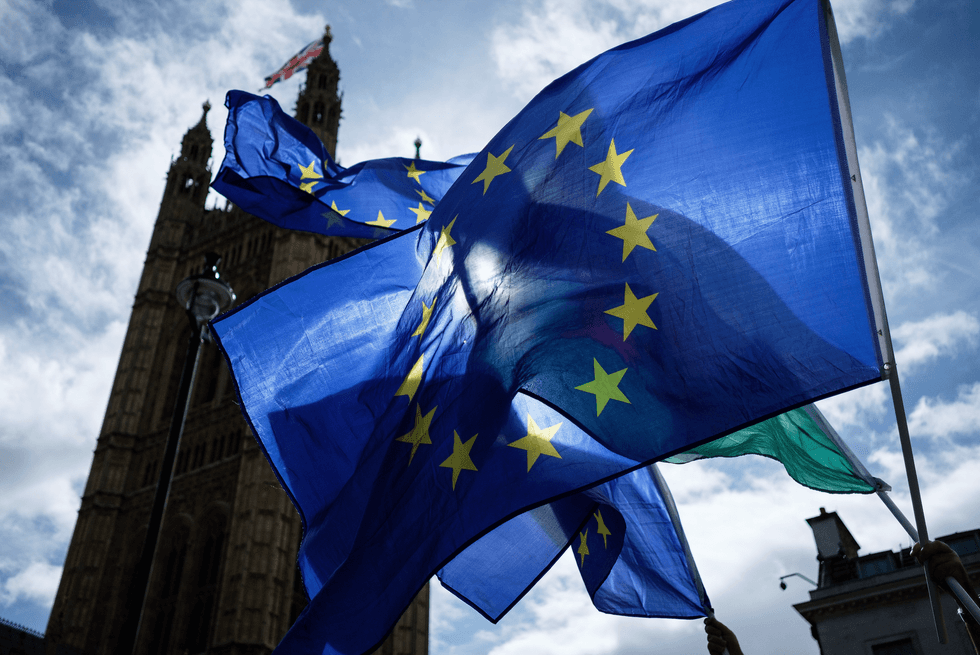
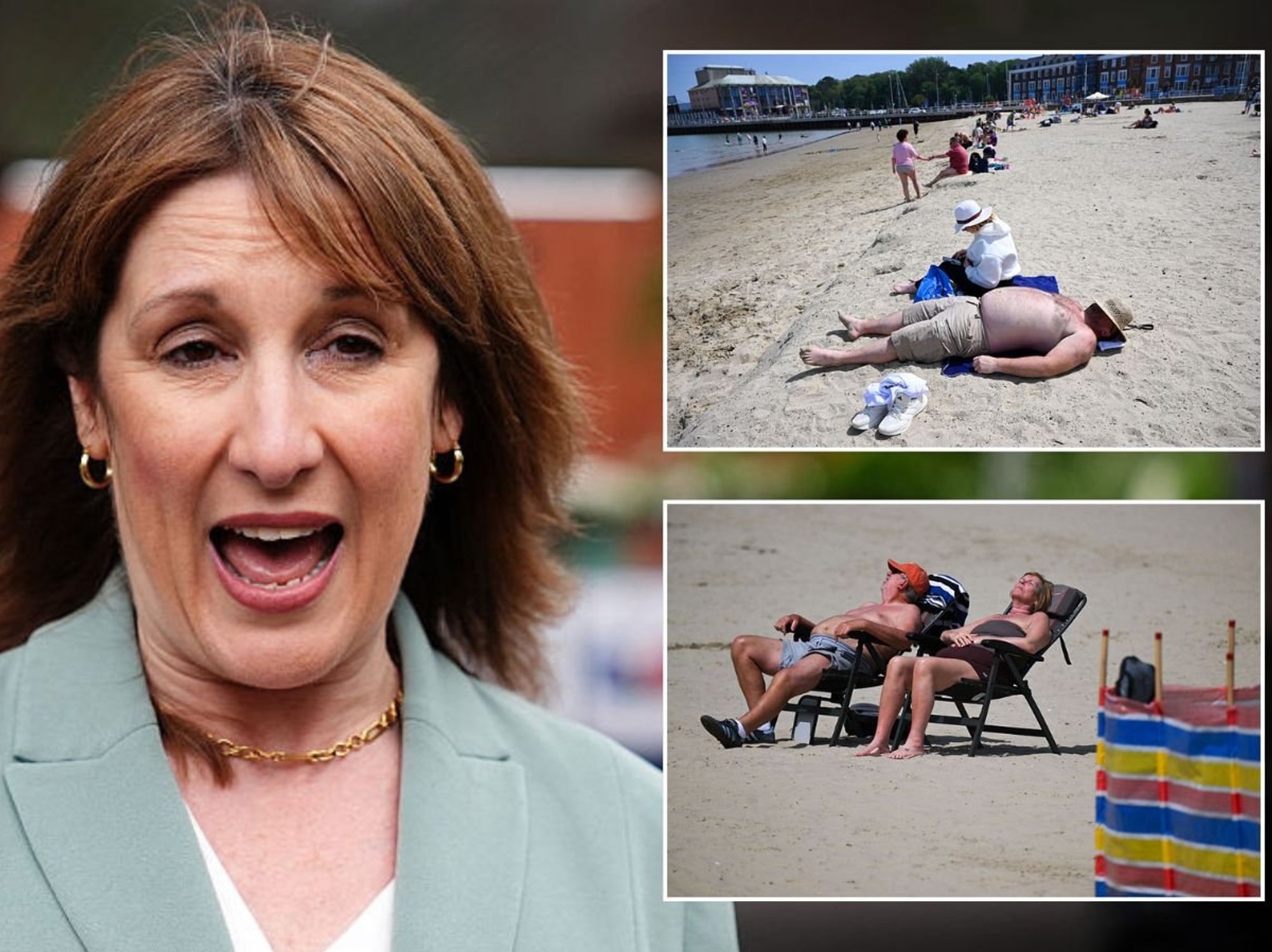
Labour wants to reverse Brexit just as it breathes life into Britain - Colin Brazier
|Getty Images
Andy Burnham, another man desperate to be PM and Streeting’s leadership rival, said last year that he believed rejoining the European superstate was in Britain’s best interests and was inevitable. He only reversed that position this week because the seat he hopes will propel him to Westminster and Number Ten voted massively for “OUT” in 2016.
Labour is pivoting. Most of its metropolitan middle-class members and MPs are instinctive Re-joiners. Labour calculates that, if it wants to win back supporters who've defected to the Greens or LibDems, it needs to effect some kind of alchemy for its 2029 manifesto.
This has been coming for a while. When Labour first took office, it was at pains to stress it had inherited an economic mess from the Tories. But, when that excuse for incompetence started to wear thin, the story shifted.
Increasingly, Labour heavyweights blamed Brexit for every bump in the road. Suddenly, all the talk - the euphemistic talk - was of “closer economic co-operation with our European neighbours”. The direction of travel was clear, even if the language was not.
Next month will mark the tenth anniversary of Brexit. In spite of what Labour thinks, large parts of the country have not reneged on their decision. The most recent YouGov poll showed that 55 per cent of voters favoured rejoining - not so very different from the 48 per cent who voted to stay in, in the first place.
If Labour sought another referendum, as I think it will come the next general election, then it will need to answer some difficult questions.
What kind of deal does it think Britain would get from the EU?
We would join as a new member. And that would mean adopting the Euro as a currency. The Margaret Thatcher rebate would be gone, and our annual membership fee - what we would pay Brussels for the privilege of joining a rapidly declining economic bloc - would be colossal. Back in 2020, it was £12.6bn. Today it would be much higher.
So no more Thatcher rebate, but nor any of the opt-outs we once enjoyed, like the one negotiated by John Major, which kept us out of the Schengen Agreement. Were we to go back in, we would have to accept the free movement of EU nationals, theoretically giving half a billion people the right to live and claim benefits here.
Many of them are Europeans in name only. Last month, Spain, for instance, granted an amnesty to at least half a million mainly-African undocumented migrants. Were we still part of the EU, they could all come to the UK.
Perhaps most importantly of all, and this is often overlooked, by leaving when we did - we’ve avoided all the stuff that Brussels has subsequently forced on member states since we left. We’ve swerved the suffocation of all that ever-closer union.
Brexit has meant the freedom to plough our own furrow. On covid vaccines, AI, gene-editing. It has allowed us to strike trade deals like this week’s agreement in the Gulf, an area with which the UK has long had the sort of strong historic ties which other European nations have not.
If we went back into the EU, we would trade with the Gulf states - and many others now - on terms that advantage the whole of the EU. And those terms would not necessarily advantage us.
The UK officially left the EU on January 31st 2020. Less than eight weeks later covid was here and our first lockdown too. The Brexit butterfly struggled to exit the chrysalis. But now - as we approach ten years since the referendum result - it is finally bearing fruit.