





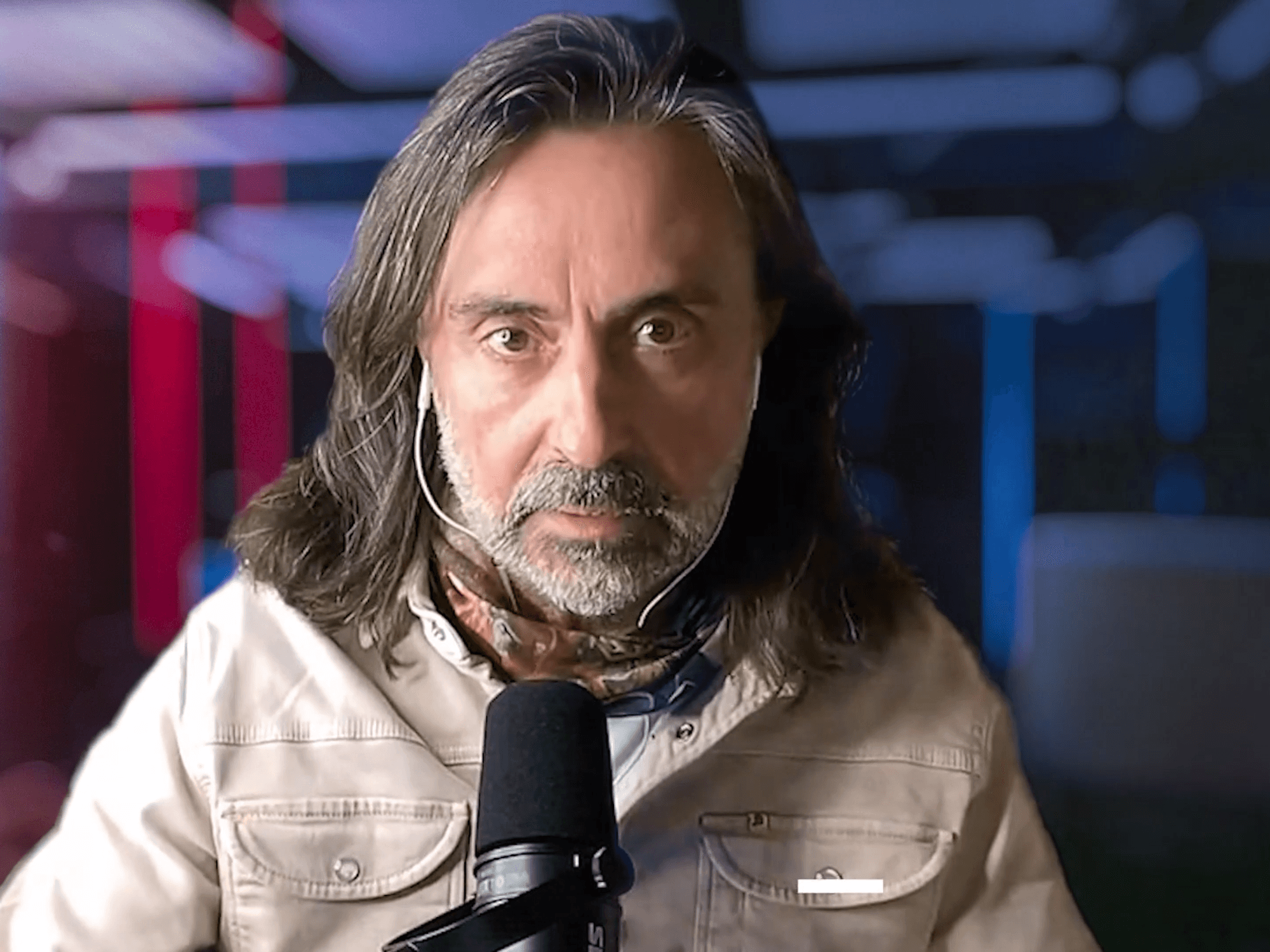
I spent a happy couple of hours last Saturday watching Bradford City play a football match, sitting alongside one of the city’s former MPs. He’d spent 19 years as a member of parliament, building a reputation as the kind of public servant who worked hard for constituents.
It’s fashionable to disdain the calibre of contemporary MPs. And, indeed, I am about to do exactly that. And yet there are exceptions, and Sir Philip Davies, the former Tory MP for Shipley, is one of them.
The job is unhealthy (he recently had a quadruple heart bypass); underpaid (I’ll explain); and increasingly dangerous (Davies has lost count of the number of threats he received while in office).
But in spite of all that, Sir Philip loved his job. He took it seriously, partly because, unlike so many current MPs, he hasn’t spent his entire life in politics. Before winning his seat, he worked for ASDA for more than a decade.
I thought of him this week when I saw 40 of his former colleagues dancing while the Middle East burns. Ostensibly, they were ‘raising awareness’ - that breezy, catch-all excuse for bestowing the nobility of a cause on a frivolous event.
In this case, the event was held in Parliament’s overflow building, Portcullis House. Built at a cost of £235million (against an estimate of £165), it has an atrium space designed for MPs to meet constituents, away from the stuffy, gothic confines of the Palace of Westminster.
Churchill said of architecture, “we shape buildings; thereafter, they shape us”. And maybe there’s something in that. Perhaps the mock-medievalism of the Houses of Parliament gives MPs a window on a world where a wrong step in politics was a matter of life or death.
Put them in a modern, smoked-glass and chrome building like Portcullis House, and they instantly succumb to the glitzy flippancy of the age. Well, that would be one charitable interpretation.
Sadly, most of us know something deeper is at work. That the sorts of people who are now drawn to politics are too often either callow duffers or wallowing narcissists.
As I posted on X this week: “Large parts of the world are run by politicians who retain what Roger Scruton called ‘the tragic sense of life’. By contrast, our country is run by frivolous pygmies who view public service as a bit of a lark.”
Judging by the response on Twitter, many of you agree with me. The sight of MPs taking part in the sort of toe-curling exhibitionism which Ed Davey now deploys in lieu of being electable is never gratifying.
Especially not right now. Britain faces existential questions about its place in the world, our ability to defend UK nationals in the Eastern Mediterranean and whether the Special Relationship with the US can survive Keir Starmer’s weak impersonation of wartime leadership.
 The sight of Westminster MPs dancing while war rages is a searing portrait of modern Britain - Colin Brazier |
 PA
And yet there was the Speaker of the House of Commons, practising the Cha-cha-cha for the cameras, flanked by grinning Tories, lithesome Labour backbenchers, even the new, gyrating, perpetually-dazed-looking Green MP for Gorton and Denton, Hannah Spencer. There was much talk of bringing recognition of the role dance plays as a “valuable tool for getting the nation healthy” and saving the UK implausibly large amounts of money on obesity and mental elf.
Presumably, some of the MPs thought twice before popping on their dancing shoes? The papers are, after all, full of pictures of explosions and sinking warships; of Britons fleeing war zones and dark warnings about Where This All Ends.
Nobody wants MPs to wander Westminster in sackcloth and ashes whenever British military personnel are risking their lives for Britain, but taking part in a Strictly Come Dancing tribute act wreathed in cheesy smiles? Come on.
And presumably somebody, an organiser of the event perhaps, thought maybe the right thing to do was to cancel and reschedule for a time when there are fewer death-delivering ballistic missiles in the air. But, no, that would be Too Much Trouble. And, anyway, what kind of po-faced kill-joy could object? It’s only harmless fun, an entertaining spectacle in furtherance of a good cause. Isn’t it?
This is the reasoning of the students’ union common room. Anyone with an ounce of judgement would know that the sight of British MPs, grinning like Cheshire cats, throwing themselves around a make-shift Parliamentary dance floor for the benefit of the cameras, is in poor taste.
And for politicians who spend a lot of time talking about sensitivity and empathy, it shows a staggering want of both. But the wider point is this: we deserve to be led by people we can take seriously - so where did they all go?
Part of the problem is that Labour didn’t anticipate the scale of its 2024 landslide, and many of its backbenchers were never expected to become MPs. And it shows in the quality of parliamentary proceedings.
Two decades ago, any MP seen reading a question would’ve been shouted down and scolded by the Speaker. Now it’s more common than not.
Think about that. These are our tribunes of democracy. Elected by tens of thousands of constituents to hold ministers to account and debate the great issues of the day in the very cockpit of democracy. And yet many of them can’t trust themselves to speak a few words without notes.
The gulf between what now is and what once was seemed especially stark for me this week. I went to a panel discussion about the legacy of Enoch Powell. The former minister’s reputation is undergoing a re-evaluation.
Not just because his ‘Rivers of Blood’ speech in 1968 turns out to have been far more prophetic than people were once willing to accept, but because there’s a growing recognition in right-wing circles that - by allowing Powell to be cancelled in the way he was - British politics was deprived of a huge talent.
His politics were forged in war. And this, of course, is one reason why our current crop of politicians will always seem insubstantial by comparison with previous generations.
Margaret Thatcher’s first Cabinet, for instance, contained three ministers who had been awarded the Military Cross in World War Two: Willie Whitelaw, Lord Carrington and Francis Pym. Several others saw active service.
When war broke out in 1939, Powell was living in Australia. He returned home immediately, enlisted as a private, but worked his way up to Brigadier. He was a sober soldier and even more serious scholar, speaking several languages fluently, including Urdu and Russian, becoming a professor of Ancient Greek at 25.
And when he entered politics, he lived by an intellectual and moral code that would be a mystery to many of the former activists, charity workers and lawyers who now litter the backbenches. His parliamentary speeches were legendary, and his resignation, when it came, was a matter of principle.
Politicians like him are rare, but not confined to the conservative cause. Take Frank Field, the Labour minister charged by Tony Blair to ‘think the unthinkable’ about welfare reform (he did, and was sacked).
Frank Field often looked a bit, well, glum. But he was a man of profound Christian faith, with a genuine desire to help the poor who wanted to better themselves. And even Gordon Brown, whose politics I vehemently oppose, could never be accused of shallowness or glibness.
So what to do? We can hardly hope that a war will restore our politics of seriousness. But one place to start relates to money.
This week, we learned that an MP's basic salary will rise to £98,599 a year.
For many people, this is an outrage. But for me, it is not enough to lure gifted members of the public into the rough trade of politics. Pay peanuts, get monkeys. Dancing monkeys at that.
More From GB News