





Could Keir Starmer secretly want Donald Trump’s plan to rid the threat of a nuclear Iran to fail? Considering the assaults his government has dealt to its own country’s values, heritage and culture, the possibility cannot simply be dismissed.
The evidence of his conduct points unmistakably to a deeper calculation: In direct defiance of nearly every preceding British government, Labour appears convinced that a visibly close relationship with the United States is not in the party’s electoral interests.
This is not the product of mere indecision, nor is it the triumph of scrupulous legalism over rashness.
It is a deliberate posture that subordinates national security and historic alliance obligations to short-term domestic positioning to pander to certain constituencies.
The timeline of decisions is unrelentingly damning. On 11 February 2026, the United States formally requested permission to use RAF Fairford in Gloucestershire and Diego Garcia in the Chagos Islands as staging points for strikes on Iranian targets.
The National Security Council, acting on the advice of Attorney General Lord Hermer, initially refused.
Hermer’s opinion warned that Britain would be regarded as an accomplice if the strikes were subsequently judged unlawful under international law. Trump’s response was swift.
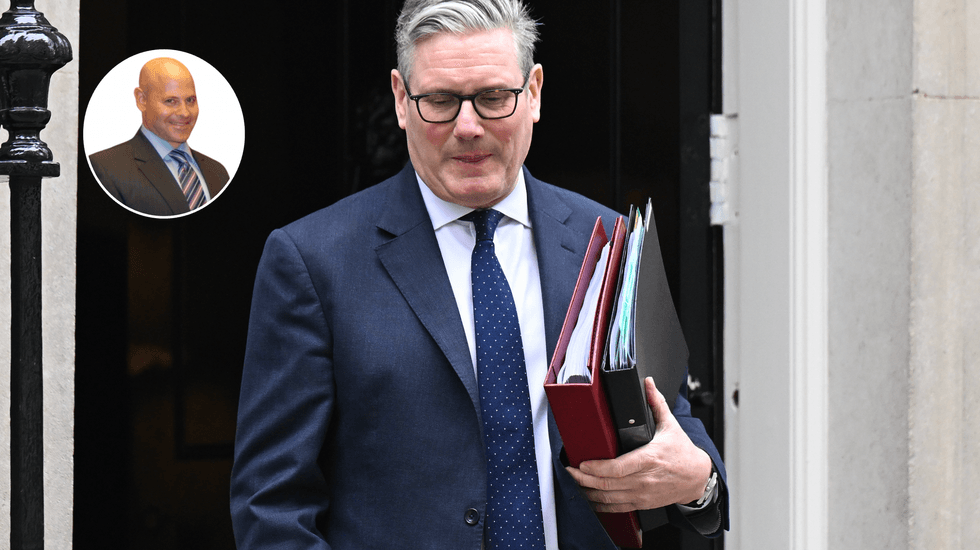
Keir Starmer's nervousness makes perfect sense once you realise he has a stake in Iran's regime - Lee Cohen
|Getty Images
On 19 February, he posted on Truth Social that “this land should not be taken away from the UK” and explicitly linked the Diego Garcia and Fairford bases to the urgent need to “eradicate a potential attack by a highly unstable and dangerous regime”.
The Chagos handover deal, which Starmer had negotiated with such fanfare, was now being weaponised against him.
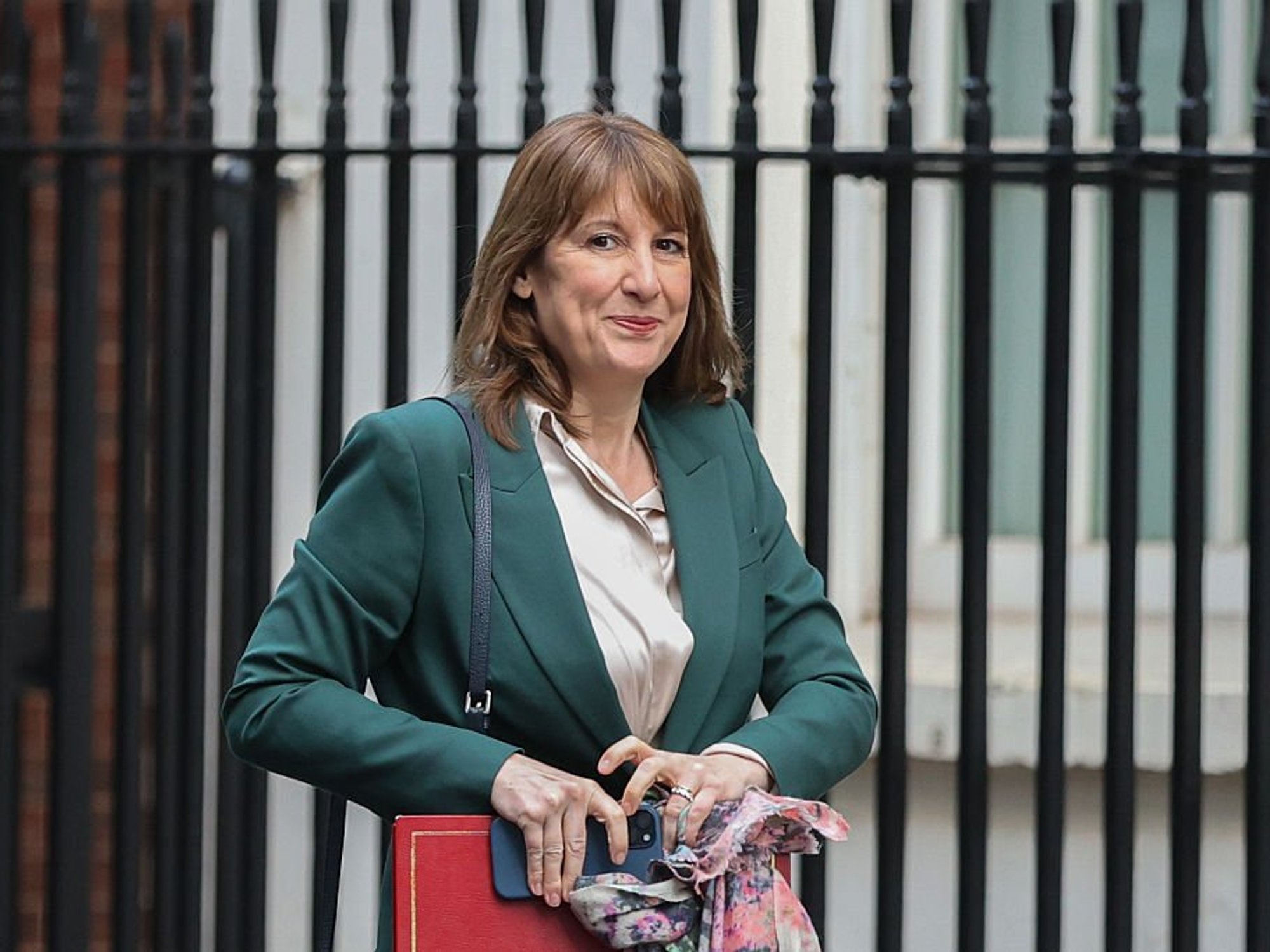
By 26 February, with the US-Israeli strikes believed to be hours away, the NSC convened again. Ed Miliband, Yvette Cooper, and Rachel Reeves led a sustained legalistic assault on any deeper involvement. Leaked accounts from inside the meeting record explicit arguments that being seen to align too closely with the USA was not in Labour’s electoral interests.
When the operation commenced on 27–28 February, Starmer instructed British forces to remain strictly defensive. RAF assets in Cyprus and Qatar were scrambled only to protect against Iranian retaliation, not to support the offensive.
It took the direct impact of an Iranian Shahed drone on RAF Akrotiri’s runway on 1 March — Russia-supplied ordnance striking sovereign British territory — for Starmer to announce a limited U-turn.
Even then, the decision was buried three-and-a-half minutes into a five-minute Downing Street video, issued only after urgent calls from Gulf leaders who felt abandoned. Trump’s verdict arrived almost immediately: “very disappointed,” “surprised at Keir,” and the lacerating judgment that “this is not Winston Churchill that we’re dealing with”.
Contrast this record with the standard Britain once set. In April 1986, Margaret Thatcher, politically vulnerable after the Westland crisis and facing Cabinet grumbling, authorised Ronald Reagan to launch F-111 bombers from British bases against Libyan targets linked to terrorism.
She engaged Reagan frankly, then decided: “We have to support the Americans on this. That’s what allies are for.”
She framed the action under Article 51 of the UN Charter as self-defence, absorbed the domestic political cost, and emerged with a strengthened transatlantic bond that helped carry Britain through the end of the Cold War.
Starmer, by contrast, permitted legal maximalism to paralyse decision-making from the outset. The cabinet’s electoral calculus — laid bare in the NSC leak — took precedence over strategic necessity.
The consequences are both immediate and structural. When the conflict reached sovereign territory with the Akrotiri strike, Britain found itself reliant on France’s Charles de Gaulle carrier group for air defence cover while HMS Dragon remained in dry dock for repairs.
Gulf partners — UAE, Bahrain, Jordan — expressed open fury at what they perceived as abandonment while Iranian drones and missiles targeted their cities.
Starmer’s pivot to the E3 format with Emmanuel Macron and Friedrich Merz, emphasising the “resumption of negotiations” rather than decisive action, has left Britain isolated from allies who backed the United States without hesitation, including Canada and Australia.
Merz himself observed that appeals to international law have “relatively little effect” when military resolve is absent.
NATO influence diminishes; Britain’s voice on Ukraine weakens; borders become more vulnerable to cascading threats from a region destabilised by Tehran’s aggression.
Labour’s governance institutionalises this retreat across multiple fronts. Legal caution supplants executive judgment.
Miliband’s eco-pacifist worldview and the cabinet’s domestic priorities consistently subordinate security to polling concerns.
Net zero commitments have left energy resilience fragile at precisely the moment when Middle East instability threatens global supply lines. Migration policy has eroded effective border control. Institutional caution has turned advisers into de facto decision-makers.
What claims to be a measured principle is surrender dressed as moral superiority.
It leaves Britain marginalised when its sovereign bases, historic leverage in the Gulf, and proximity to European energy routes should confer decisive influence against Iran’s nuclear and missile programmes.
The Iran episode exposes the alarming reality that Starmer’s Government prioritises its own interests above those of the nation and the wider West. How could one expect any less of an administration that has so degraded the UK at home and on the world stage?