





In the wake of recent American strikes on Iranian targets, much of the reaction in Britain’s political debate has focused on criticising Washington.
Listening to some of the commentary in Westminster, one might assume that the conflict with Iran began only days ago. It did not. The Iranian regime declared war on the West decades ago.
For more than forty years, the Islamic Republic has pursued a strategy built on destabilisation, proxy warfare and ideological confrontation with democratic nations.
Its leaders have repeatedly declared hostility toward the United States, Israel and Western allies. Yet many policymakers in Europe, including in the United Kingdom, continue to behave as though Iran were simply another difficult diplomatic partner. That assumption is dangerously outdated.
Iran’s regime has spent decades funding and arming militant groups across the Middle East. Organisations such as Hamas, Hezbollah and the Houthis have all received financial support, weapons and training from Tehran.
These groups have carried out attacks that have destabilised entire regions, threatened international shipping and targeted civilians.
The Iranian people’s wealth has not been used to develop their country or improve their lives. Instead, it has been diverted to finance an international network of armed proxies designed to expand the regime’s ideological influence.
Iran’s reach extends far beyond the Middle East.
In the war in Ukraine, the regime has supplied Russia with Shahed drones used to attack Ukrainian cities and civilian infrastructure.
At the same time, Tehran has repeatedly targeted Israel and Saudi Arabia through its proxy forces. In just the past five days alone, Iranian-backed operations have targeted 15 different countries, demonstrating the extraordinary scale of the regime’s destabilising activity.
Yet despite this record, Western leaders continue to debate Iran primarily through the language of diplomacy and negotiations. This disconnect between reality and policy has allowed the regime to act with remarkable impunity.
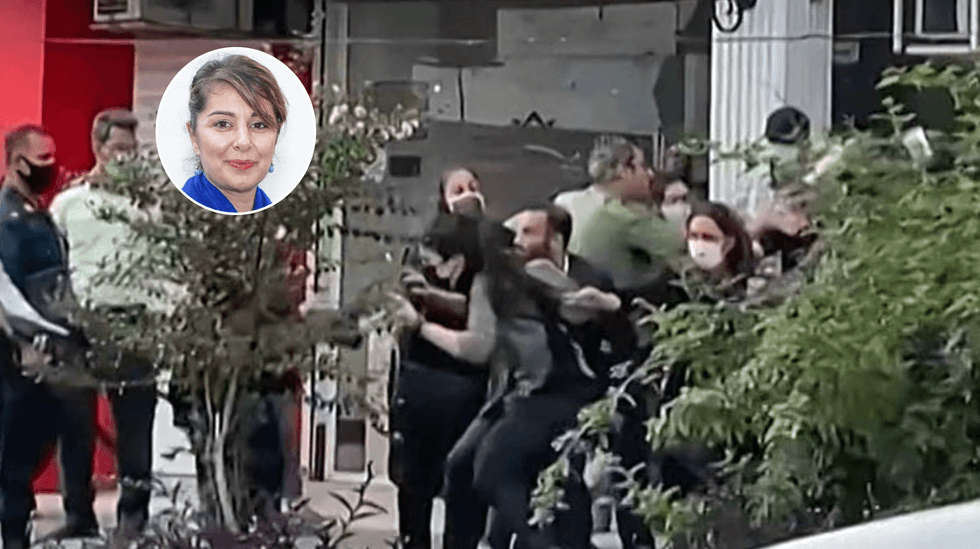
As an Iranian woman, let me tell Western liberals what happens when you criticise the regime - Mattie Heaven
|AFP/Getty Images
The central issue is preventing the Iranian regime from acquiring nuclear weapons. For years, Iran has pursued nuclear technology that many experts believe could soon lead to the development of a nuclear arsenal. Reports indicate that uranium enrichment has already reached levels close to weapons-grade.
If the regime were to obtain such a capability, the consequences would be profound.
A nuclear-armed Iran would dramatically increase the threat not only to the Middle East but also to Europe and the wider world.
This is a regime that has shown little hesitation in using violence against both its own citizens and its enemies. It has funded and directed terrorist groups responsible for attacks such as the October 7 massacre, and its leaders have repeatedly declared their hostility toward Israel, the United States and the United Kingdom. One must ask a simple question: what would such a regime do if it possessed nuclear weapons?
This is the context in which recent American and Israeli actions must be understood. Their objective is not to start a new war, but to prevent a regime that has already demonstrated hostility toward the West from acquiring the most dangerous weapons imaginable. Critics in Britain have been quick to condemn these actions as an escalation.
But that criticism ignores a fundamental truth: Iran has already been escalating war against us for decades. From financing militant organisations to supplying weapons in global conflicts, Tehran has repeatedly demonstrated that its strategic goal is confrontation with the West and the destabilisation of the international order.
For me, this issue is not abstract.
I was born in Iran and saw firsthand how the regime suppresses its own people, particularly women. From the very beginning, the Islamic Republic imposed its ideology through fear, violence and control. Women were among the first victims of this system.
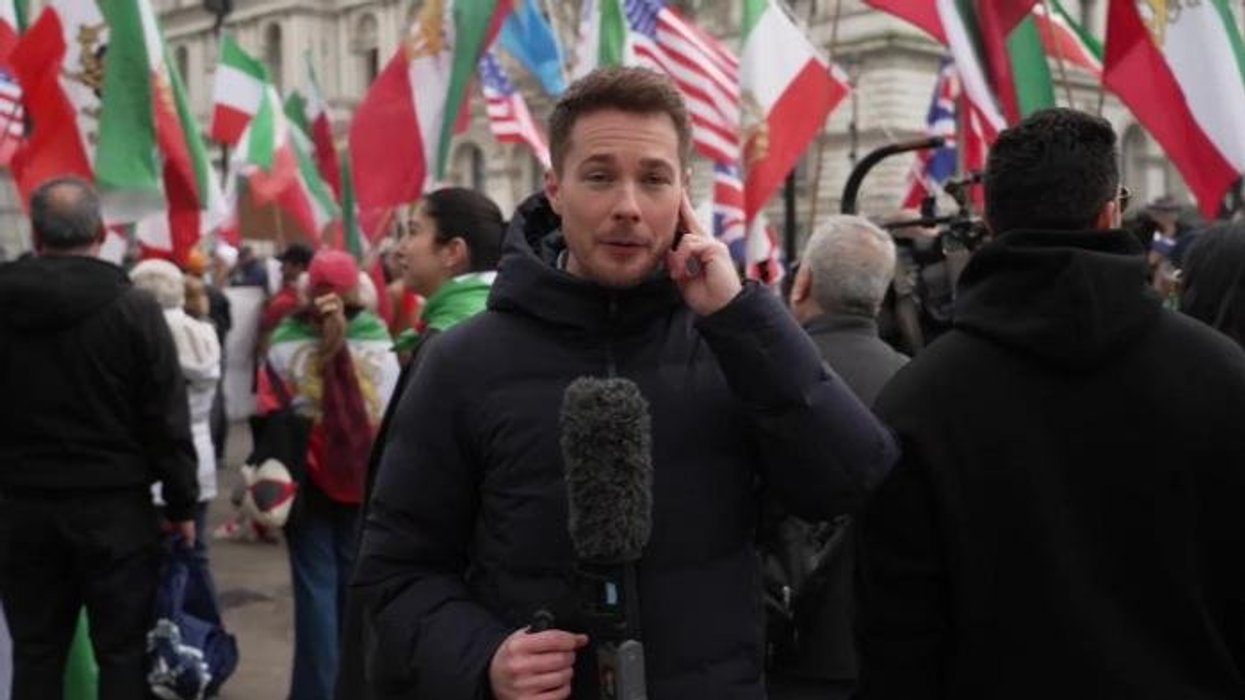
Today, Iranian citizens continue to risk their lives in protests demanding freedom and dignity. Those demonstrations are met with brutal repression.
Only weeks ago, during the latest uprisings, thousands were reportedly killed in just days as the regime moved to crush dissent.
For many Iranians, Western hesitation has been deeply painful. When people risk their lives calling for change, they hope that democratic nations will stand clearly on the side of freedom.
Too often, the international response has prioritised negotiations with the regime rather than solidarity with the Iranian people.
Ironically, the regime now appears weaker than it has been in years. Its regional network of allies has suffered significant setbacks. Syria or Venezuelais no longer the secure strategic foothold it once was. Tehran’s regional proxies are weaker, such as Hezbollah and Hamas, while the Houthis confront growing opposition.
Russia, one of Iran’s most important partners, is heavily consumed by its war in Ukraine and cannot fully support Tehran’s ambitions. Yet even in this weakened position, Iran has still managed to threaten multiple countries and destabilise entire regions.
That fact alone should raise a serious question. If a weakened Iranian regime can already cause such chaos, imagine the danger if it possessed nuclear weapons. The stakes could not be higher.
What we are witnessing today is a historic moment. There is no comfortable middle ground. Either one stands with the Iranian people who seek freedom and with those trying to prevent the regime from acquiring the most dangerous weapons on earth, or one continues to enable a system that has spent decades exporting violence and suppressing its own citizens.
The world would be safer without the current Iranian regime.
More From GB News