






The USA has just proved why strong national security on the world stage is vital, with its operation in Venezuela - an audacious manoeuvre that seized Nicolás Maduro and took him to the United States to face long-running criminal charges.
Concurrently, we are witnessing renewed unrest in Iran: a regime that has sponsored terrorism beyond its borders, and which costs the UK a great deal in defence spending simply to contain and protect free trade from it.
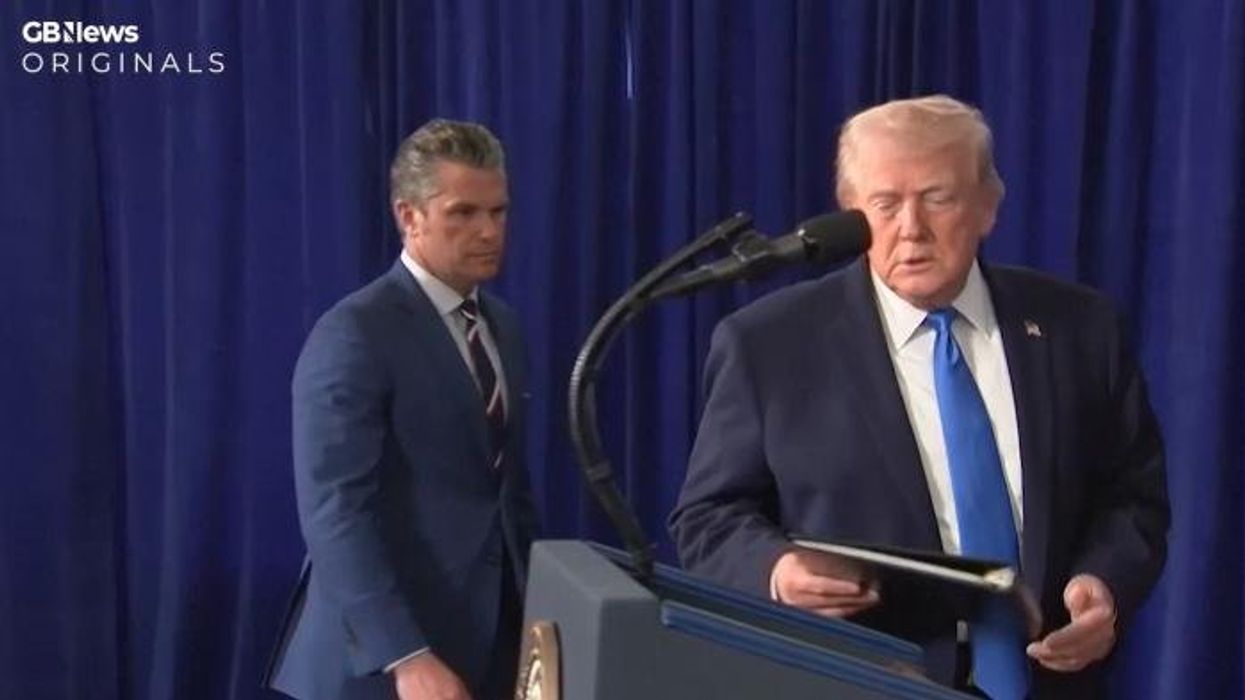
On both, we cannot afford to be bystanders. Ukraine has taught us what happens when we dither. I respect President Trump’s decisiveness and courage to do what he believes is best for his country.
On the left, and across international commentary, I’m already hearing the self-righteous chimes of “rules-based order” and “international law”. I remain in awe of the naivety that “the rules” are still being adhered to, given Russia’s campaign in Ukraine since 2014 and China’s global power play. Get real. International law was developed to prosecute the crimes of political leaders-not to shield them from the consequences of committing them.
Keir Starmer has hesitated yet again on whether the UK stands by the US. I firmly believe we should-and the reason is simple: the world is an unforgiving place for weak political leadership when it comes to nation-statecraft.
We cannot keep retreating into the comfort blanket of process and legal cover when our closest ally takes action in defence of its security. Alliances are not theatre; they are memory.
I fear our abstention of support will be remembered when we call upon them. In the future, if the wolf is at the door, it won't be international law but a strategic alliance that can save us.
 With the illusion of international law shattered, the game is up for the enemy of the West - Stuart Fawcett |
 Getty Images
Venezuela did not become a crisis overnight. The post-Chávez system hollowed out institutions and turned the state into a racket. Maduro then tightened his grip through elections widely rejected as neither free nor fair, while millions fled collapse and poverty.
The US alleges his circle ran Venezuela as a narco-state-using state cover to move drugs and money, and treating the country as a platform for organised crime. You do not need to accept every allegation to recognise the end-state: a corrupt regime weaponised sovereignty while ordinary Venezuelans paid the price.
Venezuela holds extraordinary resources-oil foremost among them, plus minerals modern industry depends on. Under Maduro, those assets became bargaining chips for political survival and patronage, and an open door for foreign leverage. China brought finance and dependency; Russia brought security links and influence. The same pattern is visible in Iran. If we do not neutralise that influence, we will all be poorer and less secure.
This is where the international law debate is often misunderstood. I respect the frameworks that nation-states commit to. But people do not vote for international law. They never have. They vote for politicians who will do what is necessary to keep them safe.
Given the choice, they choose security-because without it, prosperity and our way of life are uncertain. The UN can condemn and convene, but its elected governments carry responsibility for actually providing security to citizens.
Now look again at Iran. The regime’s model is repression at home and aggression abroad: proxies, intimidation, and pressure on critical trade routes.
An Iran free of the Ayatollah and the IRGC would mean fewer terror groups armed, fewer attacks incentivised, and less permanent strain on our defence budget and maritime posture-domestic and international security gains at once.
Not to mention the prosperity that could be unlocked if a legitimate Iran could trade openly on the world stage rather than exporting instability.
Should Venezuela have a sovereign and functioning democracy? Absolutely. It now has a better chance of doing that. Americans now have a more secure future because of this operation: reduced destabilisation from a narco-state with the public health and security consequences it illegally exports, and the prospect of future trade in natural resources that will be mutually beneficial to them and a new Venezuela.
I hope that this is also possible in the future for an Iran free of the oppression of the Ayatollah and the IRGC. That too will cut the defence expenditure required to contain the regime’s malicious intent and improve regional prosperity.
This is what international security looks like. It is not comfortable and rarely righteous. It is the hard, imperfect business of protecting the principle of nation-statehood.
Leaders who shy away and distance themselves from that reality-after posturing that “security” is the first priority of government-need to understand that this is what the business looks like in practice.