








Hampshire police seem to have placed an unverified racism accusation above the urgent need to save the life of a dying teenager.
On 28 May 2026, a jury at Southampton Crown Court convicted Vickrum Digwa of murdering 18-year-old university student Henry Nowak.
The jury rejected Digwa's claims of self-defence and provocation by racist abuse.
Yet on the night of 3 December 2025, that same unverified allegation shaped police conduct in a way that delayed aid to a bleeding victim.
This case reveals how institutional anxiety over certain grievances now distorts basic operational priorities.
Nowak suffered multiple stab wounds, including additional wounds to his legs and a fatal wound to the chest.
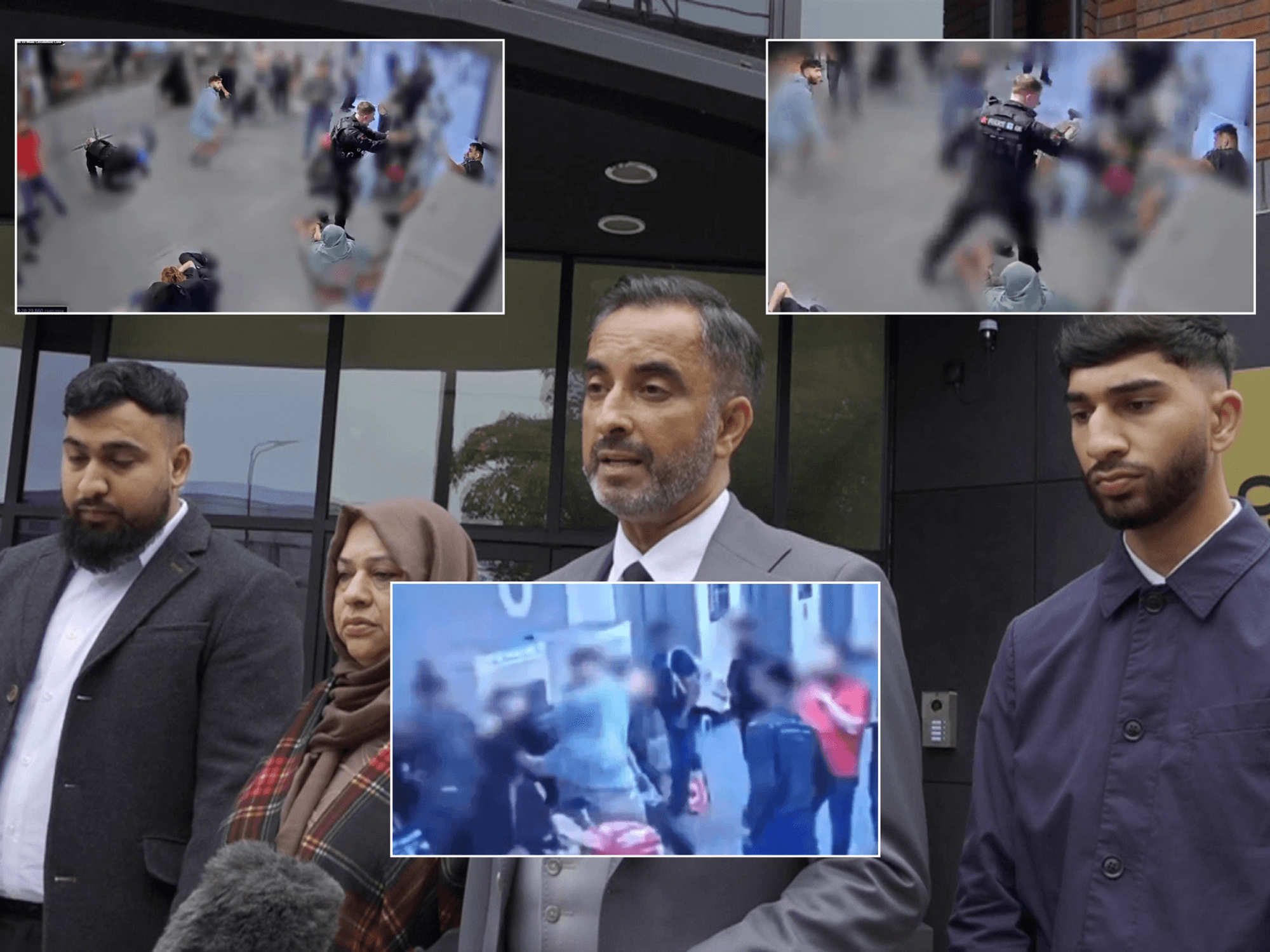
He attempted to escape by climbing a fence, leaving a trail of blood. Officers heard him state that he had been stabbed, with his last words reported as "I can't breathe".
They handcuffed him based on Digwa's accusation. Restraints were removed, and first aid was attempted only after he collapsed. He died at the scene. Digwa carried a 21 cm ceremonial blade as part of his Sikh faith.
His mother was convicted of assisting an offender by removing the blade from the scene.
The jury's verdict establishes that the racism and self-defence narrative did not withstand evidence. Prosecutors presented Digwa's account as fabricated in key respects.
Nowak had filmed Digwa moments earlier saying, "I am a bad man"; prosecutors used this recording to dismantle the self-defence narrative. On the night itself, however, that allegation received immediate weight.
Police arrived to a clear emergency: one young man collapsing from multiple stab wounds, the other levelling a complaint. Their response prioritised the complaint over immediate assessment of visible, life-threatening injury.

This is not Britain’s George Floyd moment. Henry Nowak's murder is the product of it - Lee Cohen
|CPS
This sequence stands in sharp contrast to the institutional reaction to George Floyd in 2020. Floyd, who had a significant criminal record, uttered the same words — "I can't breathe" — and became the centre of sustained global outrage, policy upheaval across Western police forces, and years of media focus.
A British teenager used the identical phrase while bleeding out from stab wounds. The response was restraint rather than rescue, followed by relative institutional quiet — until the verdict forced attention. The direction of the grievance dictated the intensity of concern.
Hampshire policing is founded on the principle of acting without fear or favour. In practice, fear of a racism complaint appears to have outweighed the visible imperative to preserve life.
Officers face complex, high-pressure situations, but the physical evidence of severe injury should not require second place to an accusation.
Training and culture that elevate narrative management over decisive action in emergencies produce predictable results. Henry Nowak received cuffs before meaningful aid.
The conviction brings justice for the killing. It does not resolve the prior failure. This addresses one incident. They leave untouched the wider pattern: persistently high knife crime, public concern over integration and religious blade exemptions, and institutional sensitivity that tilts enforcement.
When a 21 cm blade features in a fatal stabbing, and initial police focus falls on the victim's supposed racism, questions of equal application of the law arise naturally.
No one disputes that midnight street confrontations are chaotic. That reality makes impartial standards more necessary, not less.
Once incapacitated by blood loss, Nowak posed no threat. The state's immediate duty was to stop the bleeding and secure his survival.
That duty was subordinated to a complaint later rejected in court. This hierarchy of concerns reflects deeper absorption of grievance frameworks imported and adapted without sufficient scrutiny or corrective mechanisms.
Britain's policing tradition earned respect for treating individuals equally before evidence, not before identity or community optics.
That tradition has been quite seriously challenged. Partial priorities, even when driven by a desire to avoid tension, erode public confidence and, most critically, cost lives.
Restoring clarity requires a culture in which preservation of life and assessment of facts precede any calculation of racial narratives. Officers must know that a dying man's blood takes precedence over an unverified allegation.
The Nowak verdict confirms the facts of the murder. It also illuminates how institutional reflexes failed him in his final minutes.
Until policing returns to evidence-led impartiality as its operating default, such cases will demonstrate not only individual tragedy but a systemic distortion with lethal consequences.