

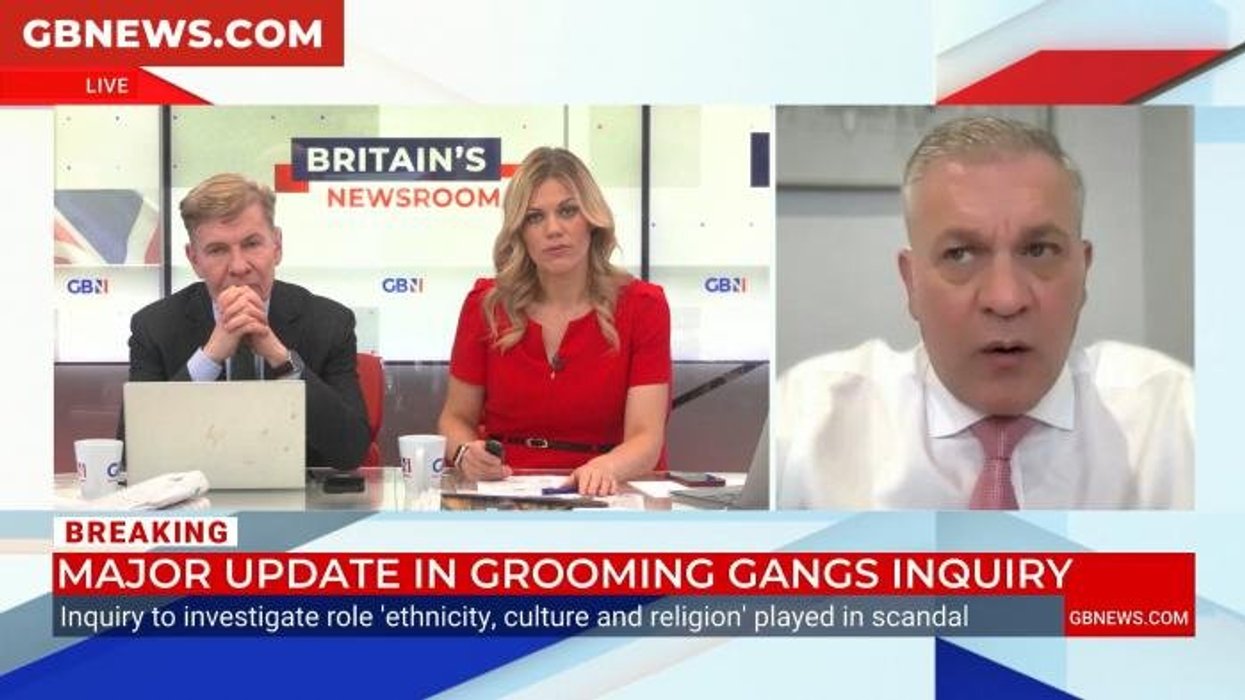






The chairperson of the national statutory inquiry into the grooming gangs, Baroness Longfield, has declared that police officers who failed to investigate cases of group-localised child sexual exploitation (GLCSE) will be held to account.
It has been reported that any police officers or council officials suspected of deliberately covering up grooming-gangs abuses could face investigation by the National Crime Agency (NCA).
As well as it being vital that the national statutory investigation into grooming-gang activity explores the potential ethnic, cultural, and religious factors at play, it is also important that it examines how the background of the perpetrators played a part in cases of gross institutional mismanagement – especially when it comes to police forces such as Greater Manchester Police (GMP).
Operation Augusta had identified at least 57 victims – mainly white-British working-class girls aged from 12 to 16 – and some 97 potential suspects involved in grooming-gang activity across the Greater Manchester region.
However, senior officers at GMP deprived the investigation of resources before shutting it down completely – with this being supported by Manchester City Council.
Only three perpetrators were convicted of related crimes in court. The report suggested that police officers were concerned over the perception of “targeting another minority group”, after dealing with cases involving members of the Kurdish-heritage community.
The national statutory inquiry into grooming-gang abuses must examine how racial and religious sensitivities – essentially the desire not to rock the multicultural boat – affected the quality of policing responses to such heinous crimes committed against some of the most vulnerable members of society.
 The grooming gangs inquiry will look like a stitch-up if it ducks the most radioactive question - Rakib Ehsan
There are certain police forces that should very much be under the microscope, along with GMP – including the likes of West Mercia Police and South Yorkshire Police (which cover the well-known grooming-gang ‘hotspot towns’ of Telford and Rotherham respectively).
But this needs to be a truly broad-based analysis – one that incorporates our capital city of London, which appears to be anything but shielded from this nationwide scourge.
Determining public-sector accountability when it comes to institutional failures over properly investigating cases of grooming-gang activity should be a critical pillar of the national statutory inquiry.
High-ranking police officials directly responsible for such failings should face the loss of pension entitlement, dismissal if they are still serving in a public sector role, and the possibility of criminal prosecution.
Dereliction of public duty and wilful neglect in this context needs to be met with serious consequences – otherwise the national statutory inquiry into the grooming gangs risks looking like an establishment stitch-up.