







In these uncertain times, government ministers and quantum physicists have found something in common. Both are uncertain about time, in particular, what the future holds.
To some scientists, the strange workings of the universe could mean wars in Ukraine and Iran may never have happened. In our down-to-earth world, we know that they have, and our failure to defend ourselves properly in the past means more military spending in the future, which will cost us all.
Clearly, events from the past determine the future. Throw a large stone at a window, and you can be fairly sure that in the very near future the glass will shatter.
More difficult to imagine are events from the future shaping the present and redrawing the past. Some physicists believe that it can happen, which means past events would disappear from history books and our memories, and we would be none the wiser. They call it retro causality.
How Keir Starmer must be wishing he could change the past in such a way. That the Cold War dividend still existed, that Nato countries could count on America to come to our aid in time of war, and that Donald Trump had never entered the White House.
In your dreams, Prime Minister. The Russian invasion of Ukraine is too close for comfort. The war in the Middle East is too unpredictable in its far-reaching consequences.
But the US president’s demand that Nato should contribute more to its own security was not, unusually for him, entirely unreasonable.
Although the US bankrolls 62 per cent of Nato, as a proportion of its national wealth, it comes fifth at 3.2 per cent in the league table of members.
Poland shells out four per cent of its GDP on defence, Latvia 3.7, Estonia 3.4 and Norway 3.3. But then they are the ones with Russia on their doorsteps and have most to fear from Vladimir Putin.
All 32 Nato countries have now reached the two per cent minimum target since the Ukraine war began. But Mr Trump wants more. The UK plans to increase spending to 2.5 per cent by next year, with a commitment to get to 3.5 per cent.
That will mean increasing the MoD’s budget by £36billion a year, more than a third more than it gets now. It will cost taxpayers an average of £963 a year each.
 Donald Trump's browbeating will soon cost you £963 a year. Let that sink in - Nigel Nelson |
 Getty Images
We could build the 40 new hospitals Boris Johnson promised us for that and still have change left over. Or 7,200 schools. Or, if we’re looking ahead to the 22nd Century, 45 Millennium Domes.
Mr Trump is still irked Nato countries didn’t help him flatten Iran. That shows either ignorance of what Nato is for or plain mischief-making.
It is a defensive alliance in which an attack on one member state is considered an attack on all. Had Ukraine been in Nato as it wants to be someday, we’d be bombing Moscow by now.
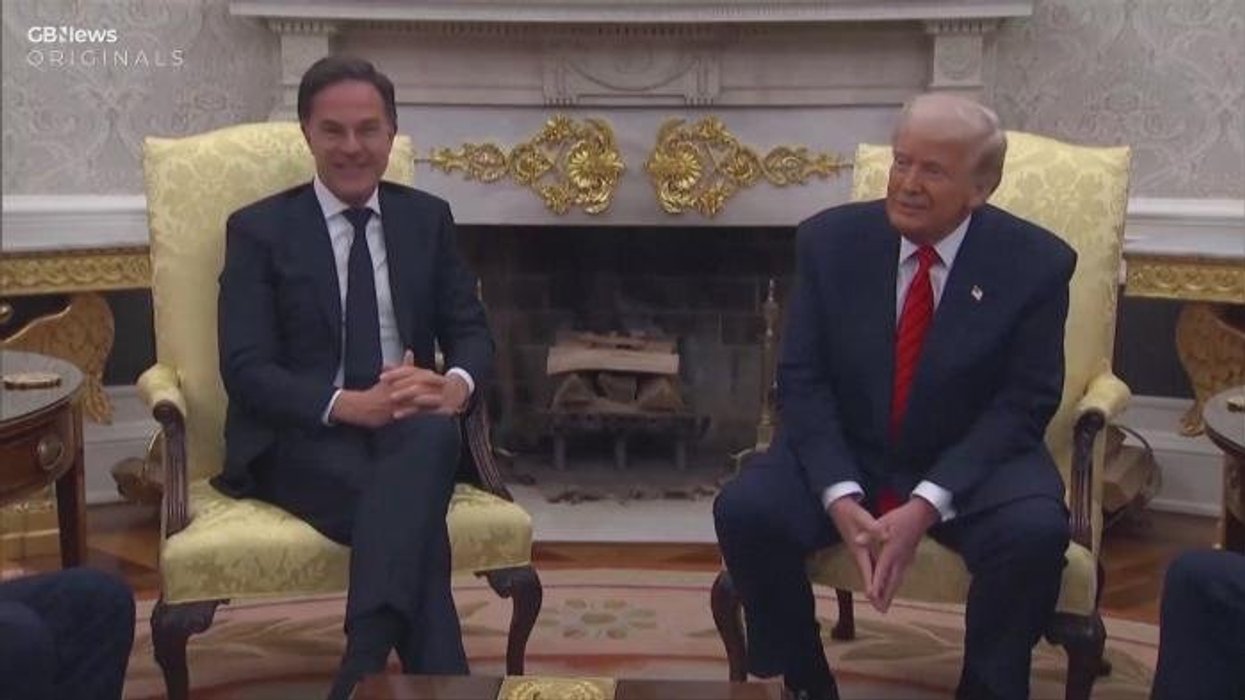
It is not there for one member to start a reckless war of its choosing and then expect everyone else to pile in, a point Nato Secretary-General Mark Rutte should have forcefully made to President Trump. Perhaps he did.
He described his two-hour meeting with Donald Trump on Tuesday as “very frank” – which is usually diplomatic-speak for a blazing row. White Press Secretary Karoline Leavitt added “candid” which means the same thing.
Then came the president’s odd post on Truth Social: “Nato wasn’t there when we needed them, and they won’t be there if we need them again. Remember Greenland, that big, poorly run, piece of ice!!!”
There’s nothing in the Nato rule book to cover what might happen if one Nato country invaded another, so Trump’s threat to Denmark’s territory marks a precedent.
And Congress prohibits a US president pulling out of the alliance without its approval, so the Donald would have a fight on his hands if he attempted it.
Now we have three Russian subs sniffing around the UK's undersea cables, which carry half our gas and 99 per cent of our telecoms.
It all adds up to making today’s world an ever more dangerous place. Our best hope is that the quantum physicists are right – and there is something out there in the future to make it a safer one.