






This was the dress rehearsal. How will our dwindling social trust cope with what's coming? - Colin Brazier
|social media
It was the most bizarre thing I’ve ever seen. Driving around a tight corner in Japan in 2011, only to be forced to stop because the road was blocked by a fishing trawler.
I was there with a TV news camera crew, collecting images for a report about the awful tsunami which had hit the mainland, killing some 19,000 Japanese.
But there was something else - in its own way just as odd - which stays with me still. In the days after the tsunami hit, half a million people were made homeless.
Many of them were on the move, filling their cars with a few belongings and heading to stay with friends or family away from the areas affected by the earthquake, tidal waves and subsequent nuclear power station leak.
In some places, it felt like the whole country was on the move. But, even though fuel was in vanishingly short supply and motorists were queuing for hours to fill up their tanks, nowhere did I see order breakdown.
Quite the opposite. Everywhere long, disciplined lines of cars, waiting patiently in turn. One thought kept recurring: imagine if this were England.
Time was when - as a nation - we shared Japan’s international reputation for orderly politeness, a sense of fair play and a deep attachment to the queue as the best mechanism for accessing scarce resources.
But those days are gone. Japan may have retained high levels of social trust, but ours are in free-fall. Try to imagine drivers in an English city waiting in line for fuel. After a few hours, I predict that the thin patina of civilisational solidarity would wear thin very quickly.
Why the difference? The obvious answer is the one those on the Left find least palatable. Japan has retained high levels of social cohesion because it has resisted high levels of immigration.
Japanese interpersonal norms have not been diluted by the arrival of millions of foreigners who do not share those rigid social conventions.
If the war being waged against Iran doesn’t end quickly, and the supply of oil dwindles further, then we may soon see just how far some of our cities have abandoned the kind of neighbourliness which allows citizens to endure a crisis.
Long patient queues at the petrol pumps? I think not. Rather, the devil take the hindmost, with the most clannish communities working together to secure what they need.
Lest I be accused of imagining a golden age of urban solidarity that never existed, let me acknowledge two qualifications.
First, bad actors exist everywhere and always. Even in societies with high levels of social trust, there will forever be wrong ‘uns.
Take London in 1940, when the Luftwaffe bombs rained down night after night. We chose to remember it as a time of coming together in adversity. We even gave it a name: the Blitz Spirit.
But the reality was something different. Crime spiked. The blackouts and empty homes created perfect conditions for burglars, and they cashed in.
Second, declining social trust has several causes, not all of which can be attributed to the negative impacts of mass migration. Social atomisation is not new.
The French sociologist Emile Durkheim identified it in the 1890s. He coined the word ‘anomie’ to describe the alienation, isolation and ‘norm-less-ness’ caused by rapid change.
Indeed, even Japan itself is no stranger to this. Family networks have crumbled. Old people die alone in huge numbers. The Japanese call this phenomenon Chonaikai. The collapse of associations, clubs and voluntary organisations that bring people from different backgrounds together.
But the broader point holds. London, 85 years ago, enjoyed a level of mutual support and collective fortitude that now, looking back, feels as if it belonged not just to a different century, but a different planet.
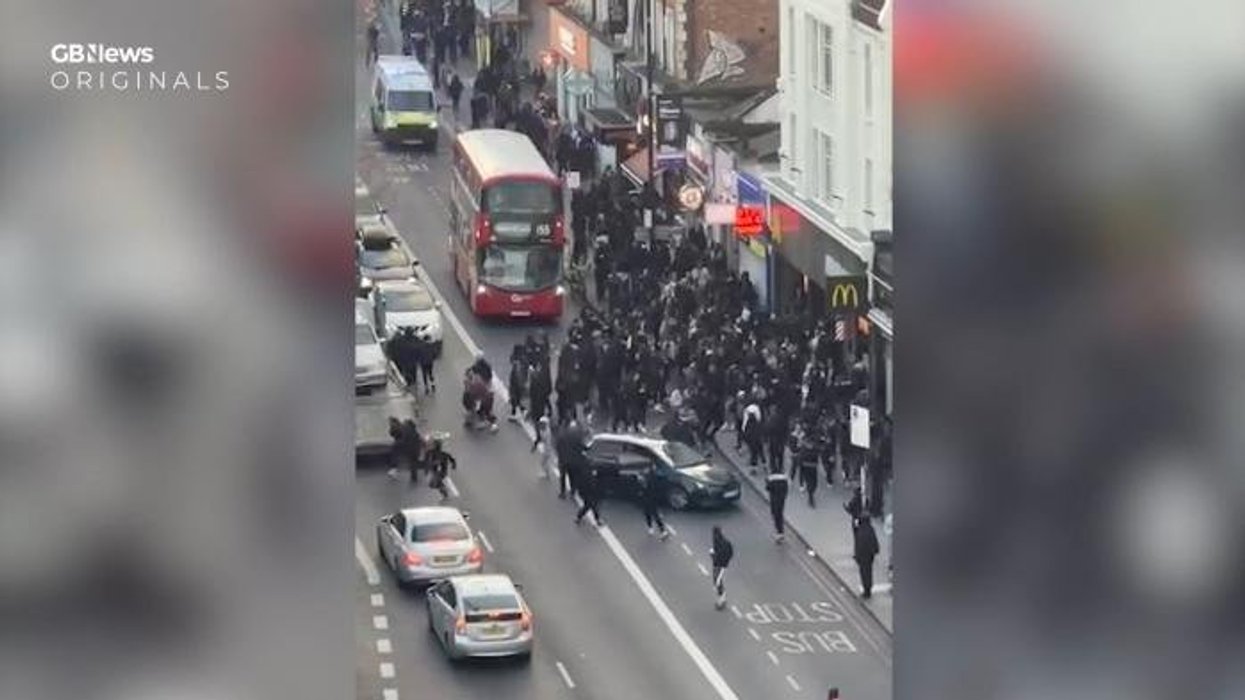
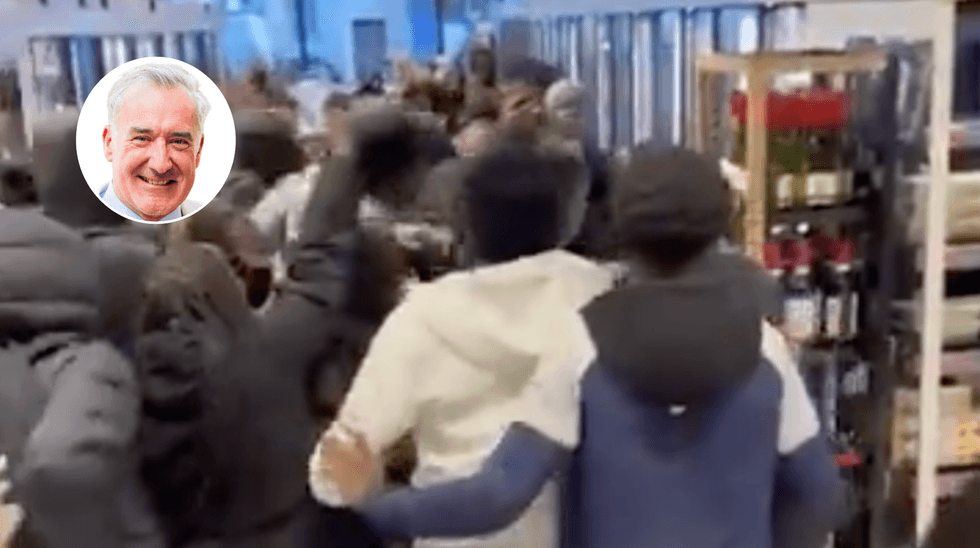
Imagine someone hiding in the tunnels of the London Underground in 1940, leaving behind that subterranean sanctuary and coming up to find the capital as it is today. What would they make, for instance, of the sight this week of marauding groups of predominantly young black men, thronging the streets of Clapham, a mob intent on theft and mayhem.
What would they make of the pavements turned into a free-for-all of face-mask-wearing delivery men on scooters and bikes? Or the heavy waft of cannabis? Or the sight of shoplifters carting away stolen goods without any hope of police intervention?
What would they make of Tube station signs in East London emblazoned in a language they could not understand (Bengali)?
Would they think this was still a united nation - or one in which the fabric of the rule of law was fraying and which no longer had the confidence to expect newcomers to learn the common tongue?
It’s hard to think of any country which has seen such a dramatic and rapid reduction in levels of social trust as Britain. Part of the explanation is that it was so high to begin with. We were, for instance, alone among European nations in having police officers who were not routinely armed.
But perhaps we now need to acknowledge, as the Europeans have, that the rules that govern a society need to be imposed if they are no longer voluntarily obeyed.
Take one example. On Germany’s autobahns, whenever traffic comes to a standstill, vehicles instantly move to the left and right, creating a Rettungsgasse (rescue alley). It looks like an object lesson in strangers working together for the common good.
And, certainly, having sat in heavy traffic in London and watched ambulances blocked by selfish drivers, it’s tempting to assume Germans have higher levels of social trust than we do.
But, in reality, the Rettungsgasse isn’t a spontaneous act of goodwill and human kindness. It’s the law. Anyone not doing it faces prosecution.
Whatever we do to restore social trust, we had better get about it quickly. It is draining away in multiple ways. Politicians are part of the problem.
They make promises they can’t keep. Our young, for example, were told to go to university to secure well-paid jobs. It’s not turned out that way.
And all of us were told that, whatever else the Government would do, its first duty was to defend our island. Yet last month, we learned that Iran (a country led by men who believe in wiping another nation off the map and are intent on developing nuclear warheads) now has the technical wherewithal to hit Britain with long-range missiles.
We are heading towards a future of unprecedented social mistrust, led by an elite that refuses to acknowledge the role played in this downward shift by uncontrolled mass immigration.
Instead, our leaders will likely embrace ever-more authoritarian rule, hoping that by doing so, our inner-cities will not succumb to Balkanised anarchy.
Either way, when a low-trust society like ours faces genuine hardship, I fear for the outcome. Liberals might argue that, when the shit hits the fan, Britons can be relied upon to pull together.
Just look at how we all played nicely during lockdown! I’m not sure that really supports their argument. And I’m certain that, if another pandemic were to strike - this one killing the young rather than the old, such that key workers could not be persuaded to leave their children behind and work in hospitals or on short supply chains - then we really would face the mother of all tsunamis.