

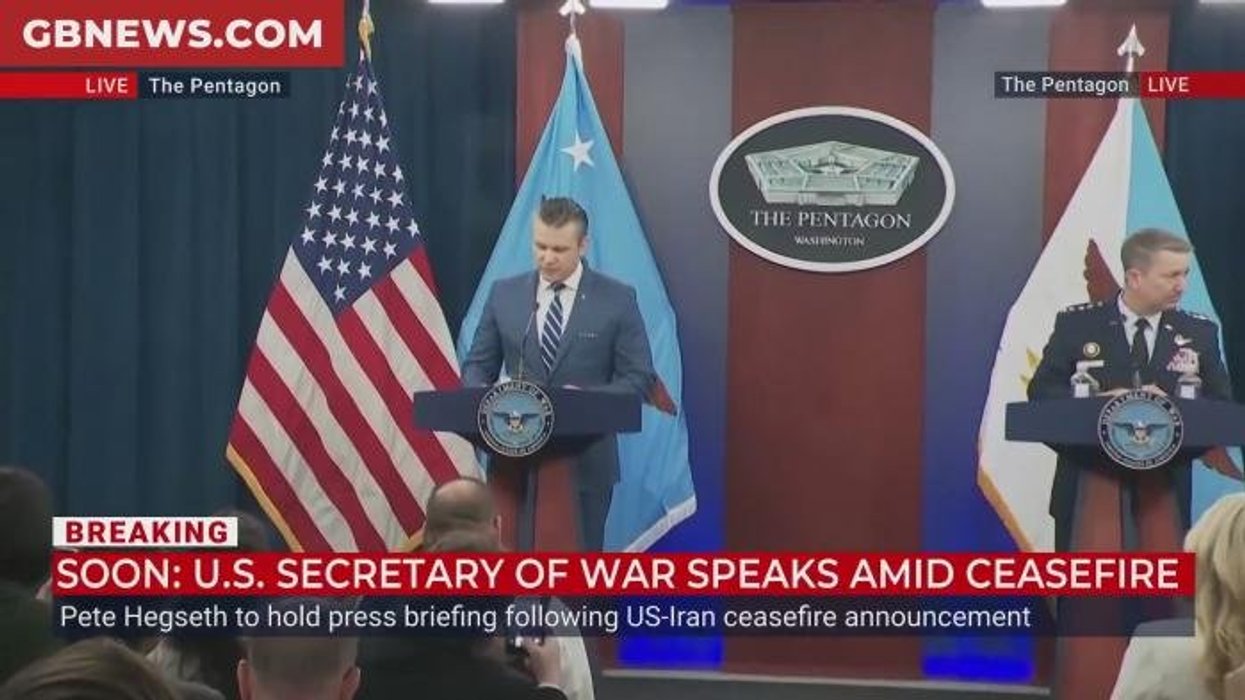








It appears that the Middle East has stepped back, temporarily at least, from all-out war with the announcement of a two-week ceasefire between Iran and the US/Israeli/Gulf States coalition.
Although the conditions of the cessation of hostilities still have to be publicly clarified, the bones of it are that the USA and Israel will stop attacking Iran in return for the Strait of Hormuz being reopened to international shipping.
The USA and Iran agreed to a two-week ceasefire brokered by Pakistan on April 7 and will begin negotiations in Islamabad, Pakistan, on April 11.
It was later announced that the US delegation will be led by Vice President J D Vance, which could be a good thing or a bad thing depending on your point of view. It hasn’t taken long, however, for the proposed ceasefire terms to become a matter of some contention.
Whereas the basis of Trump’s proposed “deal” is the opening of the Strait of Hormuz, the surrender of Iran’s nuclear fuel, and a cessation of Tehran’s support to its various proxy groups around the Middle East, Iran has responded with a ten-point counterproposal.
Trump described the counterproposal as “a workable basis on which to negotiate”, but it is clear that some of the terms will be unacceptable to the US.
Iran’s demands included a permanent end to the war with guarantees that the USA or Israel will not attack Iran again. It also demanded the lifting of all sanctions on Iran, the termination of all UN Security Council and International Atomic Energy Agency (IAEA) Board of Governors resolutions against Iran, the payment of reparations, the withdrawal of US forces from the region, and the cessation of war on all fronts, including Israeli operations against Hezbollah in Lebanon.
Iran also reportedly stated that it will charge vessels transiting the Strait of Hormuz a fee of up to $2million US dollars, the revenue from which it will split with Oman and use for post-war reconstruction.
Iran’s proposal to charge vessels that transit the Strait of Hormuz highlights Iran’s attempt to use the strait as a point of leverage and for its financial gain.
The USA and Israel cannot agree to such terms. The latter in particular has refused to stop operations against Hezbollah in Lebanon, which it regards as a continuing existential threat.
So the first 24 hours of the so-called ceasefire have seen a continuation of attacks and accusations of betrayal by both sides in the conflict.
 Apocalypse averted or postponed? This new front in the Iran war is unleashing new levels of chaos |
 Getty Images
So, where does that leave us? Both sides claim victory, but neither has won. Currently, if the Strait of Hormuz does open, it will be on Iranian terms, something Iran did not enjoy before Trump’s War.
Some are already calling it the Tehran Toll Booth. General Sir Richard Shirreff, former NATO Deputy Supreme Allied Commander, has stated: “You now see the global superpower humbled by a tinpot theocratic dictatorship.”
Trump's failure to force Iran to open the Strait of Hormuz "may come to be seen as America's Suez moment”. Typically, Trump declared "complete victory" in one of his bombastic media outbursts.
But so far, Iran still controls the Strait, retains its supply of enriched uranium, and still has plenty of missiles and drones. Thousands are dead, and the US has spent up to $1billion a day since the war began.
How would defeat look? We should note that the President has said that all US military forces will remain in place “around Iran”. He clearly has his doubts that the negotiations will succeed.