

Here's why Keir Starmer's child safety pitch is really about watching you
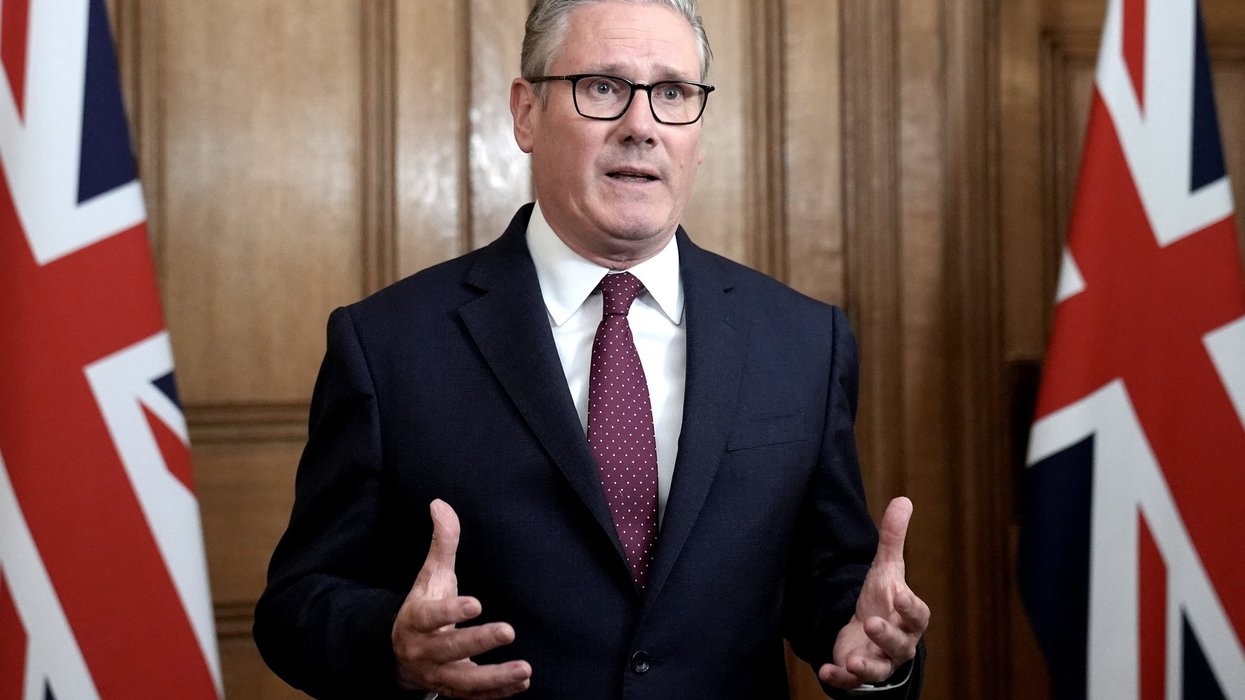
Here's why Keir Starmer's child safety pitch is really about watching you – Bev Turner
|GETTY



Bev Turner writes about the real danger of Labour's social media push
Don't Miss


Most Read



Latest
For a Government that still valiantly claims to have a "special relationship" with Washington, Labour is again on the receiving end of some blunt messages from Donald Trump's America.
The President has yet again criticised Britain's expanding online safety regime, questioned whether UK regulations are becoming a threat to free speech and raised fresh concerns about British demands for access to encrypted data.
Trump's allies in Congress have openly warned the UK against what they describe as "backdoor spying" on American citizens through Britain's surveillance laws.
Thank God for America, fighting for the freedoms of Brits – the irony of this is profound, given that we are a few weeks from July 4 and America's Independence from the UK.
We should be grateful that they are still on our side – just.
While Washington is asking whether Britain is becoming way too comfortable monitoring what people say and do online, Keir Starmer has unveiled a proposal that would once have sounded less like policy and more like the plot of a dystopian thriller.
Standing on stage at London Tech Week, the Prime Minister gave Apple, Google and the rest of Silicon Valley three months to introduce controls that would prevent children from taking, sharing or viewing nude images on their devices. Failure to comply, he warned, would see the UK Government step in and do it for them.
"This Government will not stand by while children are put at risk online," he declared. "Today, I am calling on the tech companies to introduce device-level controls to prevent children from taking, sharing or viewing nude images. And if they don't act, we will."
TRENDING
Stories
Videos
Your Say
Even when he is trying to be tough, Starmer sounds weak, and, of course, keeping kids safe online should be a shared ambition, but selecting something so roundly utopian means that any naysayers can be quickly accused of being against child safety itself. It's a classic totalitarian diktat – create a problem, generate fear, and clamp down on it "in everyone's interests".
But the entire debate hinges on two deceptively innocent words: "Device-level".
Because once you look beyond the emotional manipulation and marketing dross, the reality is shocking.
If a system is going to identify one inappropriate image on your phone, it must first examine every image on your phone. Every image.
It may be that you sent a picture of a dodgy mole on your backside to the doctor, or your child's self-harming marks to a concerned counsellor, or even just a selfie trying, or your new swimsuit.
Under the excuse of "protecting kids" from perverts, they will create a world in which all content has the potential to become public – or criminal.
The technology industry has a name for this already: "client-side scanning", and you are the client – but you don't get to opt in or out.
In simple terms, it means software sitting inside your device, inspecting content before it is encrypted and sent anywhere.
Imagine employing an alarm fitter to secure your front door, and as you get the rundown of how it works, a government agent is sitting on your sofa taking it all in. Technically, the alarm still works. Practically, your privacy has already gone out of the window.
Apple experimented with precisely this type of system in 2021, before abandoning it following widespread criticism from privacy experts and security researchers who warned about the implications for encrypted communications.
LATEST DEVELOPMENTS
End-to-end encryption exists specifically to prevent intermediaries from inspecting your private messages and files. "Client-side" scanning neatly sidesteps the entire principle by moving the inspection process to your own device before encryption ever takes effect.
The encryption survives, but privacy is consigned to history – remember, this will never be rowed back on. Governements that gain extra powers never hand them back.
It is truly shocking to observe how casually this idea is now being discussed.
A decade ago, the suggestion that governments might encourage phone manufacturers to install software capable of reviewing every image on every handset would have been laughed out of a policy conference.
Today, thanks to an authoritarian government in lockstep with a sleepy, compliant media; global institutions; academics; and agencies, it is presented as common sense: "to keep the kids safe." It's grotesque and over-reaching, and luckily, millions of British people are starting to piece together the socio-political conditions that were supposed to remain invisible.
View it as a Government fitting every home in Britain with a smoke detector that also happens to record conversations, then insisting only "those with something to hide" need worry.
Of course, we're assured adults needn't be concerned and ministers say that the restrictions will only apply to children, leaving adults free to switch them off.
There's just one catch: to prove you're an adult, you'll need to verify your identity. In other words, the escape route from surveillance requires another layer of surveillance. To disable controls on a device you purchased, own and pay for, you must first prove your identity to someone else.
Home Secretary Shabana Mahmood dismisses concerns entirely. She insists this is about preventing exploitation, coercion and sextortion, not monitoring private devices. The technology already exists, she says with absolute certainty – companies simply need to activate it.
"There is no reporting, no data collection, no monitoring, and no images leaving the device", she says. For now, I say.
But this confidence might land more comfortably if it wasn't coming from the same Government currently embroiled in a bitter dispute over demands for access to encrypted cloud data.
Remember, this is the Government that reportedly issued Apple with a secret Technical Capability Notice demanding access to encrypted iCloud backups.
Apple responded not by complying but by withdrawing its strongest encryption protections from the UK market altogether rather than create the capability requested.
That legal battle continues. History teaches us that the snoopers and censors are never the good guys.
Many privacy advocates simply don't buy the assurances. They have shown us their hand and trust is gone.
The European Union spent years wrestling with its own proposal for large-scale message scanning, eventually known as "Chat Control". The scheme ran into fierce resistance from privacy campaigners, cybersecurity experts and lawmakers concerned about the implications for private communications.
Germany, with its unique historical experience of state surveillance, proved particularly sceptical. Its justice minister compared blanket scanning to routinely opening every letter in the post just in case one might contain something illegal.
Signal, one of the world's most secure messaging platforms, indicated it would rather leave certain markets altogether than compromise encryption.
And if this really is about protecting kids, why not demand that phone companies make existing child safety controls (already fitted by the way!) more hack-proof and easier to use – as a matter of urgency?
Most smartphones already contain extensive child-safety features, they are just unfathomly difficult to master and easy for tech-savvy children to hack! This would require no legislation or nationwide infrastructure. But it would also require no mass identity verification...and that it what the government really wants.
History shows that surveillance powers rarely remain confined to their original purpose. A capability introduced to tackle one social problem inevitably attracts interest from officials seeking to solve another. Today's target is child protection but that woud quickly morph into
Tomorrow it would be "misinformation" and "harmful content" – whether that is a Reform UK manifesto or a feminist statement against trans rights.
Pick your political panic – whatever is deemed that day's virtue signalling hot topic - you had better be on the right side of every argument or the wrong screenshot of a meme, could see you on trial without a jury in a court with an AI judge. It sounds like madness..but the pace of change is so immense right now that it is entirely imaginable.
Once the machinery exists, the temptation to widen its remit will become irresistible. And that's the question no journalist is posing to the Government. Why should citizens trust any of them when they have spent years pushing for greater access to private communications when it promises that this time, the surveillance infrastructure will only ever be used for the purpose it currently has in mind?
I don't believe a word of it.