










Francesco Mattana grew up surrounded by the freshest ingredients imaginable on the Italian island of Sardinia. His childhood was filled with fish, eels, crabs and sweet potatoes, all sourced mere metres from his family home.
For the chef, meals were never simply about sustenance. Food represented connection, tradition and a way of life shared with loved ones under the Mediterranean sun.
This philosophy forms the foundation of his new cookbook, Eat Like A Sardinian: Live to 100.
"It mainly focuses on fresh seasonal ingredients, healthy fats, but one part of the cuisine as well is that you spend plenty of time cooking and eating together – it's not just about the actual ingredients, community is part of the cuisine," said Mattana.
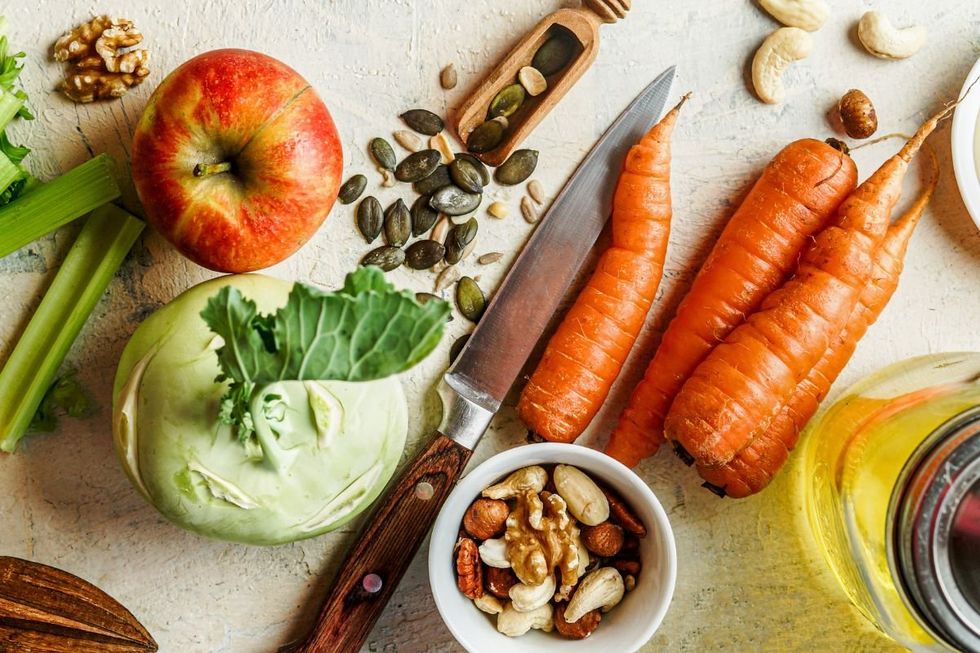
Raw vegetables hold a special place in Sardinian culinary tradition
|GETTY
The book draws on Sardinia's renowned status as one of the world's Blue Zones, a term first introduced by National Geographic explorer Dan Buettner during the early 2000s to describe specific locations around the globe where residents enjoy remarkable longevity.
The five regions that currently hold official Blue Zone status are Okinawa in Japan, Costa Rica's Nicoya Peninsula, the Greek island of Ikaria, Loma Linda in California, and Sardinia.
Each of these areas contains an unusually high proportion of centenarians who continue to lead active, fulfilling lives well into their later years.
Researchers have attributed this exceptional lifespan to several common factors, as residents typically experience minimal stress, maintain strong social bonds, and consume diets of outstanding quality.
For Mattana, his homeland's inclusion among these longevity hotspots represents a source of considerable pride.
His connection to the land and sea came through both grandfathers, one who worked as a fisherman and another who tended the fields as a farmer.
"When I was a child, both of my grandads, one was a fisherman, and one was a farmer, so I was lucky enough to have the freshest vegetables and meat and the freshest fish," he explained.
LATEST DEVELOPMENTS
Mattana recalls vivid scenes of his grandfather returning from the fishing village laden with the day's catch.
The extended family would gather in the courtyard, with young Francesco tasked with chasing crabs scuttling across the garden.
"Those memories, they build up, and they stick with me," he said.
These formative experiences taught him that exceptional cuisine emerges from the combination of quality produce and shared moments with family. Raw vegetables hold a special place in Sardinian culinary tradition, celebrated rather than merely tolerated.
"Raw vegetables – for us, raw vegetables are a celebration because you get the best nutrition if you don't cook them," Mattana explained.
This reverence for uncooked produce extends to even the most upmarket establishments, where diners routinely order platters of fresh vegetables.
The minestrone exemplifies seasonal adaptability, prepared throughout the year with whatever ingredients nature provides. Spring brings asparagus, broad beans and peas, whilst summer calls for ripe tomatoes and fragrant basil.
Wine also plays its part in Sardinian longevity, particularly the local Cannonau variety.
"We prioritise quality over quantity when it comes to this type of wine – it's very high in antioxidants – Cannonau has two to three times the amount of flavonoids, a type of antioxidant, compared to any other red wine," said Mattana.
Mattana believes anyone can embrace Sardinian eating principles regardless of where they live. The key lies in developing a genuine relationship with local produce.
Wine plays an important part in Sardinian longevity
|GETTY
"See what's around you: in Italy, especially in Sardinia, we have this (concept) called Kilometre 0 – go to your local shop, go to the Sunday farmers' market, see what's in season, get excited. Talk to the butcher, talk with the fishmonger. Get advice from them," he advised.
Simplicity remains paramount. Ingredients that have travelled shorter distances to reach your kitchen will invariably taste superior and deliver greater nutritional benefit.
The final element involves gathering others around the table.
"So, if you combine those things – making it very simple, inviting people around the table, (and) have fun with it, make mistakes – you can enjoy the process just as much as the result."
Our Standards: The GB News Editorial Charter